Adam Greco’s New Book on Product Evangelism Puts a Spotlight on Humans in an AI World

On the latest episode of “The Critic’s Corner” podcast, the digital analytics luminary shares insights from his decades of experience and explains why Product Evangelism is becoming essential in the burgeoning era of AI – offering both wisdom and practical strategies for aspiring evangelists.
Listen to the full episode of “The Critic’s Corner” Podcast >
Adam Greco is a force of digital nature.
I don’t say that lightly.
If you’ve spent any time in the dark trenches of analytics, you know his work – which spans hundreds of blogs, countless speaking roles, and the preeminent book on Adobe Analytics. He’s been a kind of North Star, shining the light of logic in a landscape that’s constantly shifting above and below us.
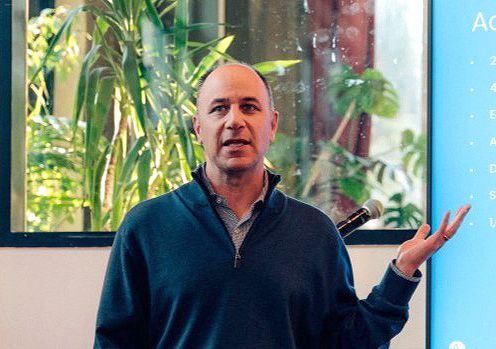
Adam Greco. Source: LinkedIn
On the latest episode of The Critic’s Corner podcast, I sat down with Adam to talk about his decades-long journey from web analytics pioneer to Product Evangelist at Hightouch, a composable customer data platform I’ve been closely tracking. We talked about the big leap into CDPs and why it was a logical move.
But more than anything, we linked up to discuss his new book, Product Evangelism: A Practical Guide for Aspiring Product Evangelists and the Organizations That Need Them.
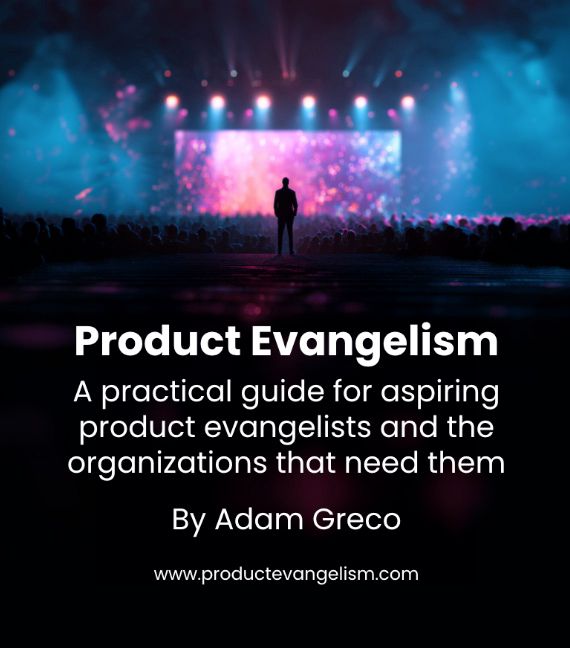
Source: www.productevangelism.com
What follows is a streamlined ride‑along of that conversation – an overview of the big themes we covered, why Product Evangelism matters more than ever, and how the human voice could be the signal that breaks through the noise in an AI-saturated world.
If you’re wondering whether your company needs a Product Evangelist, or you’re thinking, “Maybe this is the role that fits how I’m wired,” or you’re just trying to understand how ideas and products really gain momentum in a crowded, AI-driven content landscape – this episode is for you.
As for the book, it’s a terrific read. Part field guide, part memoir, it’s practical, accessible, and deeply personal at times. Above all, Adam frames why Product Evangelism matters at this moment – and why it might be one of the most important roles of the future.
Below is a quick snippet, but you can listen to the full episode here.
From web analytics to warehouse-native
In the pod, I referred to Adam as “analytics royalty.” Embarrassing? Maybe. But it’s richly deserved. He traces his origin story back to the early days of the Internet, when organizations were still figuring out why they even had websites. This gap made him curious, and that kicked off a lifelong journey.
“In the early 2000s, I was doing CRM stuff,” he said. “Then, all of a sudden, the Internet came around, and everyone wanted a website. But then no one knew why they had a website. So I started doing some research and heard about this new field called web analytics. I ended up joining Omniture because they really liked what I was doing with their product, and then I was consulting all over the world, traveling around, helping people [understand] their websites and why people were using them.”
Most recently, Adam had a fruitful four‑year run at Amplitude, where he tried to steal a little thunder from the likes of Adobe and Google Analytics, which held a firm duopoly in the digital analytics space. Today, he’s at Hightouch, working at the intersection of CDPs, warehouse-native architectures, composability, and AI – but still very much rooted in his analytics foundation.
“I kind of looked at moving from digital analytics to the CDP world as kind of going up one level,” he explained. “Not that one’s better than the other, but just having a broader view of the customer.”
The limitation is that analytics has been constrained to web and app behaviors. As he said, in many cases, organizations were using data for the sole purpose of trying to figure out how to create better digital experiences for customers. But Adam saw more potential for completing the picture with store data and call center data in a unified digital analytics platform. That’s where CDPs and composable architectures come in – bringing together a more complete, customer 360 view and wiring it into activation.
“I think the CDP allows you to see a more holistic view of the customer, so that you can really present the best experience possible,” he said. “This is doing that, just doing it in a different way, and with a different composable architecture.”
If you’re watching the convergence of analytics, CDPs, and the warehouse and wondering what it all means for your marketing stack, Adam is very much in the center of that storm – and doing more than hunkering down.
So what is Product Evangelism?
If you’ve been in this game as long as I have, you know how easily we throw around phrases like “thought leadership” and “new paradigm” (remember that stint with “cathedral thinking”?) These terms are also fused into our marketing vernacular – for better or worse.
Conceptually, “Product Evangelism” has been around the block, but Adam sees its renaissance as something more aspirational. For him, it starts inside the marketing org, but sits apart from traditional brand and product marketing. Still, the biggest challenge is that most companies don’t understand what it is or how to quantify its value.
“I think putting Product Evangelism in the marketing area is right, but there are distinctions,” he said. “There’s brand marketing. Then you’ve got product marketing and lifecycle marketing. All of these are different marketing disciplines. What I think stands out for Product Evangelism is that people are hungry for insights. They’re asking, ‘What's going on in the industry? Why are your products different? Not just features and functions, but philosophically?’”
“What I think stands out for Product Evangelism is that people are hungry for insights. They’re asking, ‘What's going on in the industry? Why are your products different? Not just features and functions, but philosophically?’”
As Adam explained, there’s a crucial distinction: a Product Evangelist isn’t just there to pitch the product. Their job is to explain the shift across the market, the category, and the “why now.” He gave an example with his own current efforts.
“When I talk about Hightouch, I’m not actually talking about the company Hightouch,” he explained. “I’m talking about the industry topics that Hightouch is pushing, like composability. If the light bulb goes off in their head and they say, ‘Ooh, I actually think I want to move towards composability,’ then that benefits the company I work for.”
And when it’s done right, Adams sees trust accruing around the person first – and by extension, to the products they choose to stand behind. “If you're not too biased, then you end up getting a following of people who trust you and believe that you’re explaining what's happening in the industry,” he said, “and you just happen to work for a company that’s aligned with where you think the industry is going.”
The skills (and courage) behind the title
Adam told me that he doesn’t see himself as the preeminent global authority on Product Evangelism. But he’s very clear about what the role demands – and it requires real expertise and the ability to communicate it. You also have to be committed to shipping content consistently and engaging with your audience’s reaction.
“You have to have the intersection of knowledge and skills,” he said. “But it’s also having the courage and ability to put yourself out there.”
That can be scary. As Adam said, he’s given team members the homework assignment of writing five blog posts over the next five weeks. He explained how afraid people are to push something out on LinkedIn because they're nervous about the reaction – or being wrong on a public stage. It’s this kind of “imposter syndrome” that holds people back.
“I've put stuff out there that's wrong, and people will come at me and say, ‘Hey, you're wrong about this,’ and that's okay,” Adam said. “I'd rather put something out that's wrong and start a conversation around it, than not put anything out at all.”
In other words, being a “Product Evangelist” requires some grit and resolve. As he said, there are jobs where people can work quietly behind a dashboard – and that’s an essential role. But evangelists are a different breed: they’re willing to step into the spotlight in both the physical and digital realms and stake out a point of view.
Storytelling from the stage
Adam has been to numerous global events and conferences over the years – too many to count. The stage is where he honed his craft and proclivity for Product Evangelism, but that forum also extends to webinars, podcasts, and other emerging media channels where his voice is the lead actor.
At the center of it all has been the art of storytelling, and it’s something Adam is deeply passionate about. As he told me, he’s sat through enough lackluster talks and dull presentation decks to know what not to do. A key to the recipe for success? Being intentionally focused.
“If you go to as many conferences as I do, I'd say nine out of 10 of the presentations that I sit in on are just awful,” he recounted. “You can tell when someone puts effort into it, and if they're trying to convey one or two really succinct messages, versus just trying to vomit out everything they know.”
To conjure more connectivity with an audience, Adam leans heavily on dramatic themes, strong narratives, and a skosh of “surprise.” At a recent data event in London, he built an entire AI talk around a medieval castle motif, and it was a home run. You can check out some of the slides from this deck in his book.
“I did this whole presentation and used AI to make the [themed] imagery,” he said. “But before I even introduced myself or my company, I just started telling a fairy tale for 20 minutes. People were like, ‘This is not what I'm normally hearing in a day.’ I told a whole story that was a really good analogy for why you need to centralize data before you can use AI. People actually clapped in the middle of my session.”
Adam’s insight was salient, and his new book offers multiple examples of how to improve the stickiness of your topics through creative and well-orchestrated presentations. As he illustrated, effective Product Evangelists use the stage to talk less about features and more about big ideas.
Listening at scale and avoiding “marketing suite fatigue”
Another underutilized skill in the evangelist’s toolkit is listening – not just to the market, but to real buyer conversations. During our pod, Adam explained how he leverages tools like Gong AI to access insights at scale to challenge his assumptions, reinforce his knowledge, and drive more authentic and relevant content.
“I’ll watch previously recorded sales calls with certain keywords as a focus,” he explained. “When you hear the prospect say the same thing over and over and over again, you're like, ‘Wait a minute, there's something here.’ And then you write content on it, and you know that your content is authentic because you've heard it from real people.”
This listening strategy has helped Adam develop his recent work on the topic of “marketing suite fatigue” – a phrase that’s already making the rounds in martech circles. Hightouch competes with large-scale, integrated marketing suites, but Adam sees more users becoming disenchanted and cognitively overwhelmed by them.
Rather than competing on features, he’s shifting the narrative up a few levels to focus on marketing suite fatigue and the downsides of being locked into monolithic platforms. This naturally positions the case for a composable solution like Hightouch, and the traction is already building.
“I got so many messages from people,” he said. “This one said, ‘Listen, I can't say this publicly, but you are spot on. We feel kind of trapped.’ I just did a whole separate podcast on the topic, and now we're doing a webinar.”
For Adam, this is Product Evangelism 101: you spot a systemic tension, frame the problem, and use it to open up new strategic possibilities – not just for your product, but for the whole ecosystem. And if you do it right, you convert interest into real opportunity.
Why this role is “AI-Proof”
And, as Adam said, almost “recession-proof.”
Why? Because in an AI-saturated world, authenticity is king – and Product Evangelists are wearing the crowns.
In our conversation, we dug into this. We all see the mountains of AI slop running downhill across our social channels, and even OpenAI’s recent shuttering of Sora reflects just how unpredictable the ecosystem is.
To cut through the noise, Adam believes Product Evangelism might be one of the few disciplines that is resilient to both AI disruption and even economic downturns. People crave trust, and avatars or deepfaked talking heads simply won’t cut it.
“I think having a human who can be an ambassador for a company or a product or a service is actually going to be one of those AI‑proof ways of doing marketing,” he said. “I even suggest in the book that this is almost like a recession-proof career move.”
That human layer matters more than ever, but it’s always been a sought-after component for brands. In the book, Adam distinguishes between celebrity endorsements – which have been around forever – and Product Evangelists. They both provide value, but there’s a clear distinction.
“A lot of people think of Michael Jordan as an ambassador for Nike, but that's very different, in my opinion, than a Product Evangelist,” he explained. “Michael Jordan is not an expert in gym shoes, he just happens to have a great name, and anything you put on his name is going to sell.”
By contrast, Product Evangelism is rooted in expertise and industry context, not fame or notoriety.
“Most Product Evangelism, for now, happens to be in the B2B space, and celebrities don't actually do very well promoting B2B products. You have to have the ability to put content out there that people believe. You have to build trust.”
Legacy, impact, and paying it forward
Underneath all the mechanics of Product Evangelism – content, conferences, Gong calls – there’s something deeply personal that drove Adam’s purpose for writing this book. In part, it’s a reflection of where he’s at in his career, a place where legacy starts to matter.
“I'm a little bit older,” he told me jokingly. “I'm not retiring tomorrow, but I can see the horizon, and I want to pass on what I've learned to the next generation.”
During our recording, he shared an incredibly poignant story about the impact of his first book on Adobe Analytics, which became an unexpectedly life‑changing totem for one reader in particular.
“I was in Seattle, and there was a gentleman who came up to me who literally was like in tears,” Adam recalled. “He said, ‘This book changed my life, because it helped me get a job, get promoted, move to America, meet my wife, and have a kid.” That’s the kind of legacy every writer hopes to achieve.
As you’ll discover when you visit the website for Adam’s book, it’s completely free. As he shared with me in the podcast, this represents his entire ethos of paying it forward, doing good in the world, and making an impact.
There is one caveat: if you like it, he’s inviting you to make a donation to a critical cause. This is a personal piece for him: as he details in the book’s intro, his wife battled and recovered from cancer, and he sees this as an opportunity to encourage more support to find a cure.
“I made the book available for free,” he said. “I'm just going to put it out there, and if people like it and they get something from it, great. I'd rather have them throw five or ten bucks towards a cancer campaign. That's more important than having someone give me money for this book.”
Why it matters
I just arrived back from New York City, where I saw a few Broadway shows (yes, I’m a huge fan of the song and dance). I was blown away by the new Stranger Things: The First Shadow, which delivered preternatural performances courtesy of practical, live-action stage magic.
I think people are hungry for this kind of human engagement, and that’s why we’re seeing brands and enterprises investing more in authentic experiences and content. With the exponential deluge of AI-generated slop polluting our attention spans, it’s the one blade that might cut through the noise with an edge of trust.
If you’re leading a CMS or technology product program right now, you’re operating in an environment that’s louder and more fragmented than ever. Adam’s core argument is that Product Evangelism is no longer an aspirational role reserved for a few visionary vendors. It’s a discipline that every serious product company should be cultivating.
For individuals like you and me, this book is a welcome primer for the essentials that make Product Evangelism work. Adam provides some great practical advice on how to write, speak, and connect the dots publicly. For people struggling with a lack of confidence, he offers a virtual hand and clear guidance for navigating to success.
And for people drawn to the stage, embracing the role of a Product Evangelist just might be the most fulfilling and durable role you'll ever play in modern marketing.
The bottom line: I really loved this book. It’s an easy and inviting read, and I strongly recommend it. While it's only available in digital form via Writebook, you can get it for free at www.productevangelism.com, along with an experimental AI‑generated audio version trained on his own voice (he talks about that in the episode as well).
“The Critic’s Corner” podcast with Adam Greco
Upcoming Events

JoomlaDay USA 2026
April 29 - May 2, 2026 – Delray Beach, Florida
Be part of the Joomla community in one of the most iconic cities in the world! JoomlaDay USA 2026 is coming to Delray Beach, and you can join us for a dynamic event packed with insights, workshops, and networking opportunities. Learn from top Joomla experts and developers offering valuable insights and real-world solutions. Participate in interactive workshops and sessions and enhance your skills in Joomla management, development, design, and more. And connect with fellow Joomla enthusiasts, developers, and professionals from across the world. Book your seats today.
CMS Summit 26
May 12-13, 2026 – Frankfurt, Germany
The best conferences create space for honest, experience-based conversations. Not sales pitches. Not hype. Just thoughtful exchanges between people who spend their days designing, building, running, and evolving digital experiences. CMS Summit brings together people who share real stories from their work and platforms and who are interested in learning from each other on how to make things better. Over two days in Frankfurt, you can expect practitioner-led talks grounded in experience, conversations about trade-offs, constraints, and decisions, and time to compare notes with peers facing similar challenges. Space is limited for this exclusive event, so book your seats today.

Umbraco Codegarden 2026
June 10–11, 2026 – Copenhagen, DK
Join us in Copenhagen (or online) for the biggest Umbraco conference in the world – two full days of learning, genuine conversations, and the kind of inspiration that brings business leaders, developers, and digital creators together. Codegarden 2026 is packed with both business and tech content, from deep-dive workshops and advanced sessions to real-world case studies and strategy talks. You’ll leave with ideas, strategies, and knowledge you can put into practice immediately. Book your tickets today.
Open Source CMS 26
October 20–21, 2026 – Utrecht, Netherlands
Join us for the first annual edition of our prestigious international conference dedicated to making open source CMS better. This event is already being called the “missing gathering place” for the open source CMS community – an international conference with confirmed participants from Europe and North America. Be part of a friendly mix of digital leaders from notable open source CMS projects, agencies, even a few industry analysts who get together to learn, network, and talk about what really matters when it comes to creating better open source CMS projects right now and for the foreseeable future. Book your tickets today.