Putting the Human Touch on Hosting: Kinsta’s Matt Reid on Powering the Future of WordPress

The digital leader talks about the evolving landscape of open source, the value of relationships, AI’s transformative roadmap, and the importance of digital sovereignty in a changing world.
I love tech meetups. I go for the tech, but I’m really partial to the “meetup” part.
There’s usually a bit of imbibing on the docket. Craft beers are acceptable, but I much prefer mingling with craft coders and colliding around interesting topics. Like AI. Or that metaverse thing. It’s all on the table. I’m open to learning.
I’ve had the chance to hit a few already this year, and at a smaller confab, I ran into a few digital agencies. One in particular, Webidextrous – a full-service shop based in Winter Garden, Florida – reminded me that the heart of the WordPress community is alive and beating in these niche businesses.
As CEO Rob Watson told me, Webidextrous is helping real people with real business problems, and the relationship is still at the center of everything. As an ambassador of WordPress, he’s also actively participating in the ecosystem, penning his own brilliant reviews for plugins like Wordfence.
WordPress effectively “scaffolds” the independence of local agencies like Rob's, and does so within a worldwide community of thousands. Over the years, the open source content management system has powered workloads small and large, from local to global. Today, it powers (roughly) 43% of all websites, 61% of the CMS market, and an ecosystem of over 60,000 free plugins and themes. No commercial platform can shake a stick at that.
WordPress websites have to live somewhere, and as such, WordPress hosting has become ubiquitous. There’s a lot of choice in the market, much of it self-service and broadly accessible. It might be viewed by some as a commodity, and there’s some truth to that downstream. But at the enterprise level, focused hosting vendors have differentiated around key tenets of expertise and support, fomenting confidence with performance-tuned servers, uptime monitoring, firewalls, SLAs, and expert support.
This is where Kinsta is doubling down, providing a trusted resource for agencies and businesses that simplifies WordPress hosting. With over 230,000 customers around the world, including market-leading brands like TripAdvisor and NASA, Kinsta has consistently earned glowing reviews, particularly around the intangibles of support and relationships.
That last piece is critical in the evolving era of AI, where websites are changing. WordPress users and organizations are wading into promise and uncertainty. But most website owners are still struggling with the fundamentals, from migrations to edge caching. Security is a huge consideration, but so too are data ownership, governance, and digital sovereignty – topics that are making open source a more compelling and attractive play.

Kinsta CMO Matt Reid. Source: LinkedIn
I recently caught up with Kinsta’s CMO Matt Reid, hoping to unpack the intersection of these trends. We talked about market shifts and the roiling impact of AI, but we also dug into Kinsta’s fervent focus on support – and how humans are at the center of everything.
Differentiating in a crowded hosting market
Matt brings solid experience from a strong run at BigCommerce, one of the market’s leading SaaS e-commerce platforms. As its VP of Marketing, he drove everything from brand strategy to ABM programs, giving him a well-rounded perspective on the entire marketing lifecycle within the digital experience space.
Injecting fresh perspective into Kinsta is part of Matt’s self-described value prop. As he told me, hosting is a greenfield category for him, but having a foundation in building partnerships is key to Kinsta’s strategy of cultivating its agency ecosystem. A big part of that is developing relationships with people, and Kinsta walks that talk with its own team.
“People have been here a long time,” Matt said, encapsulating the company’s fully remote workforce. “They really love the culture, the business, the customers. They love what we're doing on the product side. I mean, it's a cliché, but we treat them really, really well.”
Internally, Kinsta has cultivated a clear sense of purpose, targeting customers who treat their website as a mission-critical platform. That’s a bold position to take in a commodity space, but it speaks to Kinsta’s confidence and authority.
“We're not going to be for everybody,” Matt reinforced. “We're going to be for a certain set of the market that wants a professional-grade platform to run their business.”
Backing that up is a laser focus on performance, reliability, and managed operations. This comes from listening to customers and gauging their pain points around a host of key issues – and then delivering on the outcomes. And in a space where many vendors lead with infrastructure specs, Matt sees Kinsta’s “secret sauce” as a combination of technical excellence and real partnership.
“Speed is a key business metric,” he said. “So are things like ‘hands-off’ reliability. It should just work. All the updates, the scaling, the backup. We manage all of that. We know our niche, and we do it really well, and I think that we're not generic in that way. We're very authentic in how we treat our customers, and we back it up with solid technology.”
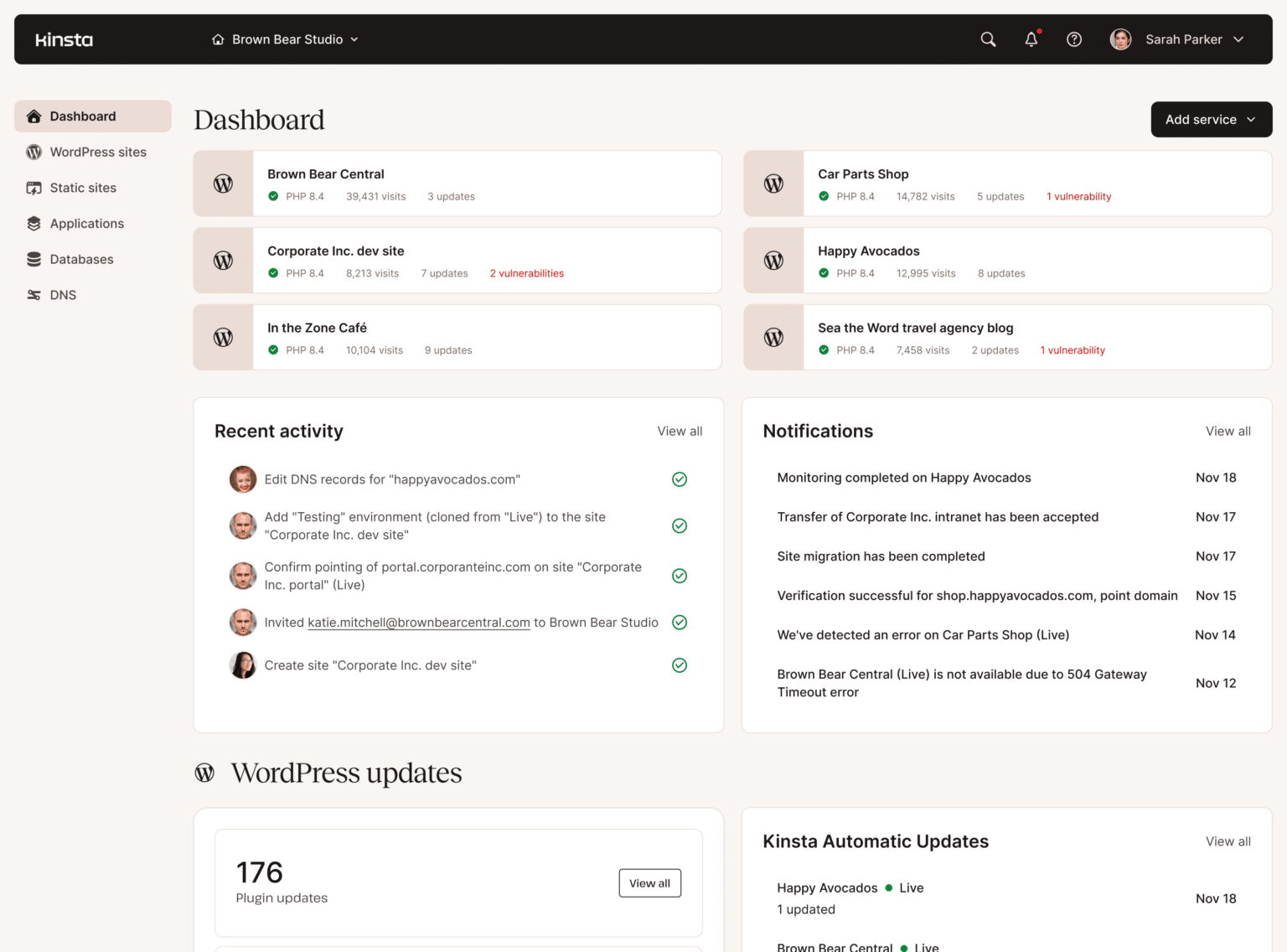
And the technology speaks for itself. The MyKinsta dashboard is elegant, easy to navigate, and provides quick access to all critical resources. While it feels familiar and complementary to the native WordPress experience, it adds a layer of clarity, focus, and simplification.
Source: Kinsta website
Matt is bullish on WordPress – not just as a CMS, but as the core of an application and workflow platform. This is especially valuable as organizations rethink their website strategies and what tech they need in their stack. Open source presents a conduit to broader, community-driven innovation.
“WordPress isn’t going away,” he said. “There's always going to be additional widgets and plugins that are going to manifest. That's the great thing about open source. I've been involved with it before, and I really love the business model of getting my community connected with the direction and roadmap of where the technology is going.”
Source: Kinsta website
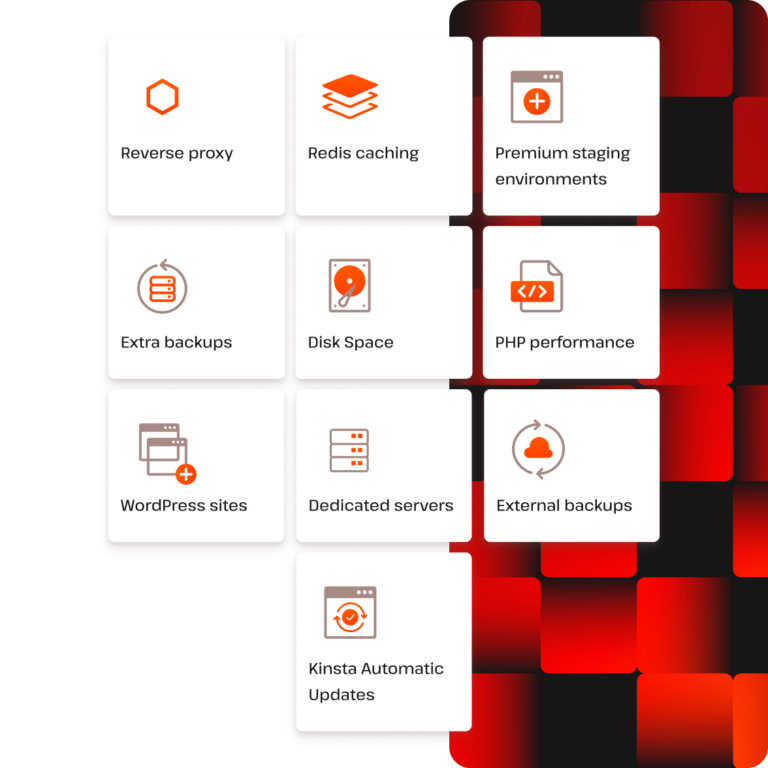
Complementing the plugin ecosystem is Kinsta’s growing library of premium add-ons, all accessible through an easy-to-use dashboard. This includes staging environments and dedicated servers, as well as advanced features like an nginx reverse proxy service or Redis in-memory data store for optimizing speed and performance.
Supporting enterprise compliance and digital sovereignty
Kinsta has its roots in the SMB and agency ecosystem, but Matt is seeing increased gravity from larger organizations wrestling with the diverse global challenges of compliance and governance across an evolving regulatory landscape. As he explained, these are key factors elevating the enterprise conversation.
“There are a lot of reasons why enterprises trust us, from global compliance and GDPR, SOC and ISO certification,” he said. “We’ve always been compliant because we want to be. And we do these things because it has an impact on the customer.”
Kinsta’s Trust Center is perhaps the best example of how the company is investing in securing infrastructure, organizations, and products within its scope. There’s a deep commitment to data privacy and compliance controls, and that’s evident through its many badges, which include a host of badges and benchmarks. It’s as solid as solid can be.
The other part of Kinsta’s enterprise delivery is architectural. By leveraging a containerized approach, deployments are isolated by design, helping to ensure security and performance. There are also granular permissions to manage large teams of users.
While Kinsta has the foundational components, Matt admits that their enterprise strategy is a long game, and that they’re still building momentum. “It takes time,” he said. “Moving from one hosting provider to another for enterprises is not something they're going to take lightly.”
“There are a lot of reasons why enterprises trust us, from global compliance and GDPR, SOC and ISO certification. We’ve always been compliant because we want to be. And we do these things because it has an impact on the customer.”
As social and geopolitical dynamics remain fluid, individuals, businesses, and even governments are seeking the safe harbor of sovereignty. This is surfacing in the re-emergence of local hosting, autonomous data centers, and even state-sanctioned LLMs like Canada’s MaplePT.
At our recent Boye & Company CMS Kickoff 26 conference, Karim Marucchi of Crowd Favorite – an enterprise WordPress agency – talked about the evolving narrative around digital sovereignty and how open source CMSes are playing a critical role. Cementing trust has been a lingering atmospheric challenge for WordPress and its open source brethren, which was tested during the widely publicized Automattic debacle of late 2024. The crucible had a chilling effect on the entire ecosystem and raised questions about the security of its software supply chain.
Hosting was a big part of the quagmire, particularly around WP Engine’s managed WordPress as a business model. But the introduction of the FAIR Package and other resources has brought relative calm to the seas, demonstrating how the community, like nature, finds a way.
Kinsta is at the center of this, both on the open source side of the equation, as well as the vital infrastructure that supports it all. As Matt noted, there are critical factors that enable digital sovereignty on a global scale. This is where hosting providers have to meet data location requirements while delivering on the tenets with transparency and performance.
“If you’re a global business with 1,000 websites and a bunch of micro sites, what are you doing about data center infrastructure and support for EMEA versus APAC versus the US?” Matt said. “On top of that, what can you do to ensure that we are training digital sovereignty in such a way that you're going to be able to ensure it?”
These are big issues facing people, brands, and businesses alike, so there are no easy answers. But as a hosting provider, Matt sees Kinsta's role as an important one for ensuring the growth of open source across a connected world.
The AI future: Powering observability, predictability, and more
AI is at the center of every conversation right now, specifically on the agentic frontier, and WordPress is no exception. From content creation to image optimization to workflow management, AI is having an evolutionary impact on workflow automation, SEO, and even the human-AI collaboration within the WordPress ecosystem.
The introduction of Model Context Protocol (MCP) as an adapter for intelligent agents is also enabling tools like WooCommerce to access website data and perform agentic tasks that are increasingly complex.
While much of the industry’s AI conversation has focused on these top-line features, the hosting layer is also forging a new path with some interesting use cases for AI-enabled optimization. As Matt explained, Kinsta is drawing its own blueprints around AI’s operational leverage, particularly with its potential to reinforce observability, predictability, and incident prevention.
“We see AI behind the scenes, so to speak,” he commented. “There are some great monitoring and capacity planning activities that could happen with AI. And of course, improving observability. But the predictive piece of what AI can bring to the hosting market is really, really exciting, like anticipating traffic spikes.”
And as complexity rises, Matt also sees AI automation as essential, not optional. “As you move into a platform play, you're moving into more complexity,” he said. “And with complexity comes a lot of headaches. If you don't automate the manual in a complex world, you don't necessarily have the skillset available in the workforce to be able to adapt to what those changes are. I think AI can be really critical in that world.”
Ultimately, the goal is to solve problems before customers ever feel the impact.
“What AI is going to allow us to do is fine-tune everything,” Matt codified. “We'll be able to solve problems before they exist or manifest themselves where the customer sees an impact.”
Why human support still matters (and is a revenue driver)
The conversation eventually turned to support, a quintessential part of the hosting experience. As a practitioner who has used a range of platforms to power my own WordPress sites, everything from GoDaddy to AWS, I’ve always relied on help in a pinch – especially in the days when accessing a cPanel and modifying MX records were rife with peril.
I reminded Matt about the legendary Rackspace, and how its “Fanatical Support” was once the industry standard. Of course, that was before the hyperscalers exerted significant competition and poor restructuring impacted its operations. In truth, it never recovered after Apollo’s failed buyout.
Matt believes support is one of the strongest threads for Kinsta. With a 98% satisfaction rating, it’s not just window dressing – it’s a core differentiator and, perhaps more importantly, a growth driver. Those are tall orders to back up, but he pointed out how they consistently bridge the gaps that other vendors miss.
“I hear a lot of talk about a customer having issues, whether it’s needing an upgrade, or moving a website somewhere, and it going into a little bit of a ‘black hole’ with their vendor,” he said. “And we've certainly differentiated ourselves in the space, not just providing excellent infrastructure and scalability and performance, but the people to back it up.”
That promise is acutely evident with Kinsta’s migration services. They make the move fast, easy, and free, with zero downtime. They also offer malware cleanup, enterprise-grade security, and the promise of instant speed improvements of up to 200%. They can expedite it in as little as 8 hours, or you can DIY using its Migrate Guru, a free plugin from WordPress.org.
As Matt pointed out, the real key to success and satisfaction is Kinsta’s dedicated team of in-house experts, who go beyond a simple lift and shift.
“I think a big differentiator is the fact that we have real humans on the other side of the line throughout the migration process, focusing on the scalability and performance of your site,” he explained. “We have experts in WordPress at Kinsta, and they’re here to handhold our customers throughout any kind of migration, as well as upgrades, backups, add-ons, security patches, and more.”
For Matt, Kinsta’s support philosophy is part of how the company is reshaping the industry and its expectations. Excellence, growth, and credibility are the central pillars of its promise – and that’s translating into growth.
“It becomes a revenue bond,” he said.
What’s next
As I said, websites are evolving in the AI era. Some question their long-term viability in a world where answer engines are hijacking traffic. But LLMs need websites, and brands need a stage for owning the customer experience. And for the vast majority of the market, the web continues to be the most important channel for transacting with the world.
But websites themselves have indeed transformed, becoming applications with a multitude of API-connected services and integrations. There’s more potential – but also more to worry about with security, compliance, and performance.
Looking ahead, Matt sees demand coalescing around more sophisticated lifecycle and workflow support – especially for teams treating their site as a true application platform. That implies tighter integration with broader delivery and release processes. These are places where Kinsta can have a meaningful impact.
“A lot of our customers want to be able to stage out specific environments,” he explained. “We're hearing things like, ‘How can we manage the ability to perform testing frameworks before we go into production?’ There's a big market need there, just with regard to the website as a critical component. It becomes the platform.”
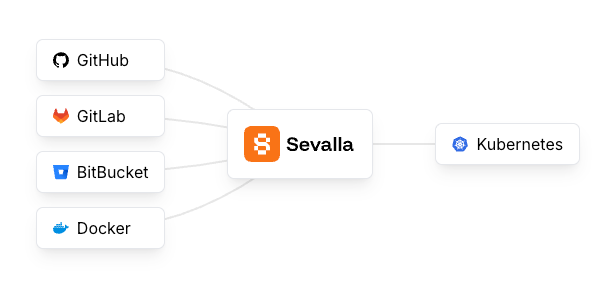
On the application front, Kinsta is also steadily innovating and expanding its core value, particularly on the development side of the ledger. In 2024, the company launched a PaaS solution called Sevalla that effectively eliminates the challenges of managing infrastructure for building and deploying apps. This includes all the essentials, from app and object storage to database and static site hosting – all with top-notch security certifications.
Source: Kinsta
What I love about Sevalla is how it simplifies the complexities of app hosting by mitigating the Kubernetes headaches (and trust me, they are numerous). You can deploy from any source, including public or private Git repos or Docker images and registries. It’s pipeline-centric, and appealing to DevOps teams looking to run their own stack with access to a global network of data centers and Cloudflare servers.
Why it matters
The hosting landscape is highly competitive, and commoditization is a persistent threat. But Kinsta’s WordPress focus – combined with its strong technical prowess and dynamite support model – is putting real wind in its sails, particularly with enterprises that are embracing WordPress and open source. Kinsta’s data center footprint is robust, and its security and stability offer a solid foundation.
WordPress agencies are a loyal bunch, and with so much riding on performance and customer satisfaction, having reliable partnerships is key. Kinsta seems to have a steady pulse on the community, driving more in-person engagement to help cultivate relationships. It’s a long-game strategy that appears to be paying off.
On the AI arc, WordPress is continuing to expand its offerings, both at the core level and via its plugin ecosystem. Kinsta’s own vision for applying AI behind the scenes – targeting predictive capabilities and incident prevention – could drive even greater value and differentiation as they manifest.
My recommendation:
Kinsta really delivers on a number of fronts, including ease of use and migration. Everything is here, from native Cloudflare CDN to analytics and monitoring. The documentation is really solid (I’ve checked it out in detail), covering all the essentials from site creation through setting up staging environments. There's a ton of runway for customization, so keep that in mind.
Managing your WordPress workloads should be a snap using the MyKinsta dashboard, which is lightweight and incredibly easy to use. Pricing is ultra-clear, with free tiers to test drive and flexible plans. Agencies have their own team-based pricing models, which makes it an attractive play.
With 24/7/365 expert support, Kinsta brings a “human touch” not just to support, but to every aspect of its business – and customer testimonials codify that. If you’re looking to kick up a new site or move your existing workload, put this host on your short list.
Upcoming Events

JoomlaDay USA 2026
April 29 - May 2, 2026 – Delray Beach, Florida
Be part of the Joomla community in one of the most iconic cities in the world! JoomlaDay USA 2026 is coming to Delray Beach, and you can join us for a dynamic event packed with insights, workshops, and networking opportunities. Learn from top Joomla experts and developers offering valuable insights and real-world solutions. Participate in interactive workshops and sessions and enhance your skills in Joomla management, development, design, and more. And connect with fellow Joomla enthusiasts, developers, and professionals from across the world. Book your seats today.
CMS Summit 26
May 12-13, 2026 – Frankfurt, Germany
The best conferences create space for honest, experience-based conversations. Not sales pitches. Not hype. Just thoughtful exchanges between people who spend their days designing, building, running, and evolving digital experiences. CMS Summit brings together people who share real stories from their work and platforms and who are interested in learning from each other on how to make things better. Over two days in Frankfurt, you can expect practitioner-led talks grounded in experience, conversations about trade-offs, constraints, and decisions, and time to compare notes with peers facing similar challenges. Space is limited for this exclusive event, so book your seats today.

Umbraco Codegarden 2026
June 10–11, 2026 – Copenhagen, DK
Join us in Copenhagen (or online) for the biggest Umbraco conference in the world – two full days of learning, genuine conversations, and the kind of inspiration that brings business leaders, developers, and digital creators together. Codegarden 2026 is packed with both business and tech content, from deep-dive workshops and advanced sessions to real-world case studies and strategy talks. You’ll leave with ideas, strategies, and knowledge you can put into practice immediately. Book your tickets today.
Open Source CMS 26
October 20–21, 2026 – Utrecht, Netherlands
Join us for the first annual edition of our prestigious international conference dedicated to making open source CMS better. This event is already being called the “missing gathering place” for the open source CMS community – an international conference with confirmed participants from Europe and North America. Be part of a friendly mix of digital leaders from notable open source CMS projects, agencies, even a few industry analysts who get together to learn, network, and talk about what really matters when it comes to creating better open source CMS projects right now and for the foreseeable future. Book your tickets today.