Beyond the Gate: CMS Kickoff 26 Explored the AI Frontier While Focusing on Fundamentals


Once again, the industry’s only event dedicated to content management offered a quantum singularity of collaboration – and while AI remains the focal point, an emphasis on structure, semantics, and ontologies brought a grounded perspective to the conversation.
Highlights
- The fourth annual CMS Kickoff 26 took place in St. Petersburg, FL, January 13–14
- The event was hosted at The James Museum of Western & Wildlife Art
- CMS fundamentals were a core focus as AI reshapes the content landscape
- Standout perspectives were offered on AI search, ontology, structure, and semantic clarity
- Agencies and practitioners shared insight about AI's impact on their roles and businesses
- Roundtables and workshops offered collaboration across key topics
Stargate first arrived on Earth in 1994, expanding on the popular trope that aliens – not humans – actually constructed the Great Pyramids of Giza. More than burial sites, they served as landing pads for enormous spaceships, thus explaining those ancient feats of engineering.
Along with their massive interstellar craft, this advanced race could traverse the cosmos using a connected network of “stargates.” These circular portals were wormholes, shortcuts in the fabric of time and space that could instantly transport you to distant planets in seconds.
As a self-described sci-fi fanboy – as my wife says, put “star” in front of it, and I’m in – the Stargate franchise felt like the perfect motif for my opening keynote at this year’s Boye & Company CMS Kickoff 26.
If your nerd detector is flashing on high alert, I make no apologies. But one can’t argue with the cultural reach of this franchise. Known across the globe, Stargate is a deep repo of world-building content. The original film spawned over 350 episodes across three separate TV series – and yes, there’s a new one on the way.
In the Stargate mythology, this ancient technology for zooming across the galaxy has been mysteriously lost to the ages. When reactivated by modern humans, it conjures wonder and excitement at the possibilities for mankind.
There’s just one problem: we can’t see what’s on the other side. The scientists who have unlocked it have no idea what lies beyond its shimmering circle of fluidic light.
But they step through anyway. Humans are curious like that. It’s in our nature to explore, to push boundaries, to connect things before understanding the consequences.
In many ways, Stargate’s plot is closely aligned to our experience with artificial intelligence – a technology that has its roots in the mid-twentieth century. Even the concept of a modern chatbot was first envisioned by MIT’s Joseph Weizenbaum in 1966, long before ChatGPT was a twinkle in Sam Altman’s eye.
Over the last two years, AI rippled across every tool in the Martech Supergraphic. There’s been convergence. Fragmentation. Confusion. A palpable fear of displacement. I spoke to numerous developers and marketers in 2025 who said, “I’m not sure if I’ll have a job next year.”
As the celebrated author, academic, and podcaster Brené Brown recently observed about AI, our nervous systems aren’t ready for the level of uncertainty we’re facing right now. In essence, we’re all stepping through the stargate, unable to see what’s on the other side, hoping to land on our feet.
But there’s simply no guarantee of that.
That’s why CMS Kickoff remains such a vital resource. Now in its fourth year, this edition offered a glimpse at what’s ahead by looking back at 2025, when AI’s weight could be felt across every facet of our work as vendors, agencies, and customers adapted to a new reality.
The right space for exploring the past – and the future
As its masterful conductor, Janus Boye once again orchestrated the right mix of topics to provide a well-rounded format, enriched by the trends that brands, consultants, and practitioners are focused on and struggling with.
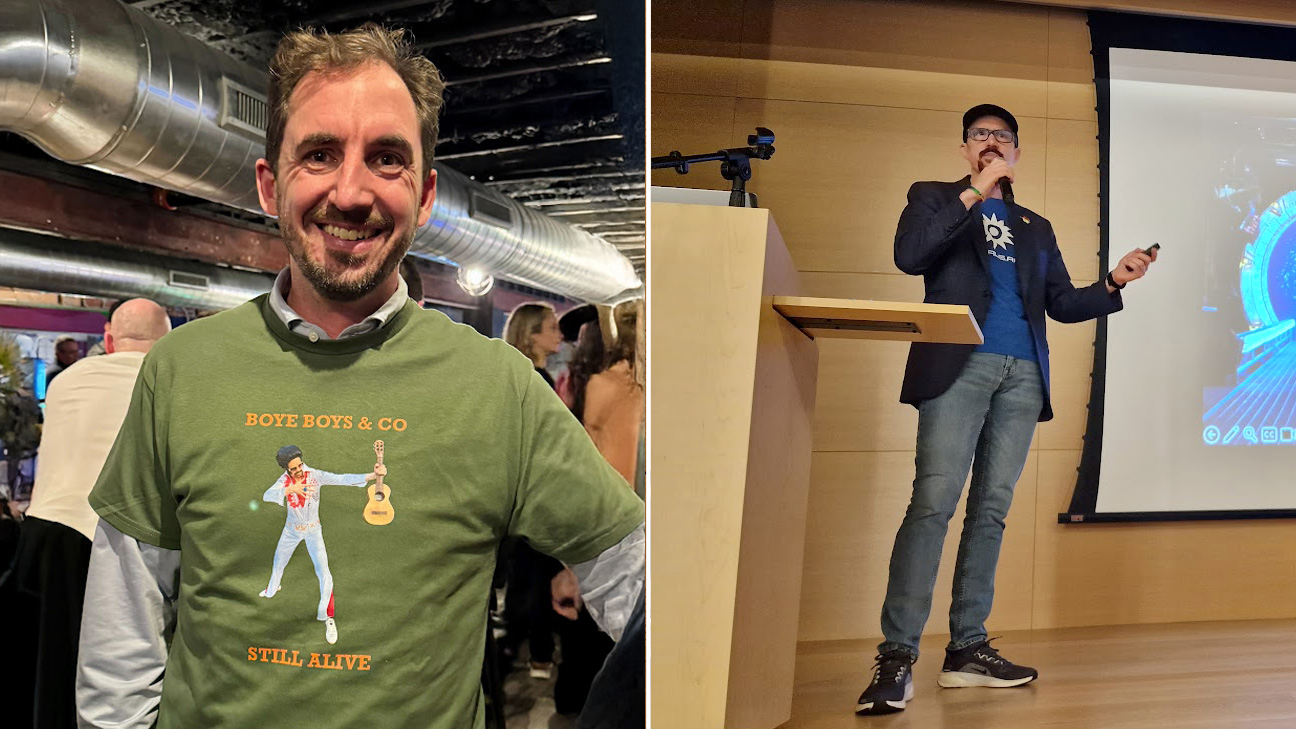
(Left to right) Janus Boye and Matt Garrepy at CMS Kickoff 26. Source: Marta Cukierman
Held for the second year at the spectacular James Museum of Western & Wildlife Art in downtown St. Petersburg, Florida, the event offered both open space and intimacy – a quiet solitude amidst the splendor of sculpture, paintings, and tapestry that explore the iconic mythology of the American cowboy and the plight of the continent’s indigenous peoples.
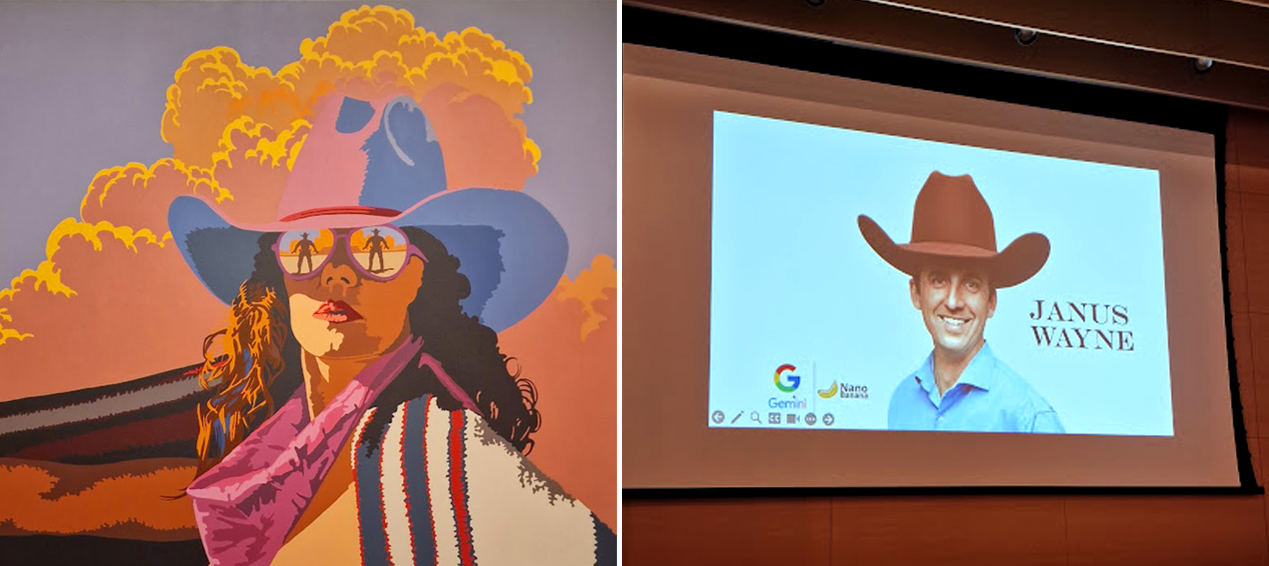
Hat tricks in the AI rodeo: Real artwork from the James collection with an AI-doctored image
Museums are, themselves, content management systems. They rely on structure, organization, and a browsable layer of experience for patrons. But they’re also transforming on the digital frontier. To that end, Stephanie Adamo, director of marketing and communications at the James, gave attendees an illuminating review of the museum’s recent website modernization.
Source: Janus Boye and Marta Cukierman
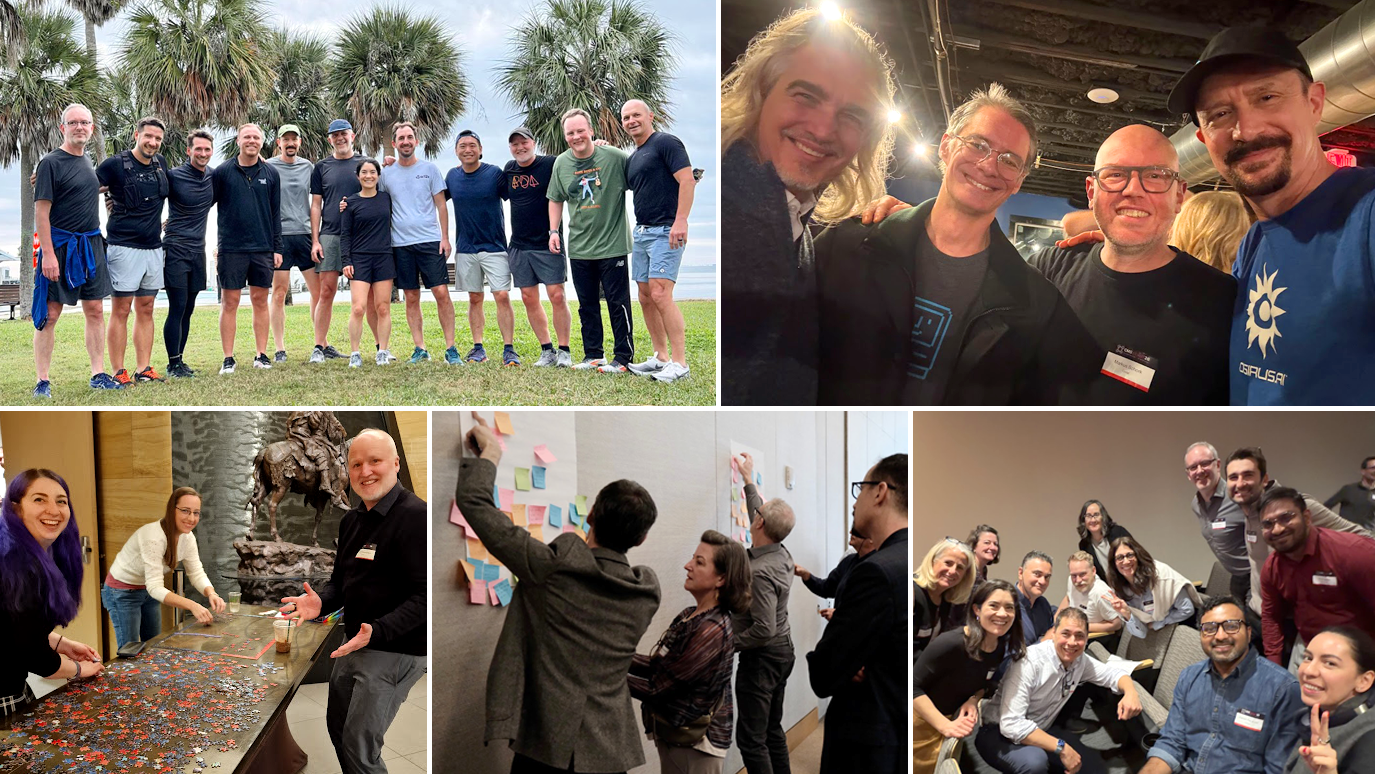
In typical form, the Boye & Company experience concentrates on personal engagement, networking, and interaction. There are no booths, high-pressure sales sessions, or “speed dating” with vendors. Instead, attendees joined morning group runs, socialized at local breweries, and even helped piece together a physical puzzle between sessions.
Yes, the substance of this event was designed to educate and inspire. But at its heart, it put people over products and focused on upgrading the most important interface of all: the human one.
Less hype, more… hope?
Maybe. It certainly felt more upbeat in certain corridors, particularly the enthusiasm for AI to solve real problems with more mature, high-utility agents in production. Along with that bleeding edge, there was an outsized focus on core fundamentals – the tenets of content management that are arming AI for its next act.
Collaboration is always a big part of the agenda, and that further enhanced the connections among attendees. Along with structured talks, there was a bevy of roundtable discussions that covered a relevant gamut. These spaces allowed for more organic discussions on everything from design systems to SEO – giving attendees a real voice in the conversation.
I do feel that 2026 is a pivotal year for open source – and that's not hype. After a year that saw the shakeout of the WordPress/WPEngine debacle, securing the software supply chain has become a critical topic. And as digital sovereignty and data ownership become more pervasive in the AI verisimilitude, open source projects are realizing gravity and growth in the digital experience landscape.
When it comes to the evolution and impact of AI, ROI was discussed around lunch tables and in quiet corners. As Karla Santi observed in her 2025 analysis of agency performance metrics, budgets got tight last year as customers focused on smaller projects – all while expecting more for their dollar. There’s a growing awareness of what AI can do, and that’s applying a new kind of pressure on agency models, vendor licensing, and the general perception of value.
Hype is always a big factor in tech. But having a community of voices to provide perspective is one of the key benefits. That was the feedback from several vendors and newcomers that I interviewed, including Sara Faatz of Progress, Maria Bishirjian of Brightspot, Byrna Dilman of Agility CMS, and Lukas Martinak of Kontent.ai:
There were so many highlights at this year’s event. Here’s a glimpse of what I saw, and why each presentation stood out. If you’re ready to peer beyond the gate, keep reading.
Ambient AI powers enterprise content operations
Source: Janus Boye and Marta Cukierman
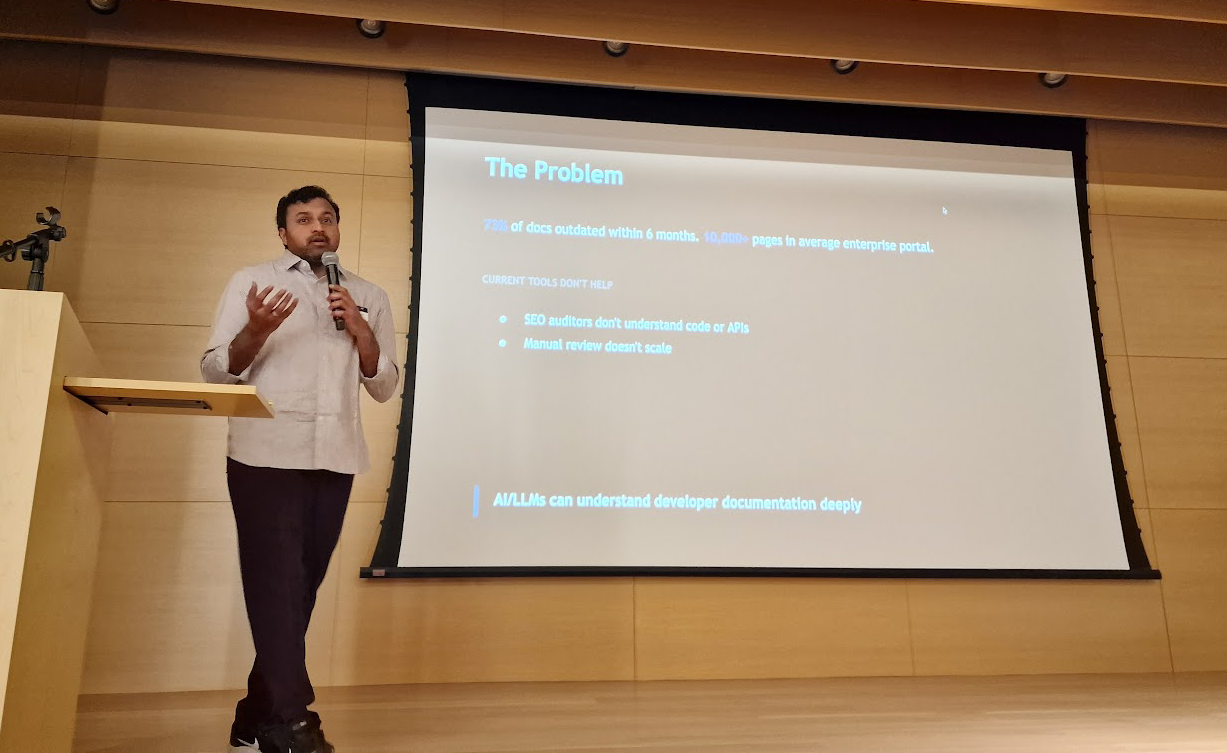
As Amazon’s Rakesh Pasupuleti said, “AI understands your technical docs better than anything.” In his session, Enabling Ambient AI for Enterprise Content Operations, he explored the real challenges that enterprise content teams face in maintaining quality across disconnected tools and workflows.
To get there, he leaned on the unobtrusive pillar of ambient AI – which acts in the background to listen, monitor, and process activities to deliver efficiency. In his live demo, Rakesh harnessed an AWS S3 service to showcase how ambient AI could function quietly behind the scenes, analyzing docs, guiding authors, and reducing the friction content teams usually wrestle with.
Where many AI talks at conferences lean poetic on the promise, Rakesh made it real – and what really resonated wasn’t the functionality, but the practical framing. By integrating into workflows instead of disrupting them, this kind of continuous guidance can help users move from reactive audits to proactive results – which can impact quality in measurable ways.
For more details on Rakesh’s AI-enhanced content management innovation, check out his website.
Did the ‘shift’ hit the fan for agencies in 2025?
Source: Janus Boye and Marta Cukierman
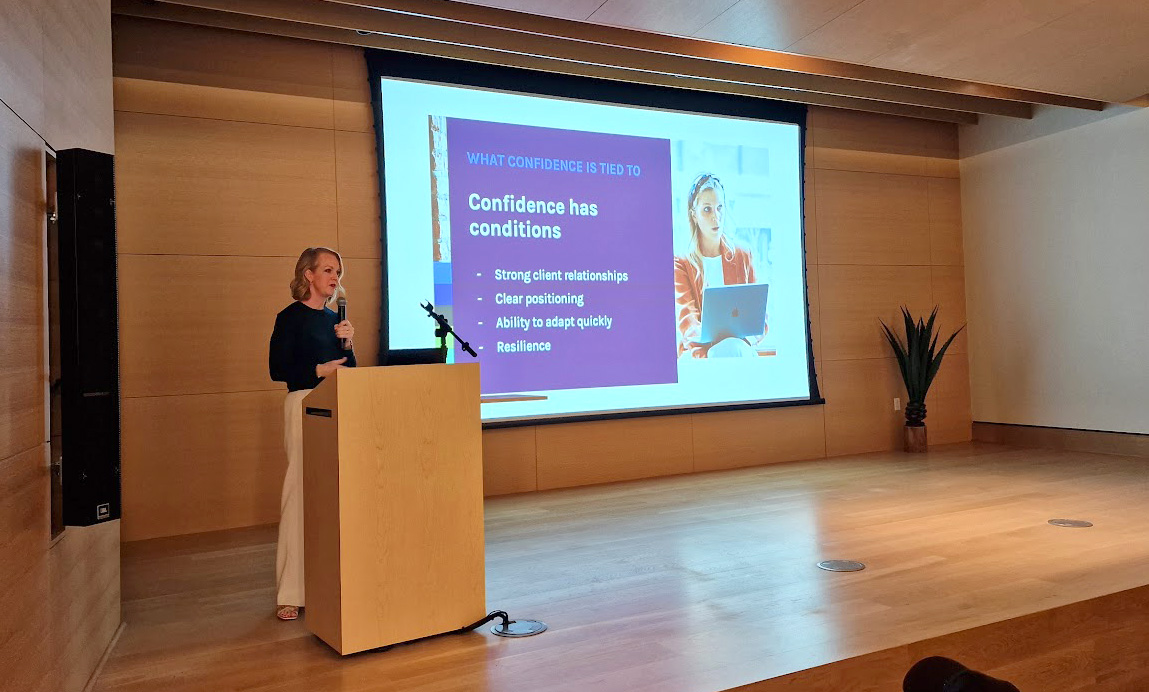
For some, it did – a theme I heard from agencies across the many vendor events I attended last year. The struggle was real, and Blend Interactive’s Karla Santi crystallized the impact in a real-world, no-BS view of how she – and other shops like hers – actually lived through 2025.
In her talk, Shift Happens: What’s Really Changing for Agencies in 2026, she presented an earthshaking deck of hard data and real conversations, mapping out the year not as a tech utopia but as a gauntlet: pipelines softened, deals slowed, and budgets got leaner. Projects were unbundled as clients opined for smaller scopes and faster turnarounds.
As she said, it was “Death by a thousand paper cuts,” and the human toll – fatigue, churn, anxiety – was as real as any data point she shared.
But within that honesty was a thread of resilience. She didn’t just catalog the pain, she spotlighted how agencies are adapting partnerships, rethinking business models, and investing in agility. 2026 may carry its own turbulence, she admitted, but the people who leaned into their relationships are already shaping stronger paths forward.
Most potent was her refrain that humans win. Not because tech fails, but because human adaptability, insight, and connection remain irreplaceable. In an AI-saturated narrative, Karla reminded us that “agency” is still about people – their creativity, their judgment, and their ability to navigate ambiguity.
Using CMS to ground AI and enable the content supply chain
Source: CMS Critic
I spoke at length with Hexagon’s George Chang at Sitecore Symposium back in November, when agents were taking center stage. As an MVP, he offered some deep perspective on how things were evolving – and the potential impact on his own content practice.
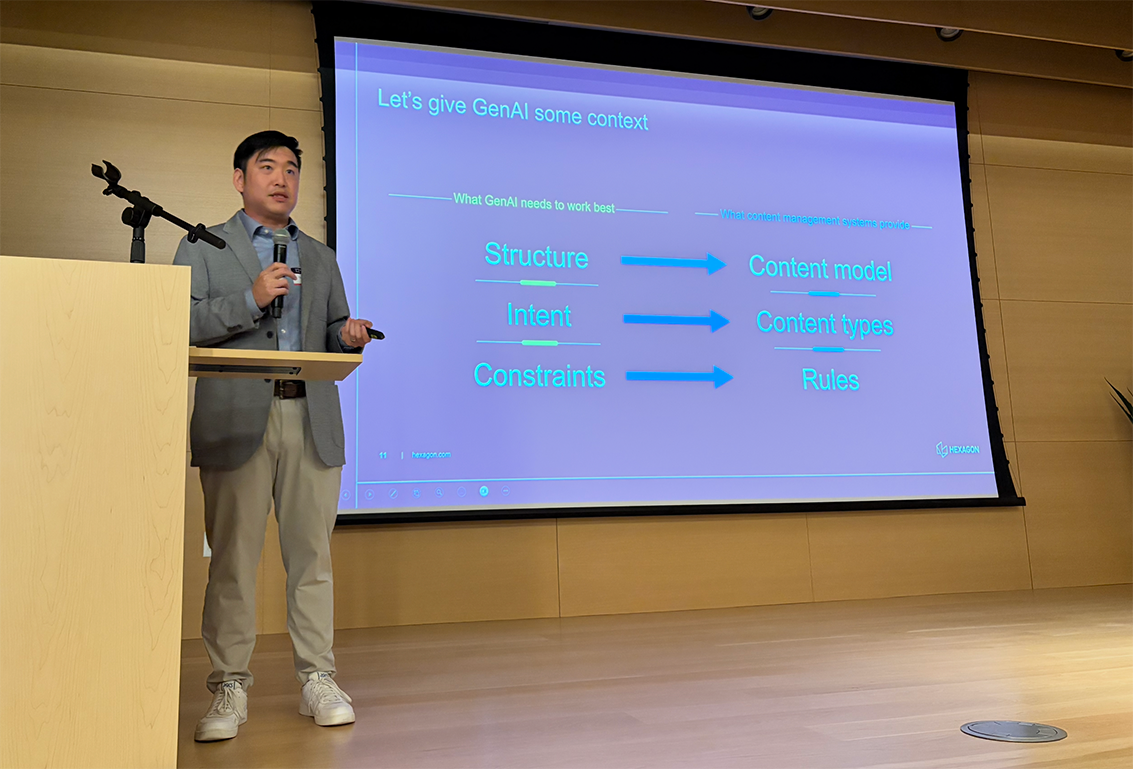
In his presentation on AI-Enabling the Content Supply Chain, we were treated to a masterclass in practicality. Rather than hyping generative text as a silver bullet, he surfaced the core operational challenge: AI produces content fast, but without structure, that speed creates chaos. His focus was on grounding AI in the CMS itself – using templates, schemas, and rules defined by humans so that AI starts with structure, intent, and context.
As George observed, “marketers aren’t doing a lot to engineer good prompts.” As such, they get output that misses the mark. By using AI to get from 0 to 1 – and keeping humans firmly in control of review and publishing – organizations can reduce friction, improve consistency, and make better use of time without sacrificing governance or quality.
Using his company’s MAESTRO product launch page (an all-digital metrology system), he offered a real example of AI-enabled content creation workflow. Perhaps the most memorable takeaway was his reframing of AI as a scaffold for human expertise.
AI search: the explosion (and implosion) is real
Source: Janus Boye and Marta Cukierman
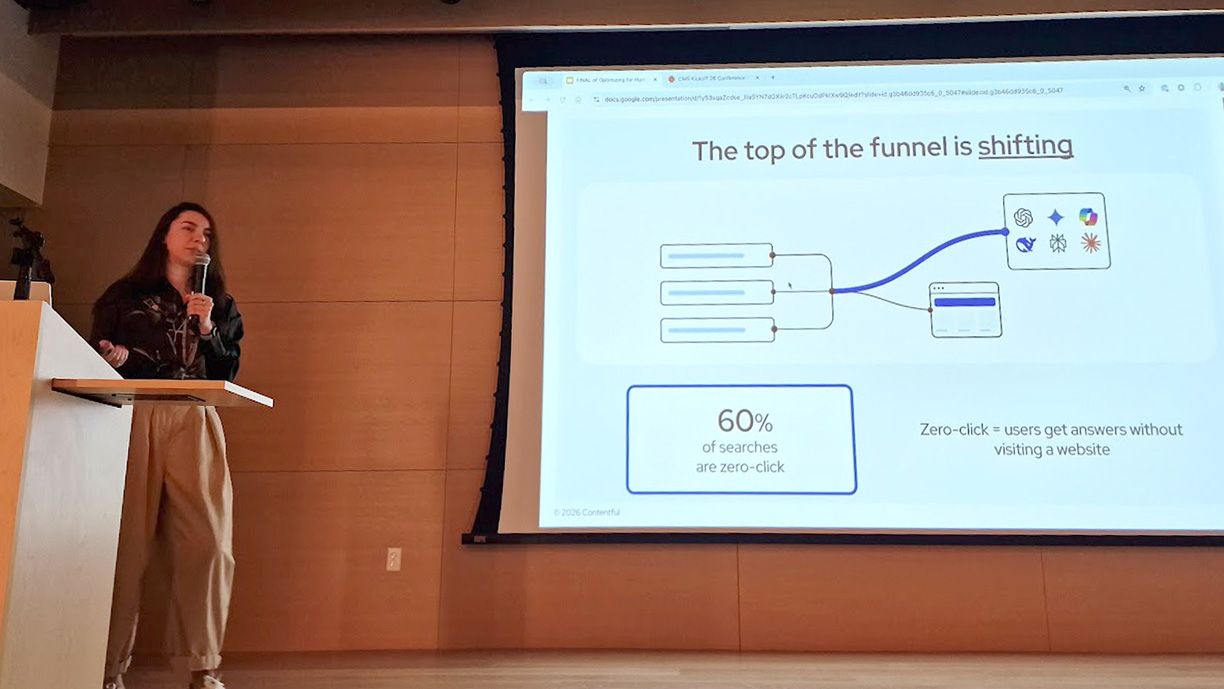
Contentful’s Nika Karliuchenko gave a standout session, digging in at the nexus of content strategy and AI evolution. She gave a stark account of how search paradigms have exploded, detailing the traffic “implosion” that occurred between March and April of 2025 – when AI search models altered how people find, interpret, and interact with content.
At the heart of her talk was a core assertion: that clarity and entity modeling have become paramount in this AI era. Using TELUS as a case in point, she showed how a single source of truth – a unified, semantically rich repository – enables not just search and discovery but also AI understanding and operational analytics.
In the AI world where ambiguity is the enemy, she contrasted deterministic use cases with clear, rule-based results against exploratory ones – where open-ended queries are driven by semantic interpretation.
The broader takeaway? If AI is going to help us scale content relevance and discovery, organizations have to move away from fractured data and start building frameworks where meaning is explicit, relationships are clear, and content carries real structure.
When machines get better, what does it mean for people?
Source: Janus Boye and Marta Cukierman
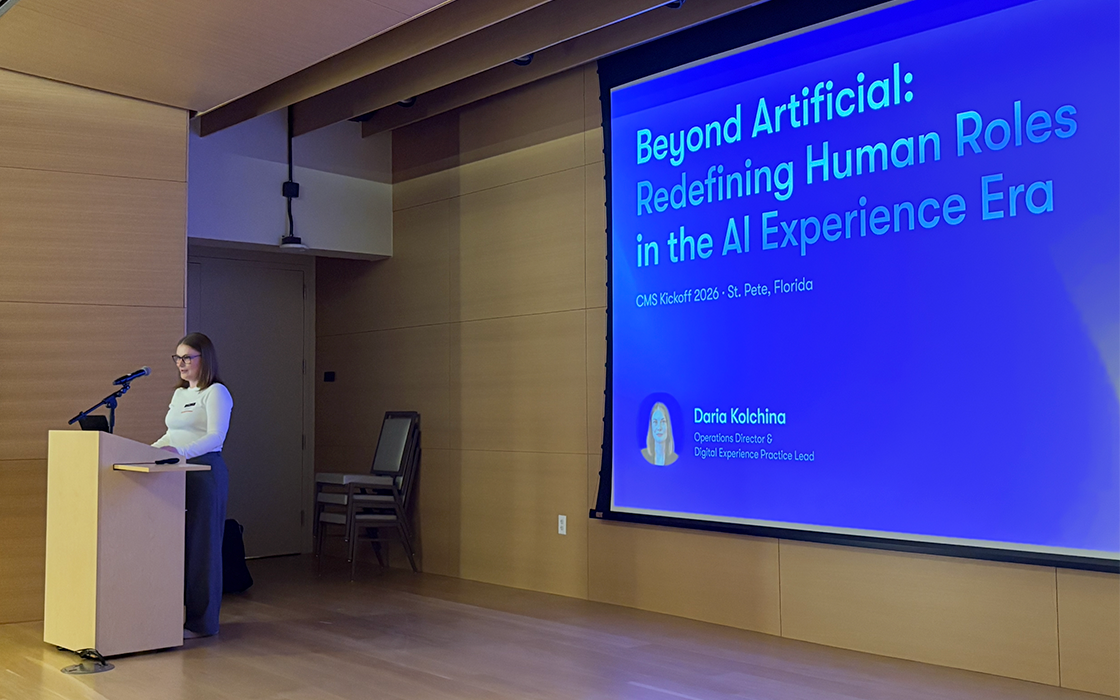
It’s a big question, and First Line Software’s Daria Kolchina approached it with a philosophical and pragmatic lens on the human dimension of AI acceleration. Rather than tech specs, she focused on people-first engineering – what it means when machines start doing tasks humans once owned. Her core thesis: AI amplifies intelligence, but humans define direction.
She laid out how content-aware personalization (engineering that adapts based on context, not just rules) will define the next wave of CMS evolution. At the same time, she cautioned that if we lose sight of human intent, we risk creating systems that are faster but not better.
In a moment where tool hype often eclipses craft, Daria reminded us that people and teams are the future of AI-powered systems. AI amplifies intelligence, but humans define direction.
Agentic reality, not magic bullets
Source: CMS Critic
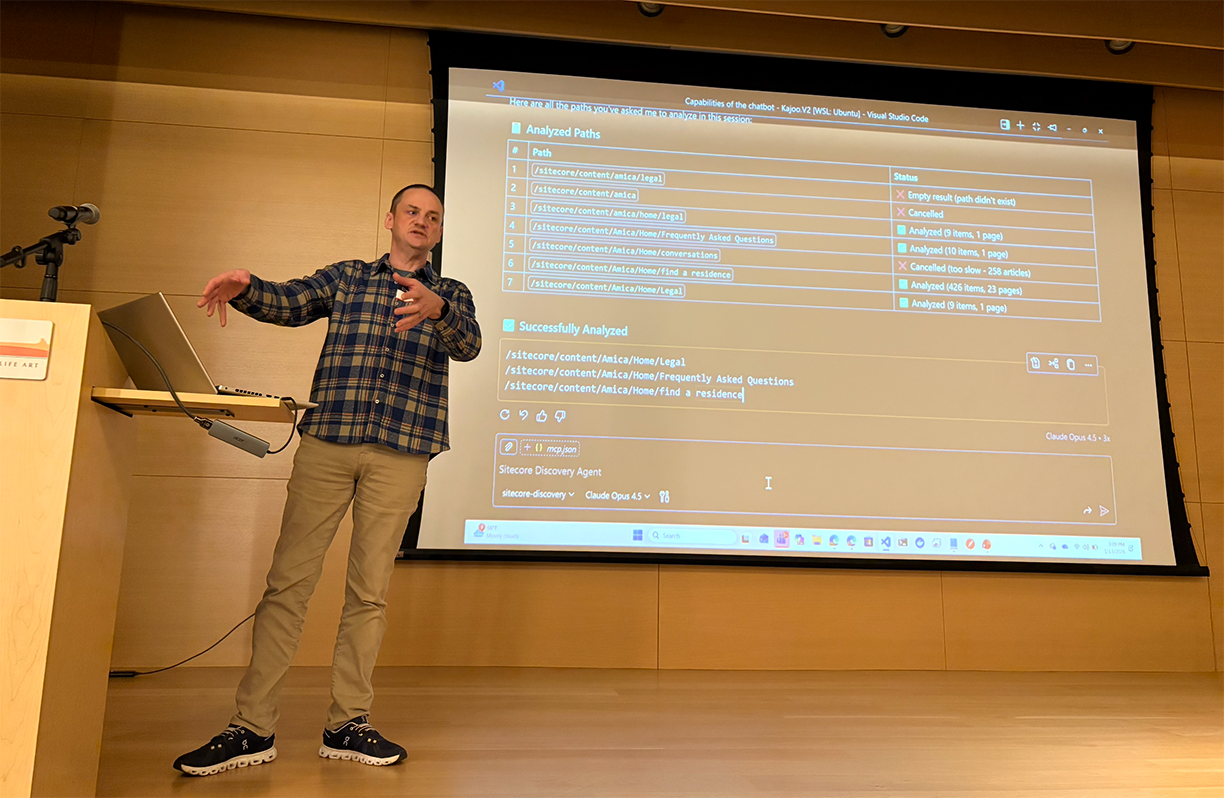
As the chief brain behind Sitecore XM Cloud (now SitecoreAI), Andy Cohen has long been playing at the frontier – and AI is no exception. He’s written extensively on CMS Critic about the transformation that DXPs are experiencing, and how leaders need to adapt to the forthcoming possibilities of agent-to-agent personalization.
At this year’s Sitecore Syposium, migration was front and center. While gains have been made around automation, Andy’s session challenged the idea that AI magically solves everything. Using Kajoo’s agentic workflows as a live demo, he showed how AI can accelerate discovery, analysis, and execution – but why complexity still requires humans.
What made the session land was Andy’s insistence on realism. AI can surface patterns, speed up decisions, and automate grunt work — but it can’t rewrite history, fix legacy content debt, or resolve organizational ambiguity. The demo made clear that agentic AI works best when it’s guided, constrained, and paired with human judgment at key decision points.
In the broader Kickoff narrative, Andy reinforced a recurring theme that AI is an accelerant, not an absolution. It makes good systems better and broken systems louder. Migration, he reminded the room, is always contextual. Even with agentic AI in play, there’s no such thing as a perfect migration – and our human work still matters.
The AI-composable roadmap: a smarter, faster path to success
Source: Janus Boye and Marta Cukierman
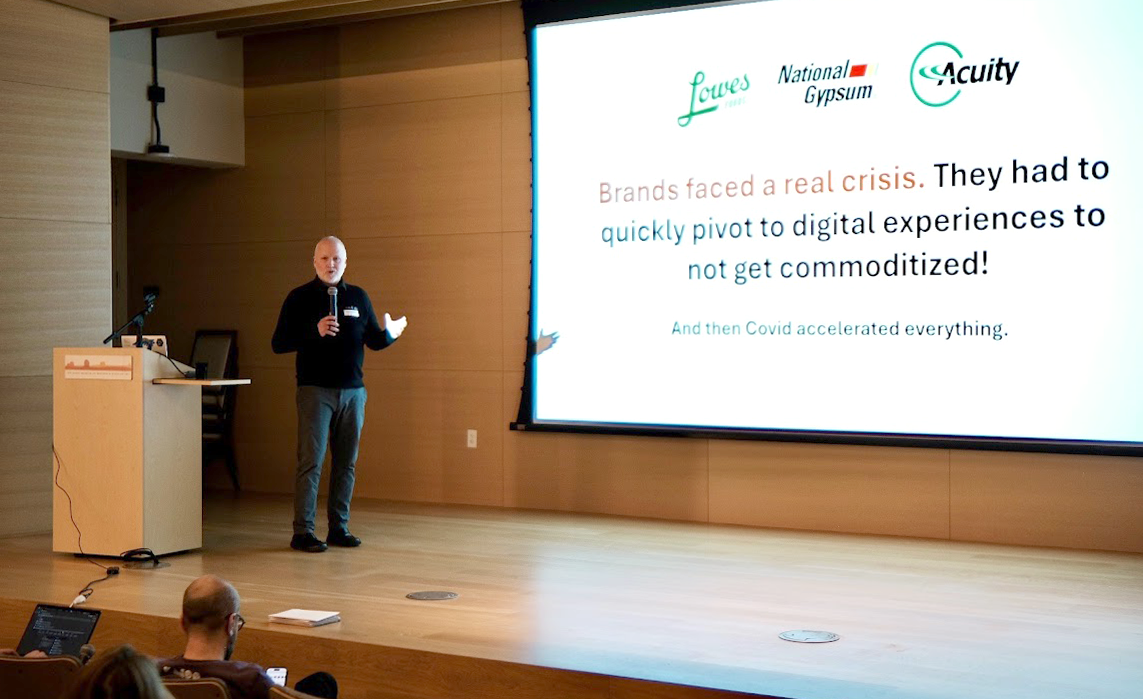
RDA’s Chad Solomonson is a futurist who’s actually living in what’s next. A Sitecore and Storyblok MVP, he has both the legacy and headless pedigree to inform his digital world view – and as he told us on stage, composable has won the debate. I tend to agree, even if the word has gotten a bit conflated (blame marketing).
Drawing on retail and enterprise examples, including a real-world use case for NRF (the National Retail Federation), Chad showed us how composable stacks give organizations the flexibility to achieve edge features like content personalization. This also includes integrating AI wherever it creates value, rather than forcing AI to conform to monolithic limitations.
One standout example was how Instacart and similar players have changed expectations around conversational interfaces and content reuse. Chad framed content as a human-generated asset that can now be remixed, repurposed, and accelerated through AI – provided it’s structured correctly. Vectorization, layering, and proximity to the customer all matter more than ever.
Chad’s closing questions hit hard: How many layers sit between your content and your users? Is it AI-ready? Not just indexed, but understandable? Chad’s talk was a reminder that AI is a game-changer, but composability is the enabler.
Trust, voice, and reaching the unreachable
Source: Janus Boye and Marta Cukierman
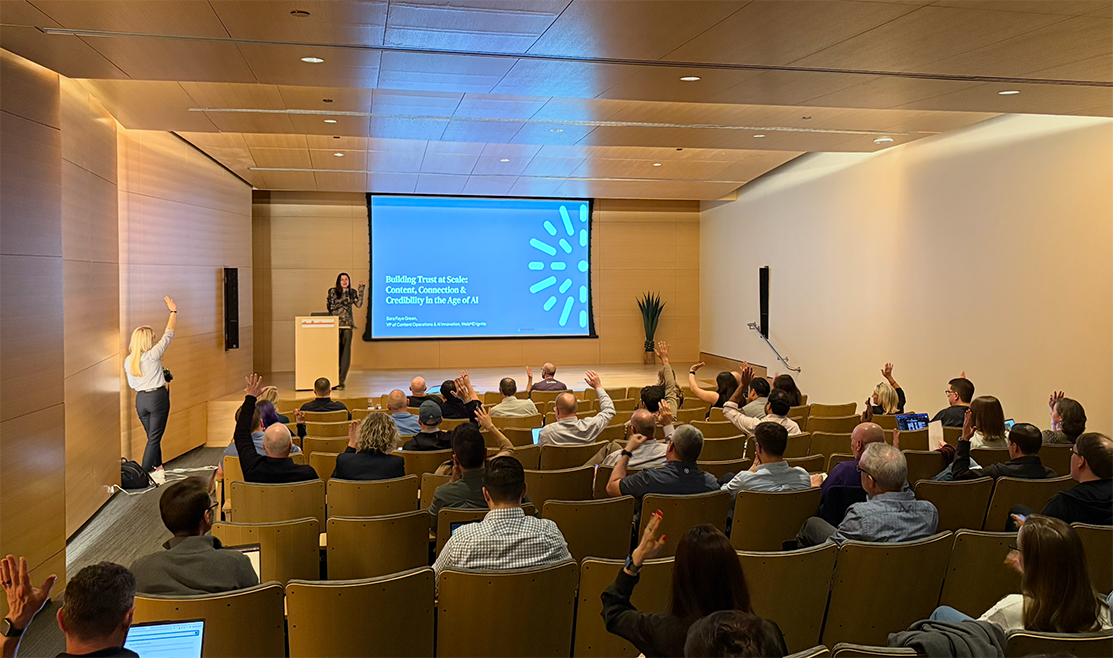
I first saw Sara Faye Green share some of her powerful, relatable experiences at our CMS Experts meeting in New York last May. Once again, she zeroed in on what builds trust – not just as a marketing abstraction, but as a lived experience for users navigating healthcare content. She explored how voice, tone, and clarity directly affect whether people believe what they’re reading, especially in moments of vulnerability.
Using her WebMD Ignite experience as a case study (the side of WebMD that serves as a growth partner for healthcare organizations and patient education), she unpacked the complexity of managing a deeply layered ontology while still making content accessible to diverse audiences – including blind users, non-native speakers, and people with limited health literacy.
What I loved about Sara’s deeper message was its humanistic intentions and how AI is enabling us to reach people who might otherwise never be reached with critical information. When paired with ethical intent and rigorous structure, it becomes a tool for inclusion.
Building AI agents that serve the customer experience
Source: Janus Boye and Marta Cukierman
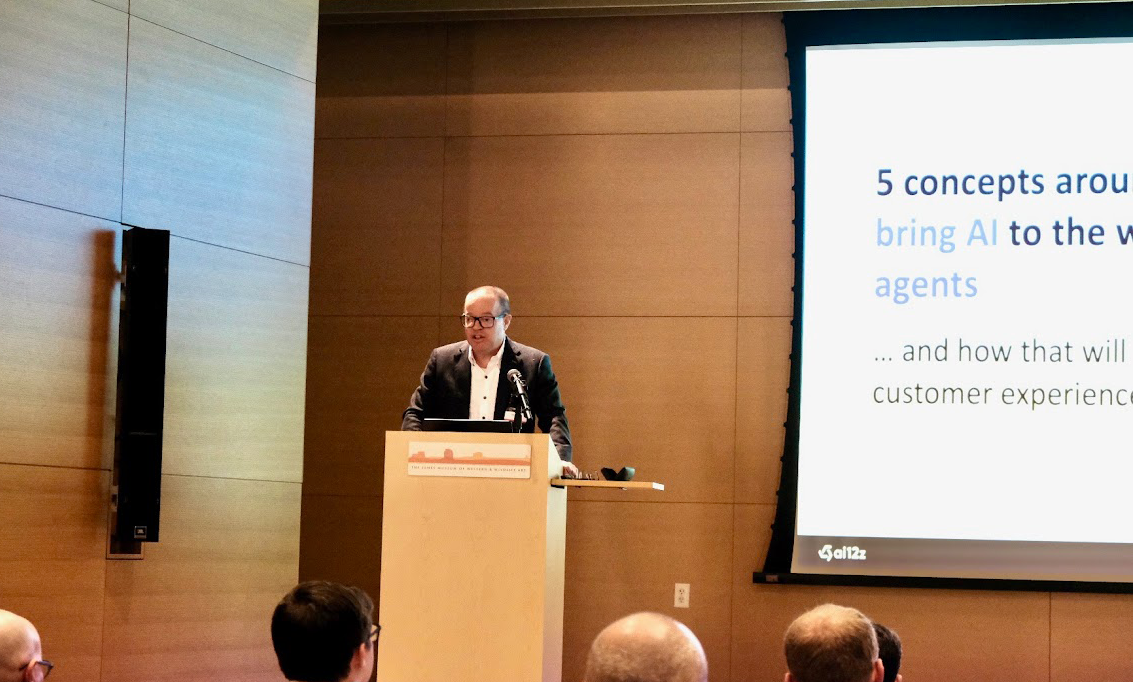
I’ve said it before: Bill Rogers is CMS royalty. Since founding Ektron (now part of Optimizely), he’s been all-in on revolutionizing AI, from his previous startup Orbita to his latest buzzworthy creation, ai12z. Bill framed his talk around an urgent reality: time is the real enemy. AI is no longer about novelty – it’s reshaping customer expectations, and brands must evolve their once static websites and digital experiences into real-time interactions.
As he said, tools don’t magically make AI “work better.” People do – through configuration, governance, iteration, and intent. The real opportunity lies in using agents to reduce latency between insight and action, especially inside complex CMS environments. This is where agents can act as “digital concierges” that not only execute tasks but also move customers through the journey.
As Bill reminded us, AI effectiveness isn’t about raw capability, but about alignment. When tools are tuned to real workflows, time might just stop working against you.
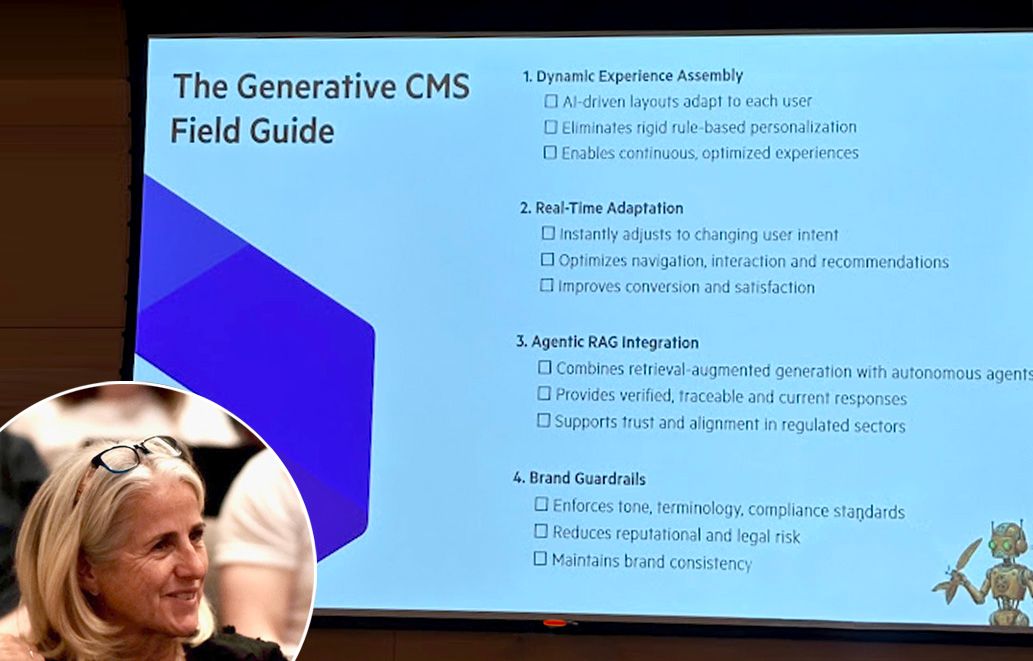
Cracking open the ‘Generative CMS Field Guide’
Source: Janus Boye and Joanna Ola
I caught up with Progress’s Sara Faatz in December, when we discussed her company’s strategic decision to acquire Nuclia, which is powering its new Agentic RAG offering. This put the Progress on Forrester’s DXP grid, adding wind in its AI sails.
Sara’s talk was one of the most structurally grounded sessions. Harnessing Progress’s four decades of CMS evolution as backdrop, she mapped how we are moving from systems of record to systems of generation – where content is no longer static but continuously assembled. This is critical in a world where users expect interactions that feel relevant, conversational, and deeply contextual.
Rather than hype, she offered a checklist: real use cases, clear governance, defined inputs, and measurable outcomes. As she said, Generative CMS is about enabling adaptive, context-aware, and compliant experiences at scale, and she provided four clear stages – RAG search, conversational assistance, dynamic and adaptive pages, and hyper-personalized journeys – to get there.
Can a traditional CMS still cut it in this new world? Sara’s session dug into that question while building a thesis on the event’s foundational themes. But it also reminded us that without structure, generation collapses into noise. With it, CMS is a living system – one governed by trust.
Why digital sovereignty matters more than ever
Source: Janus Boye and Marta Cukierman
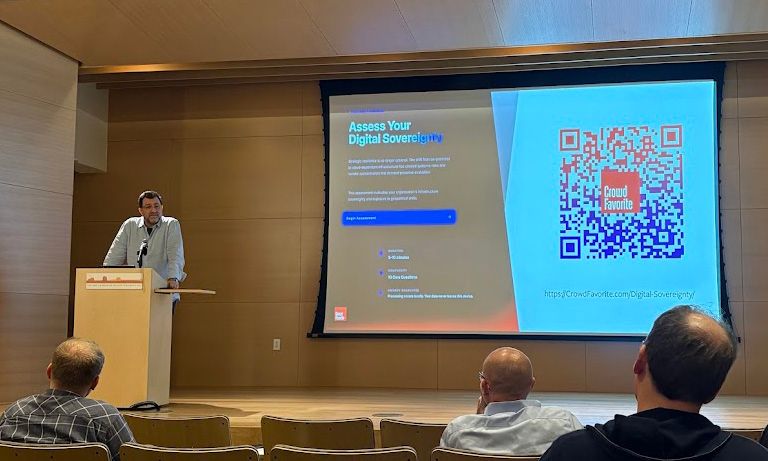
I worked closely with Karim Marucchi during 2025’s WordPress meltdown and the introduction of the FAIR package. He’s been a fervent ambassador for validating the enterprise potential of open source and securing the software supply chain.
As Karim pointed out, we have a problem in tech: fragmentation. In many ways, AI is amplifying the issue, and governments and organizations – driven by regulation, geopolitics, and public sector priorities – are seeking the safe harbor of data ownership and digital sovereignty.
I recently spoke with CoreMedia’s Sören Stamer about this topic and how it’s altering our digital trajectory. As Karim pointed out, everything from surveillance tech to data mining is compromising our trust while impacting efficiency and user experience.
This is no longer just the domain of European regulatory bodies, nor is it simply “compliance theater.” Global brands and organizations need to understand the landscape to make more practical decisions about CMS and other apps across their stack.
To move this conversation forward, I'll be joining Karim, Janus, and other open source industry leaders at the first-ever Open Source CMS 26 Conference in October.
The need for speed
Source: Janus Boye
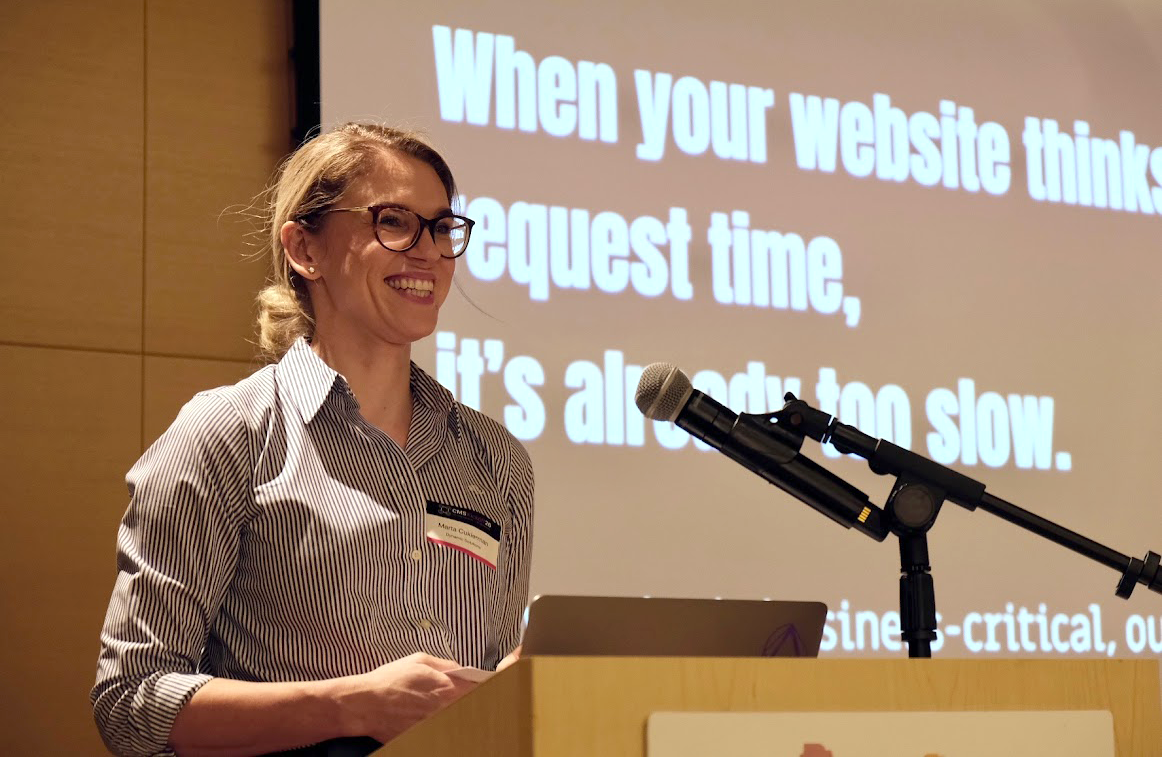
Marta Cukierman has been a staple at our Boye & Company events, and this time, she got real about the optics and metrics of website performance. This is the stock and trade at the company she co-founded, StreamX, which is a DX mesh for Adobe XM that unifies and accelerates performance.
At the heart of Marta’s talk was latency. Despite CDNs and other tooling enhancements, why does it continue to stymie modern CMS and composable architectures? What I found intriguing was the notion of “Continuous Materialization” as a new framework for speed, shifting work out of the request path and continuously preparing a website's state ahead of user traffic.
With our deep reliance on caching and runtime decision-making, perhaps it’s time to re-examine the slowdown through a different lens. With this new mindset, Marta submits that teams can reduce complexity, improve predictability, and make performance a property of the system – rather than a constant tuning exercise.
‘What You Model Is What You Get’
Source: Janus Boye and Marta Cukierman
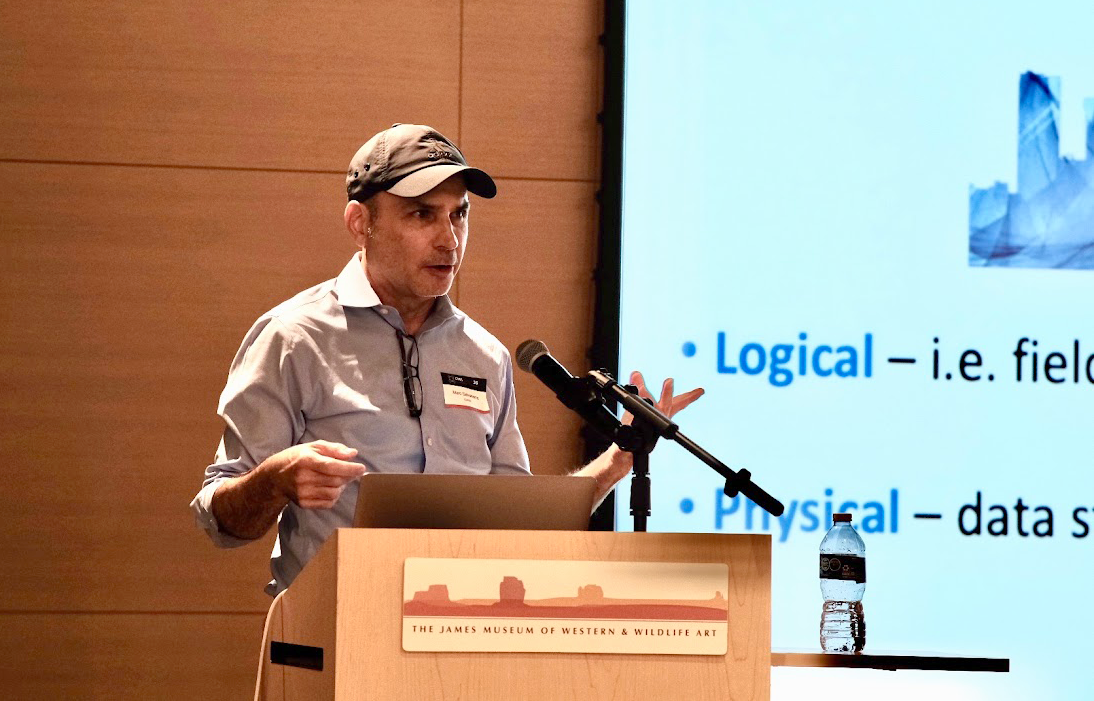
When I was playing Oktoberfest last July with Mark Salvatierra in Mountain View, California, we were talking about sausage, beer, and ontology. That laid the seeds for a well-read article on CMS Critic called What I Mean to Say: A Practitioner Perspective on AI, Semantics, and Content Evolution. In that piece, he framed the idea of a CMS becoming a parallel “Concept Management System,” shifting left to cultivate concepts and relationships.
Mark wove many of these topics into his session, focusing on conceptual content modeling in the realm of AI. His message was consistent and uncompromising: semantics are not optional. Content modeling is not overhead. What you model is, quite literally, what you get.
He urged practitioners to evaluate their content as if no CMS existed – to understand the meaning, relationships, and intent independently of tooling. AI, he argued, only works as well as the structure it inherits. And don’t overlook the semantics that are already in place. This message really resonated with people.
In many ways, Mark’s talk was the philosophical spine of this year’s Kickoff. It was challenging, revitalizing, and revelatory. As he said, your best tool is your mind. My favorite part of his deck? Trying to process a knowledge graph of jazz.
Winning in the age of AI engines with GEO and ‘Earnfluencing’
Source: Janus Boye and Marta Cukierman
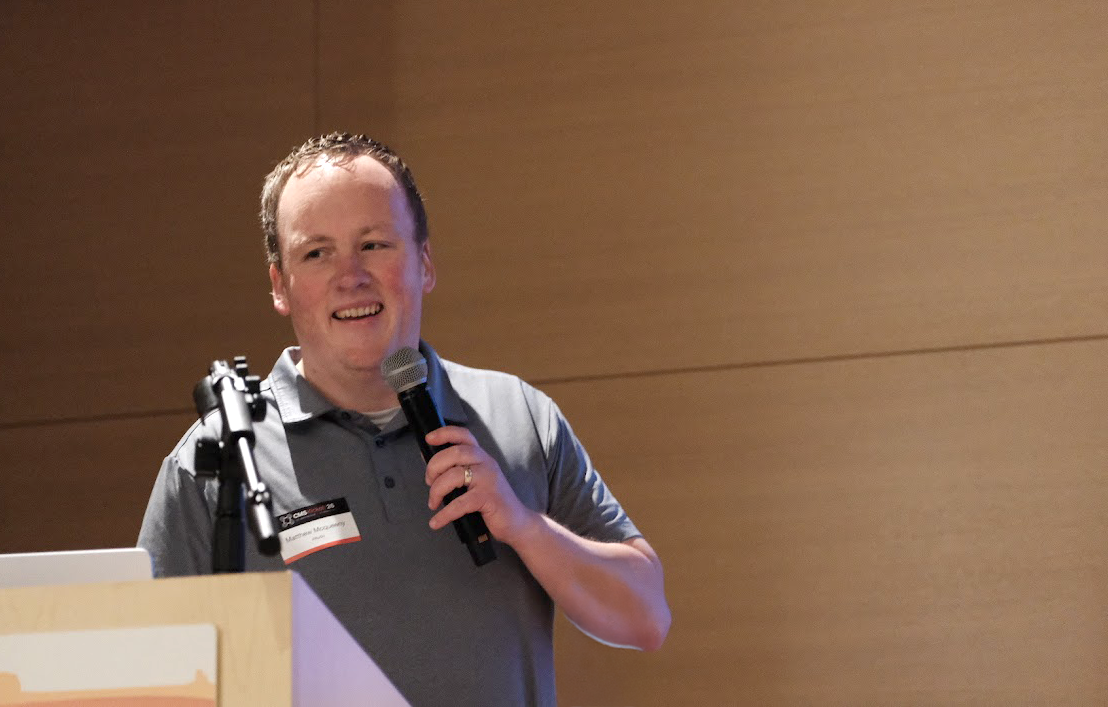
Channeling the same existential challenges about traditional search dying on the vine, the inestimable Matt McQueeny gave a compelling and actionable talk on the impact of people, community, and expertise on elevating AI visibility. He translated his dynamic platform of “Earnfluencing” into actionable tactics, focusing on how audience members could shape credibility and authority with simple tactics and strategies that can enhance generative engine optimization (GEO).
Matt really threaded the needle with CMS and DXP platforms – and how, when properly tuned for GEO, they can amplify Earnfluencing at scale. This can be surfaced through stronger content and trust signals that become visible inside AI assistants and answer engines.
Now a sort of “sacred sideline” tradition, Matt joined me for one of our classic “Matt & Matt” video wraps at Kickoff 26, which you can watch here:
My favorite part? Using that “Matt & Matt” video and LinkedIn post as a use case for his message. As he urged, creating rapid, relevant content in multiple channels ups your odds of being seen in AI – and by the people who matter.
‘The Great Content Collapse’ cometh
Source: Janus Boye and Marta Cukierman
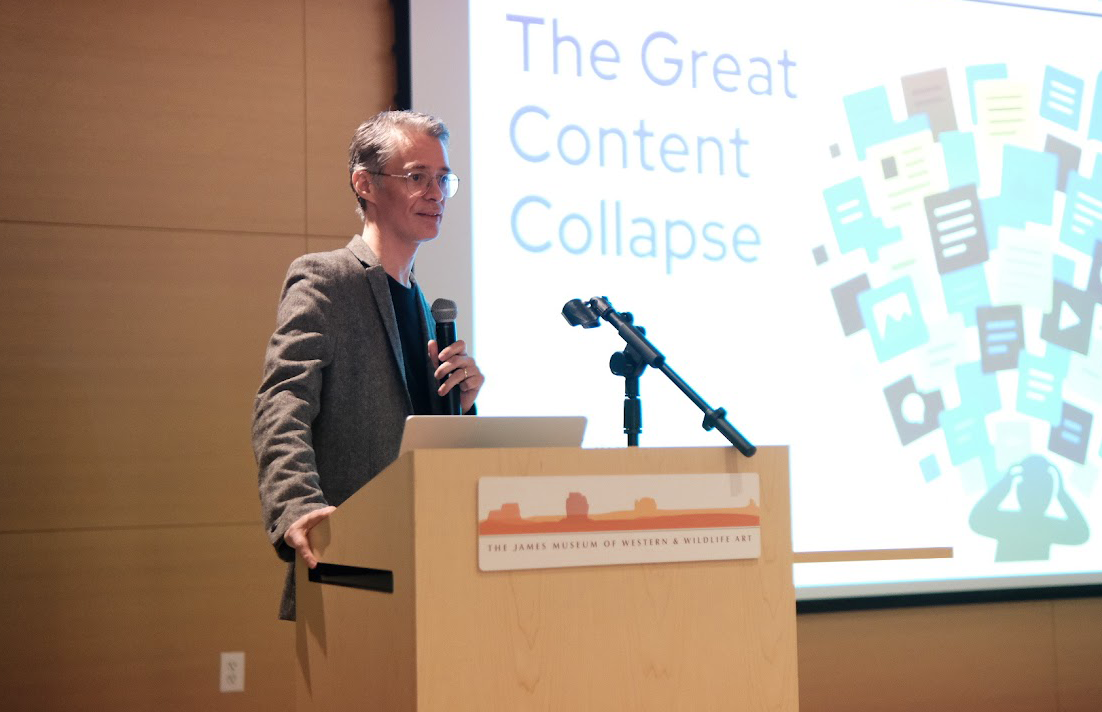
Having the incomparable Jeff Eaton as your closer is always a homerun. Once again, the consummate content thinker punched up – way up – by challenging attendees with a simple mandate: We need to enable clarity and awareness before velocity.
As part of his exploration of “The Great Content Collapse,” Jeff hammered against the notion that, while AI has made it easier to create lots of content faster than ever, we might be hitting a barrier for performance – and a point of diminishing returns.
Given the noise and complexity that AI is stirring up, Jeff prescribed that vendors and brands focus more intentionally on the planning, consistency, and knowledge curation systems that enable us to target and deliver quality content to the places where it has the most impact.
Jeff’s talk felt like both a warning and a guidepost. As he said, the primary goal should be to help individuals and content teams make smart decisions, not just quick ones. More stuff – and faster stuff – shouldn’t be the goal.
Roundtables offered collective insight
Day one’s roundtables were a masterclass in peer learning, spanning AI platform adoption, digital accessibility, SEO, and organizational change. These conversations – candid, open, and often vulnerable – surfaced insights that no keynote could deliver on its own.
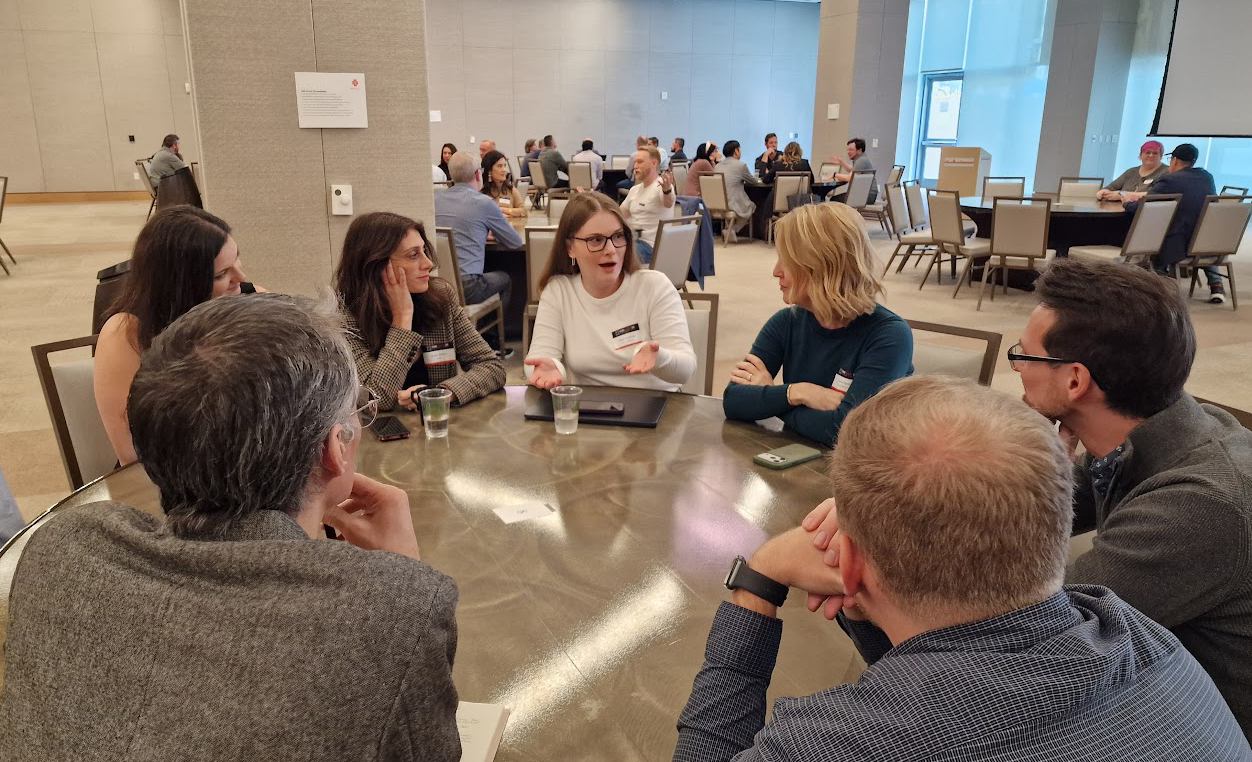
I made the “rounds” (so to speak), sitting in with a few different groups, but opted to settle in with Anisi Rouleau, a Tampa-based content designer and technical writer working with small businesses. It was a refreshing angle in a room filled with ample enterprise thinking.
Source: Janus Boye and Marta Cukierman
With accessibility as the table topic, we dove into the shortcomings of modern digital experiences when serving neurodivergent persons. AI could be the answer to many of our accessibility challenges, but as she told me, AI is also creating additional cognitive load – particularly for small shops struggling to stay afloat.
Her work is further challenged by the sheer number of different CMSes that exist in the market, making it difficult for practitioners like her to prescribe a uniform solution. We agreed on one resolution: teaching young people to embrace more of the right design principles for building accessible experiences from the ground up – and not just remediating as an afterthought.
One highlight was a post-conference reflection by Nabil Orfali, who captured the spirit of the discussions in his article, Agentic AI Didn’t Fail CMS Teams. Our Expectations Did. His takeaway was consistent with what I experienced: progress happens faster when practitioners are willing to share what’s actually happening in their worlds. It’s a great read.
CMS Idol: Why Kontent.ai won (again)
Source: Janus Boye and Marta Cukierman
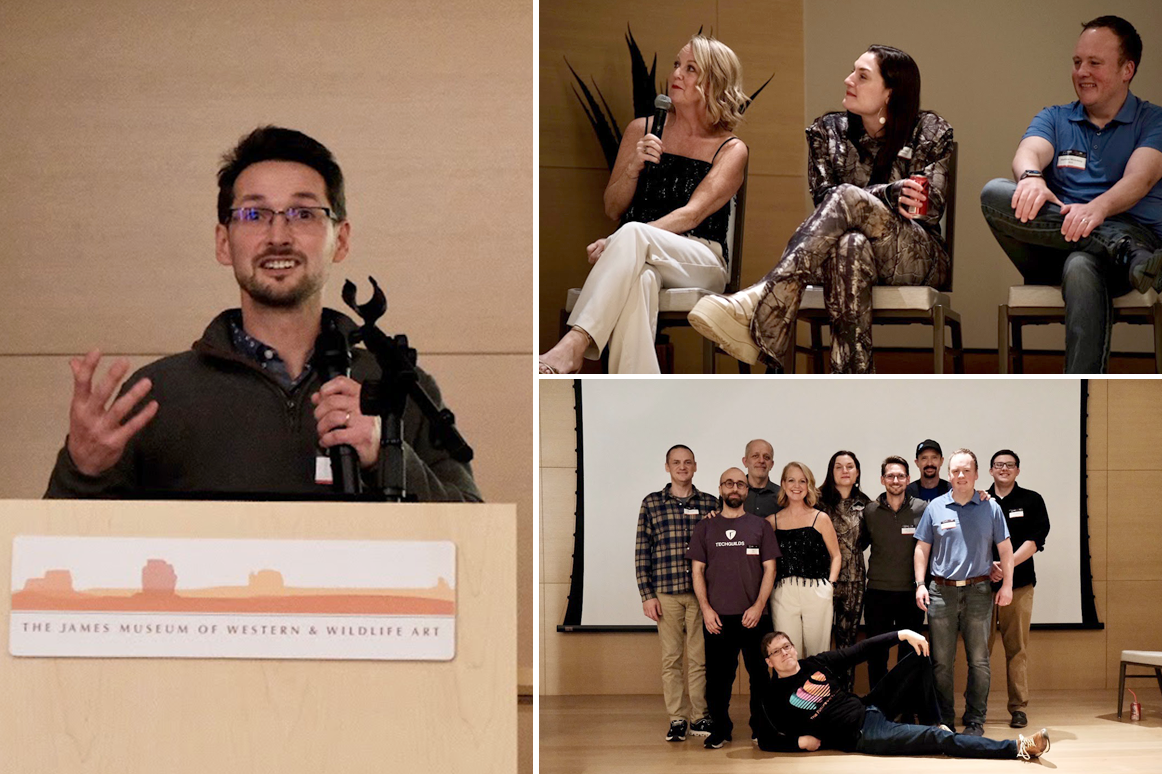
“CMS Idol” is always a crowd favorite. Part competition and part celebration, we invite a handful of vendors into the ring and give them six minutes to deliver their best demo. It’s a pressure-cooker that highlights both innovative platform features and the quick footwork of human storytelling, and we let the audience decide who takes home the bragging rights.
We hold a “CMS Idol” at most of our large-scale events, and I’m always impressed by everything I see. If I’ve noticed any clear patterns (thanks in part to the input of our judges), the winners concentrate on a single feature or aspect of delivery in their technical execution – and use it to reinforce their product’s vision and real-world impact.
For the second time in recent history, it was Kontent.ai adding the trophy to its shelf. The demo, delivered by VP of Customer Success, Lukas Martinak, wasn’t about flash – it was about clarity and consistency.
As he artfully portrayed in his presentation, Kontent’s Agentic CMS is having a measurable impact on content operations by simplifying real tasks, working at the intersection of structured content and governance within real-world implementations. As brands focus more on high utility and ROI, this kind of use case really cuts through.
In an era where many vendors promise transformation, Kontent.ai is showcasing its discipline, proving that strong fundamentals remain the surest path to relevant and meaningful innovation.
Beyond the gate, there’s peril – but possibility
In nearly every Stargate episode, some dark foe or nemesis is lurking on the other side of the gate. Despite a somewhat repetitive formula, it always made for good TV.
In our own world, the unknown can be equally as daunting. That’s why going through our own proverbial gate requires as much preparation as possible. This is where change management is the key – and while AI literacy and education are part of the prescription, we can't do this in an echo chamber. We need insight from our peers.
Last year, I called CMS Kickoff 2025 a “love letter” to slow down. Once again, this event proved the value of that sentiment, of gathering as a community to explore the trends and expectations that have led to both success and failure.
We’ve all been drawn to the bright neon of the AI hype machine and parading, in some cases, like bulls in a china shop. In this rush to adapt and adopt, we’ve often avoided the essential friction that keeps us grounded. This is manifesting in issues with agentic systems – a topic I discussed in detail with Cleanlab’s Curtis Northcutt late last year.
We do need to break things, but not the wrong things. Or in the wrong ways. We need a shift in mindset. Not just a human in the loop, but practitioners who think beyond smart prompting and clicking buttons, and understand how to lead us into the worlds that lie beyond the gate.
The anxiety remains high. In my recent interview with Domo’s Chris Willis, we talked at length about how businesses that replaced employees with AI are quietly hiring them back because our judgment – and human wisdom – remain firmly irreplaceable. Of course, that trend runs up against the fresh news that Amazon is laying off 16,000 jobs, and placing at least some of the blame on AI.
As we move forward, CMS will continue to transform. Some have already prognosticated its demise as vibe-coding tools break barriers for building homegrown solutions. While rumors of its death have been circulating, platforms are charging ahead – relaunching, repositioning, and even reimagining how their agentic-infused offerings can deliver value.
And yet, despite the progress, we continue to struggle with the cornerstones of migration, accessibility, search, and semantics – and the enduring questions surrounding content models, data ownership, and governance.
We have a lot of work ahead of us. And we need CMS to help to solve these problems.
In that vein, I was thrilled to see a more concentrated focus on fundamentals at this year’s Kickoff. It provided an energetic undercurrent, giving attendees much-needed perspective as we map new ways for CMS to have a meaningful impact on our work. And collaborating with this diverse group was the best way to recharge our batteries for the journey ahead.
There’s still uncertainty as we step through the gate. But at least we’re going together.
If you haven’t attended a CMS Kickoff, you can explore our coverage from previous events:
- Reflections on CMS Kickoff 25 from ‘The AEM Guy’
- The AI Tipping Point: A Consultant's Takeaways from CMS Kickoff 2024
- CMS Kickoff 2023 Draws Global Attendees, Focuses on the Future of Content and Composable
Upcoming Events
CMS Summit 26
May 12-13, 2026 – Frankfurt, Germany
The best conferences create space for honest, experience-based conversations. Not sales pitches. Not hype. Just thoughtful exchanges between people who spend their days designing, building, running, and evolving digital experiences. CMS Summit brings together people who share real stories from their work and platforms and who are interested in learning from each other on how to make things better. Over two days in Frankfurt, you can expect practitioner-led talks grounded in experience, conversations about trade-offs, constraints, and decisions, and time to compare notes with peers facing similar challenges. Space is limited for this exclusive event, so book your seats today.