Matt & Matt, Episode 2: Awards Season, a (Chilled) Canadian Meetup, GEO, ‘Dirty Data,’ and More

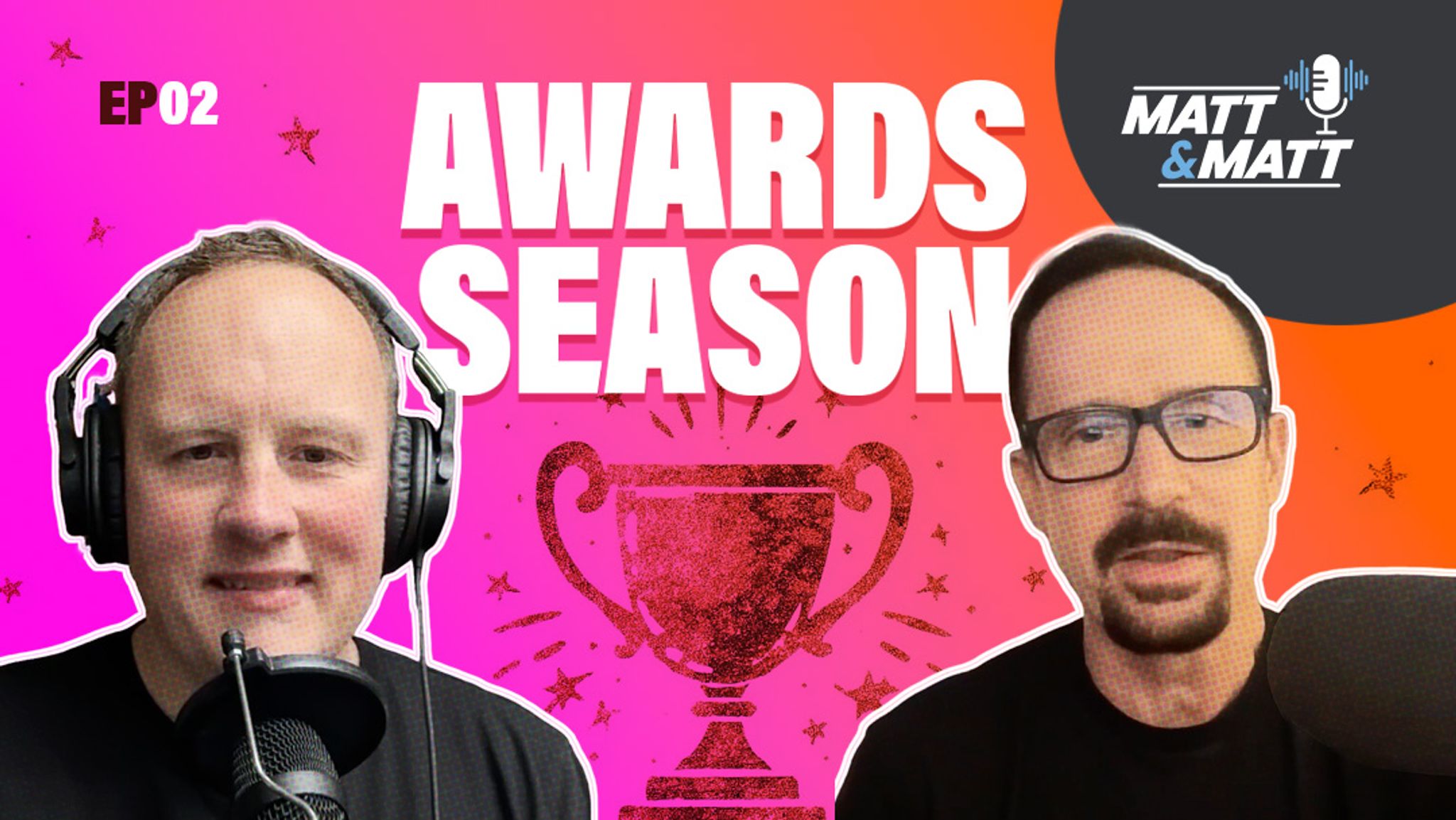
In episode two of the “Matt & Matt Show,” the dynamic duo hits home with a home renovation project, some reflections on the CMS Critic Awards and March Madness, the rise of the Clean Data Alliance, and how digital agencies are evolving with AI and GEO. Oh... and new theme music!
Watch the full episode of the Matt & Matt Show >
If you haven’t experienced a kitchen remodeling project, you don’t know what you’re missing.
Kidding, of course. You’re lucky. So very lucky…
The word “nightmare” might be more appropriate, and that was the opening conversation on the latest installment of the Matt & Matt Show – a video pod featuring Matt Garrepy of CMS Critic and Matt McQueeny of iMedia. Every other week, they bring you hot takes on the news, latest trends, and key topics facing the content management and digital experience world.
And, if the stars align, you might get some free advice on how to mentally cope with an unexpected home improvement project. But rest assured, it’s all relatable to what we’re facing in tech, from unexpected infrastructure issues to leaky services that need modernization ASAP.
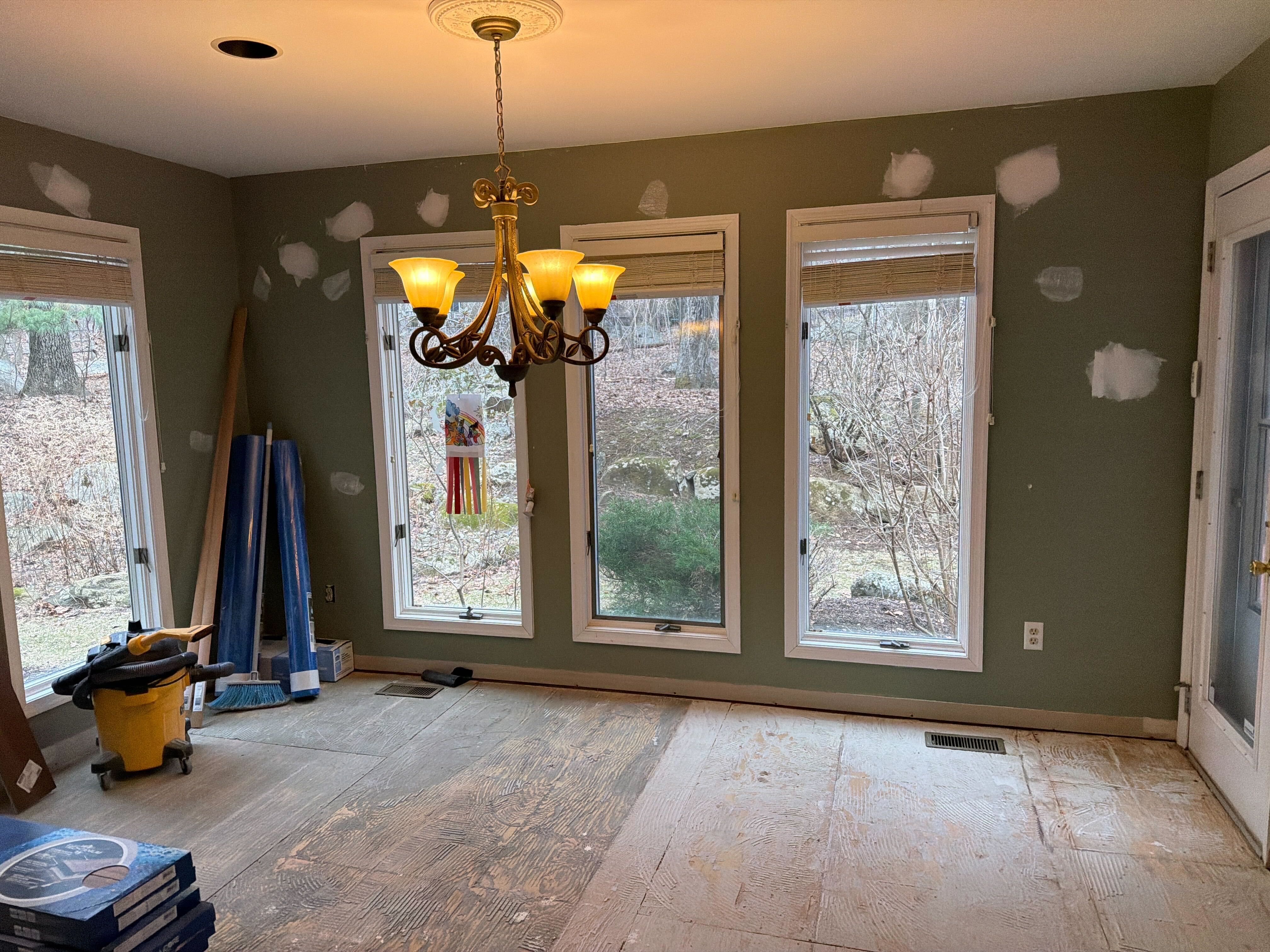
Shopvac shock-and-awe? Matt McQueeny's kitchen modernization in real life…
Poor McQueeny. What began as a plumbing issue has escalated into an insurance-driven, full-kitchen “lift and shift.” New floors, new cabinets, and a makeshift kitchen spilling into the living room while the work commences. Add two kids to the mix, and you’re feeling some pain.
The two Matts riff on comfort versus discomfort, and how forced disruption forces action. In the aftermath, they align it to our challenges within composable stacks, and how we can reframe temporary setbacks as opportunities to improvise and connect in meaningful ways.
You can catch all the gritty details here:
Unifying on Uniform
Both Matts were in the Big Apple over the last two weeks (yes, there were Broadway excursions and slices of pizza on the itinerary). In the pod, Matt McQueeny shares about his recent trip to meet with Lars Petersen and Patrick Coyne of Uniform, and he reflects on how they continue to differentiate in the composable space.
Matt McQueeny talks about Uniform's Sitecore heritage and evolution toward a modern, composable, orchestration-first platform – and how their strong focus on rapid prototyping, personalization, and accelerating the path from concept to production puts the pedal to the metal for experience velocity.
Matt Garrepy adds some seasoning as he reflects on his years of watching Uniform blossom, pivot, and find terra firma as it thinks ahead of the composable curve – particularly when solving the last-mile problems of integration and visualization. In a recent interview with Lars on conquering “cold starts,” Matt G. delves into the evolution of Uniform AI, with some analysis on how it helps teams ship digital experiences faster.
The conversation expands into a broader pattern that both Matts love: when founders and senior leaders personally open up their products, pull back the curtains, and demo real features on the fly. This might be common with startups and scale-ups, but in a conversation with Optimizely’s Alex Atzberger, Matt Garrepy got a guided tour of Opal AI and Opti’s CMP and content tools courtesy of its CEO, showing how he personally uses their tech in his own day-to-day strategic planning and marketing orchestration.
As Andrej Karpathy said back in 2023, “English is the hottest new programming language.” This trend points to a future where AI tools are making traditionally complex, code-reliant processes more accessible, even to executives – thanks to better UX, assistive features, and natural-language-driven interfaces.
It's Awards Season, and ‘community’ is the big winner
Dust off your fancy shoes and bow ties. We’re polishing the statues because Awards Season is in full swing, and the Matts dive into the impact of the 14th Annual CMS Critic Awards and the 4th Annual DXP/CMS March Madness.
Both programs evolved separately but have aligned to run concurrently at the beginning of each year. While they differ in concrete ways – the CMS Critic Awards takes a category approach, while March Madness is a bracketed competition across all vendors – they’re both community-driven, friendly competitions that invite users to support and celebrate the tools they love.
As Matt McQueeny says in the pod, March Madness serves as a kind of industry barometer in the CMS and DXP ecosystems, revealing which vendors and communities are especially energized in a given year. The Matts discuss the phenomenon and how vendor communities mobilize one another through TikTok videos, internal rallies, and even CEOs urging practitioners and agency partners to vote.
While Umbraco took the lion’s share of categories in last year’s CMS Critic Awards, Sitecore was the big winner this time, no doubt riding some of the energy from the rollout of its SitecoreAI platform.
Even though big vendors sport a key advantage with larger and more mature communities, anything can happen. Smaller or emerging platforms can deliver a kind of “Cinderella story” by punching above their weight through passionate community engagement. These programs act as culture-makers, giving companies a fun, sports-like rallying point and amplifying visibility across the ecosystem.
For McQueeny, March Madness has also evolved into a storytelling vehicle, via his “Behind the Madness” interviews with founders and CEOs. They're like postgame coach interviews that reveal how the “season” is really going.
It’s big fun, and you can follow along here.
Oh Boye, Canada! Storytelling and the power of the room
Along with his kitchen exploits and Manhattan excursions, Matt McQueeny also recaps his jaunt to a slightly “chilled” Boye & Company CMS Experts meetup in Toronto two weeks ago.
Guess what? It’s still winter. But the thaw is in the air – and as Matt says, the people warmed the room.
To that end, Matt shares his intersections with Agility’s Joel Varty and 9thCo’s Justin Cook, diving deep into AEO (Answer Engine Optimization) and GEO (Generative Engine Optimization) and how they're creating buzz across digital strategies.
As Matt relays, the standout session was from Sean Stanleigh of The Globe and Mail, Canada’s national news organization. In the pod, McQueeny highlights his takeaways on how story-first thinking prevails over rigid, format-first content planning – and the growing tension between “feeding the beast” (aka AI models) and protecting editorial value.
This is what rocks about our global Boye & Company peer group meetings. They’re always intimate, highly contextual, and often hosted by an agency or vendor in their physical offices, giving attendees a closer understanding of how people actually work and collaborate day to day.
Interested in joining an upcoming meeting? Learn more here.
AI’s energy appetite and the new economics of compute
Energy is on everyone’s minds right now (oil in particular), and data centers continue to be a hot topic given their dependence on vital resources. In the latest pod, Matt McQueeny talks about a recent piece in Barron’s arguing that some of the biggest financial winners of the AI boom may be energy companies, given the massive power demands of AI infrastructure.
That leads to some lively discussion on how tech companies have long had internal energy teams focused on conservation, but are now being forced to think about rapidly scaling generation and capacity. Garrepy cites this with the hyperscalers, but reinforces how AWS is still rebalancing its electrical consumption to achieve peak efficiency – and Microsoft is working on recapturing heat from data centers to power local communities.
With AI, there’s also the emergence of small language models (SLMs) that can run locally, thus reducing dependence on huge cloud workloads. As the Matts discuss, the reality that AI usage will be constrained by cost, energy, and token economics is forcing organizations to prioritize where it truly adds value.
Cleaning up all that ‘Dirty Data’
In the pod, Matt G. shares a recent interview with Michael Munson, founder and CEO of the Clean Data Alliance (CDA) – a new initiative aimed at improving the quality and trustworthiness of data.
Part of the CDA’s mission is to improve the outcomes for training AI models and delivering more efficient and reliable performance (you know, garbage in, garbage out). But the nonprofit advocacy group is also dedicated to creating a digital economy built on the principles of clean data and countering the rise of exploitative systems.
Michael’s path to founding the Clean Data Alliance started with a practical marketing problem: How to better understand people. That exploration led him to a bigger, more troubling realization as he encountered a glut of commercial data brokers, third-party datasets, and rampant ad fraud, as well as off-the-rails AI hallucinations.
Michael used this as a tipping point to take action against these inaccuracies. Between the lines, he also saw an opportunity to defend people’s personal data by giving them agency in a world that’s drowning in dirty data.
The Clean Data Alliance was built around a simple but challenging thesis: You can’t get to truly accurate, trustworthy data without putting humans in control of it. That control means embracing strong pillars for clean data:
- Verified – meaning real people
- Permissioned – based on continuous, revocable, logged consent
- Longitudinal – providing context over time
- Anonymous – where privacy is protected
Endowed with agency, individuals can then control their data, decide who can use it, and even be compensated when it creates value. The Matts explore this in more detail, lining it up with the efforts of the Data & Trust Alliance as industry vehicles for improving data quality and trustworthiness in the age of AI.
What’s ahead for digital agencies?
After hearing Karla Santi’s sobering presentation at the Boye & Company CMS Kickoff 26, it’s clear that “Shift Happened” for digital agencies last year – and it’s still hitting the fan as AI transforms business and revenue models.
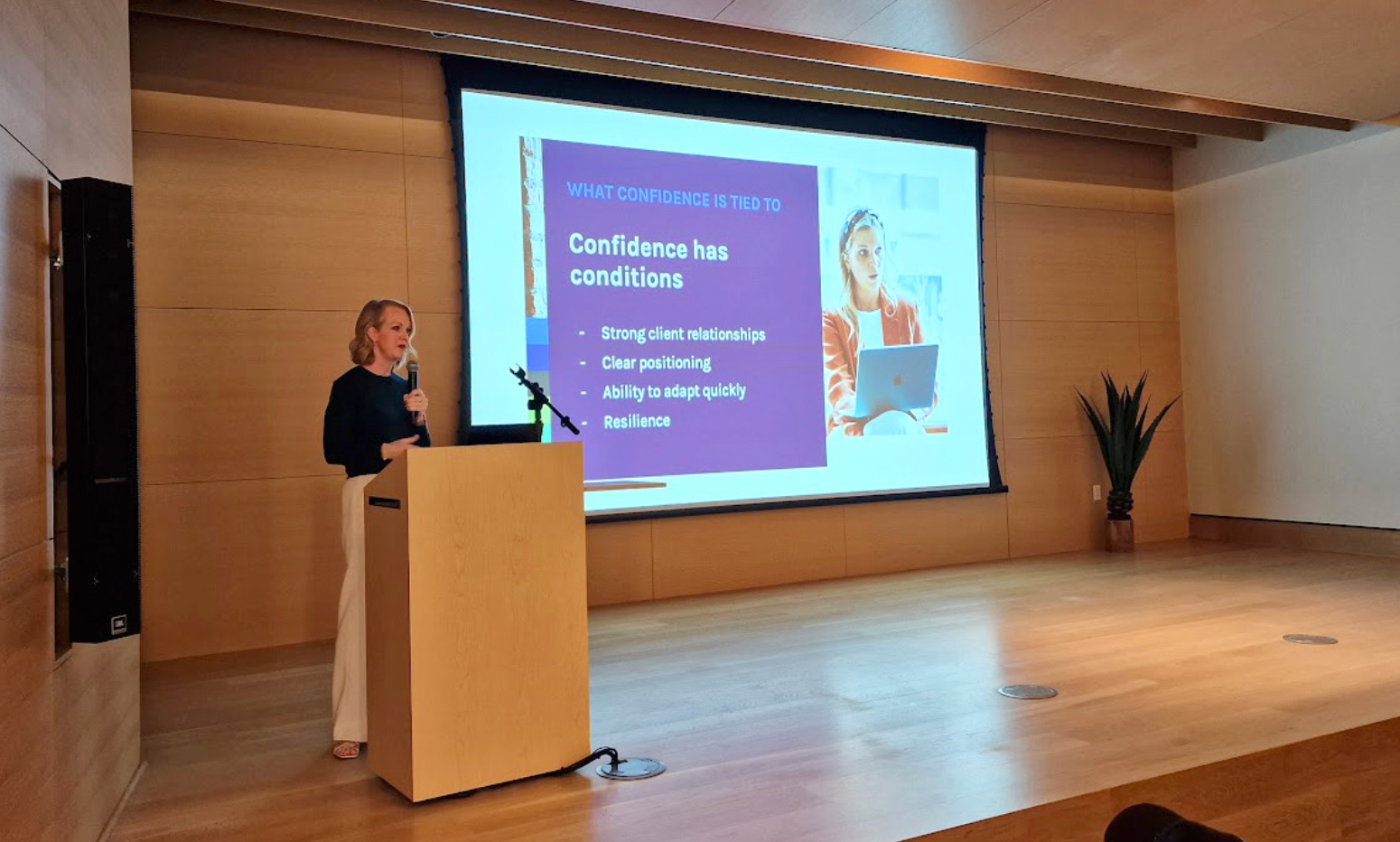
Karla Santi at the Boye & Company CMS Kickoff 26
A major theme in the latter half of the pod is on the future of digital agencies, where McQueeny is on the front lines. As he notes, the traditional agency makeup is breaking down as large dev teams move away from big projects with lots of billable hours.
This isn’t a symptom of one thing. Between composability, headless architectures, and now AI, build cycles are shrinking and long-term custom work is evaporating.
Yeah, agencies are being disrupted. There’s no question about it. But as Matt Garrepy reflects from his interviews with agency stakeholders, there’s a clear opportunity emerging for smaller, nimble teams that might be better positioned to scale with AI. In the pod, the Matts discuss how this shift is manifesting as long retainers give way to value-proving, SOW-by-SOW engagements.
Matt McQueeny also digs deeper into the force-multiplying effects of developing AEO/GEO practices, which act as a powerful wedge into client conversations. As lost traffic and visibility become critical pain points, GEO is fast becoming a boardroom consideration.
This is a phenomenon that Matt Garrepy reported on with website intelligence platform Conductor earlier this year. The company published a report on the state of AEO/GEO in 2026, and it offers some compelling data about the trend line – and how enterprises and agencies are leaning into growth and revenue optimization, not just traffic or pageviews.
McQueeny also shares a live case study in the episode, where a LinkedIn post about GEO triggered a text from a large transit organization, which turned into a pre-sales audit. Using tools like Claude Cowork, he rapidly generated a robust GEO analysis (including competitive insights), a 90-day human task backlog, and multiple ROI models that were tied to leads and revenue.
This illustrates how a modern agency’s patterns are transforming, and a new equation is emerging: Human relationships + AI-driven analysis + clear revenue framing
Vibe coding, tech debt, and the need for human oversight
The Matts talked about vibe coding in the last episode of the pod, but they’re raising fresh concerns about the efficacy of AI-assisted code generation at scale.
As Matt Garrepy points out, the recent news from AWS that AI-generated code is responsible for recent cloud outages and performance issues is a reality shockwave. While AI-accelerated development isn’t going anywhere, organizations might be quietly accumulating tech debt – and humans are having to fix it.
The Matts discuss some of the strategies needed to right the ship, from strong DevOps disciplines to clearly defined human review and approval. You know, like those old-fashioned pull requests…
There’s also talk about enhancing the training around standards and instituting stronger guardrails for AI-generated code. The consensus: AI is dramatically expanding what’s possible, but human expertise, governance, and caution remain essential – especially when it comes to mission-critical infrastructure.
Enjoying the Matt & Matt Show? Stay connected!
- Subscribe today on YouTube: @MattMattShow
- Follow Matt McQueeny on LinkedIn
- Follow Matt Garrepy on LinkedIn
Have an idea for a topic? Wanna be on the show?
We love our audience, and we want your input. Send us your ideas for future episodes! And if you’re willing, maybe we’ll have you on to talk CMS, DXP, AI, and more! Contact us.
Upcoming Events

JoomlaDay USA 2026
April 29 - May 2, 2026 – Delray Beach, Florida
Be part of the Joomla community in one of the most iconic cities in the world! JoomlaDay USA 2026 is coming to Delray Beach, and you can join us for a dynamic event packed with insights, workshops, and networking opportunities. Learn from top Joomla experts and developers offering valuable insights and real-world solutions. Participate in interactive workshops and sessions and enhance your skills in Joomla management, development, design, and more. And connect with fellow Joomla enthusiasts, developers, and professionals from across the world. Book your seats today.
CMS Summit 26
May 12-13, 2026 – Frankfurt, Germany
The best conferences create space for honest, experience-based conversations. Not sales pitches. Not hype. Just thoughtful exchanges between people who spend their days designing, building, running, and evolving digital experiences. CMS Summit brings together people who share real stories from their work and platforms and who are interested in learning from each other on how to make things better. Over two days in Frankfurt, you can expect practitioner-led talks grounded in experience, conversations about trade-offs, constraints, and decisions, and time to compare notes with peers facing similar challenges. Space is limited for this exclusive event, so book your seats today.

Umbraco Codegarden 2026
June 10–11, 2026 – Copenhagen, DK
Join us in Copenhagen (or online) for the biggest Umbraco conference in the world – two full days of learning, genuine conversations, and the kind of inspiration that brings business leaders, developers, and digital creators together. Codegarden 2026 is packed with both business and tech content, from deep-dive workshops and advanced sessions to real-world case studies and strategy talks. You’ll leave with ideas, strategies, and knowledge you can put into practice immediately. Book your tickets today.
Open Source CMS 26
October 20–21, 2026 – Utrecht, Netherlands
Join us for the first annual edition of our prestigious international conference dedicated to making open source CMS better. This event is already being called the “missing gathering place” for the open source CMS community – an international conference with confirmed participants from Europe and North America. Be part of a friendly mix of digital leaders from notable open source CMS projects, agencies, even a few industry analysts who get together to learn, network, and talk about what really matters when it comes to creating better open source CMS projects right now and for the foreseeable future. Book your tickets today.