Kontent.ai Adds AI-Powered SEO and GEO Workflows, Accelerating Content Optimization and Enhancing AI Visibility

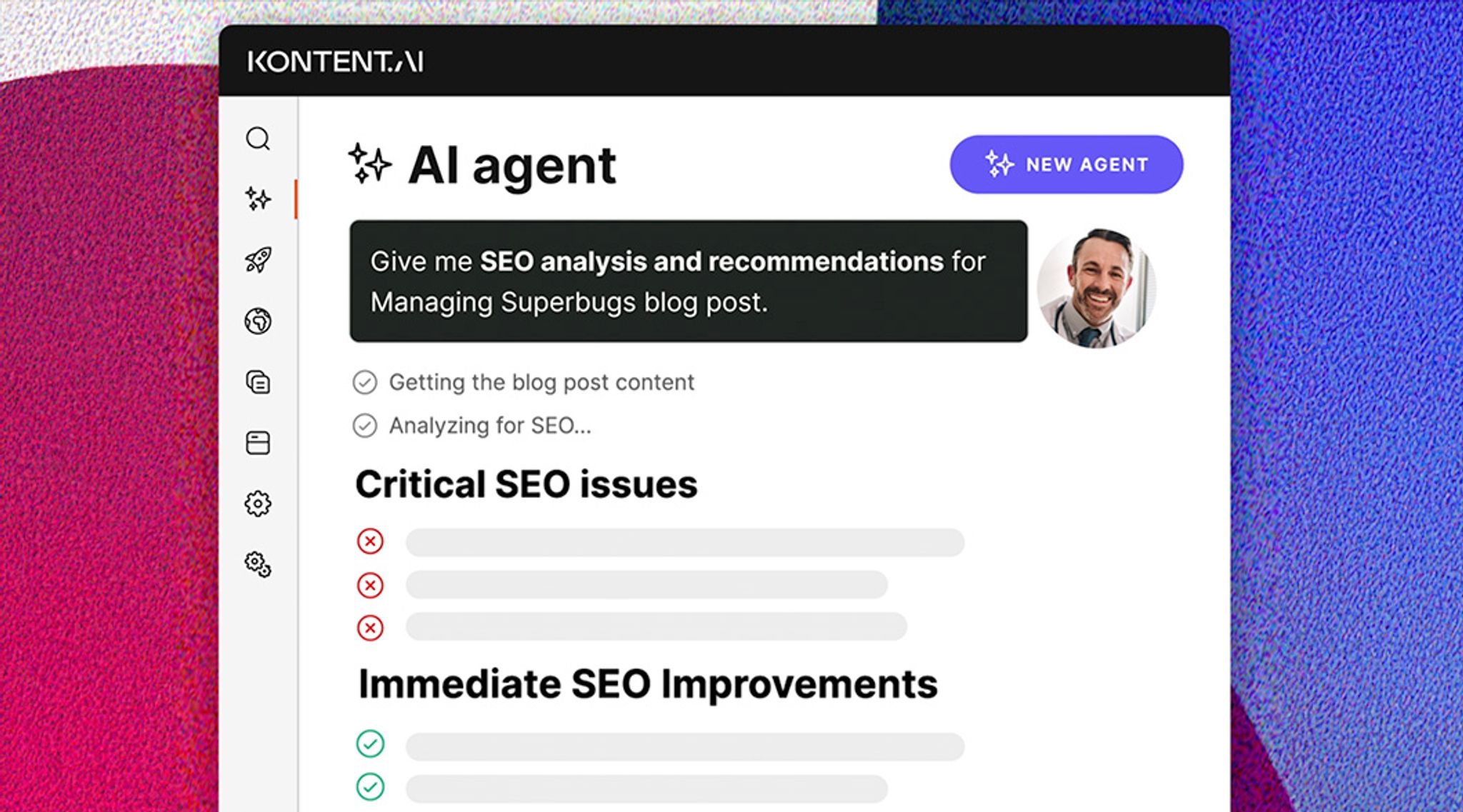
The agentic CMS just announced its new SEO and GEO workflows, building on early results that show organizations have reduced the time to audit and optimize content performance by up to 80% while improving organic and answer engine reach – without additional media spend.
SEO is a hard-fought battle. Marketers spend a lot of time – and treasure – on manual audits, digging through spreadsheets and poring over tables just to make an incremental dent in performance.
Meanwhile, they’re wrestling with the cognitive overload of juggling multiple tools across the stack, forcing swivel-chair moments as they gaze into a swarm of data.
Of course, the seismic shift to AI answer engines is compounding an already precarious challenge. Keeping content accurate, structured, and discoverable across both traditional search engines and AI-driven discovery platforms like ChatGPT is haranguing teams in a vice grip as website traffic withers on the vine – and institutional metrics go out the window.
But this is where Kontent.ai is building on its “Agentic CMS” foundation to deliver some relief.
Today, the company announced a set of new workflows that are purpose-built to impact the cost and friction associated with these challenges. They’re designed to enhance not only traditional Search Engine Optimization (SEO), but the emerging and uber-critical practice of Generative Engine Optimization (GEO).
Building on an AI vision and heritage
Kontent.ai has long embraced its artificial intelligence roots (it’s been part of the name since day one), but repositioning its value as an Agentic CMS speaks to its laser focus on AI and its impact on content management and operations. That gives it an edge for addressing the existential challenges that traditional SEO and GEO are presenting to brands and marketers.
According to Kontent.ai’s VP of Customer Success, Lukas Martinak, something has changed in the CMS and digital world, and brands are feeling the heat. This came into crystal clarity at the recent Boye & Company CMS Kickoff 26.
“There was one topic that kept coming up in almost every session and every hallway chat: GEO. Generative Engine Optimization,” he said. “Traffic is down, AI answers are up, and GEO has moved to the boardroom.”
He’s absolutely right. Unlike SEO, the C-Suite is hyper-focused on GEO, making it a mission-critical imperative as zero-click searches and crashing traffic become the status quo. This is where Kontent.ai’s new workflows are aiming to make an impact.
Optimization without the manual madness
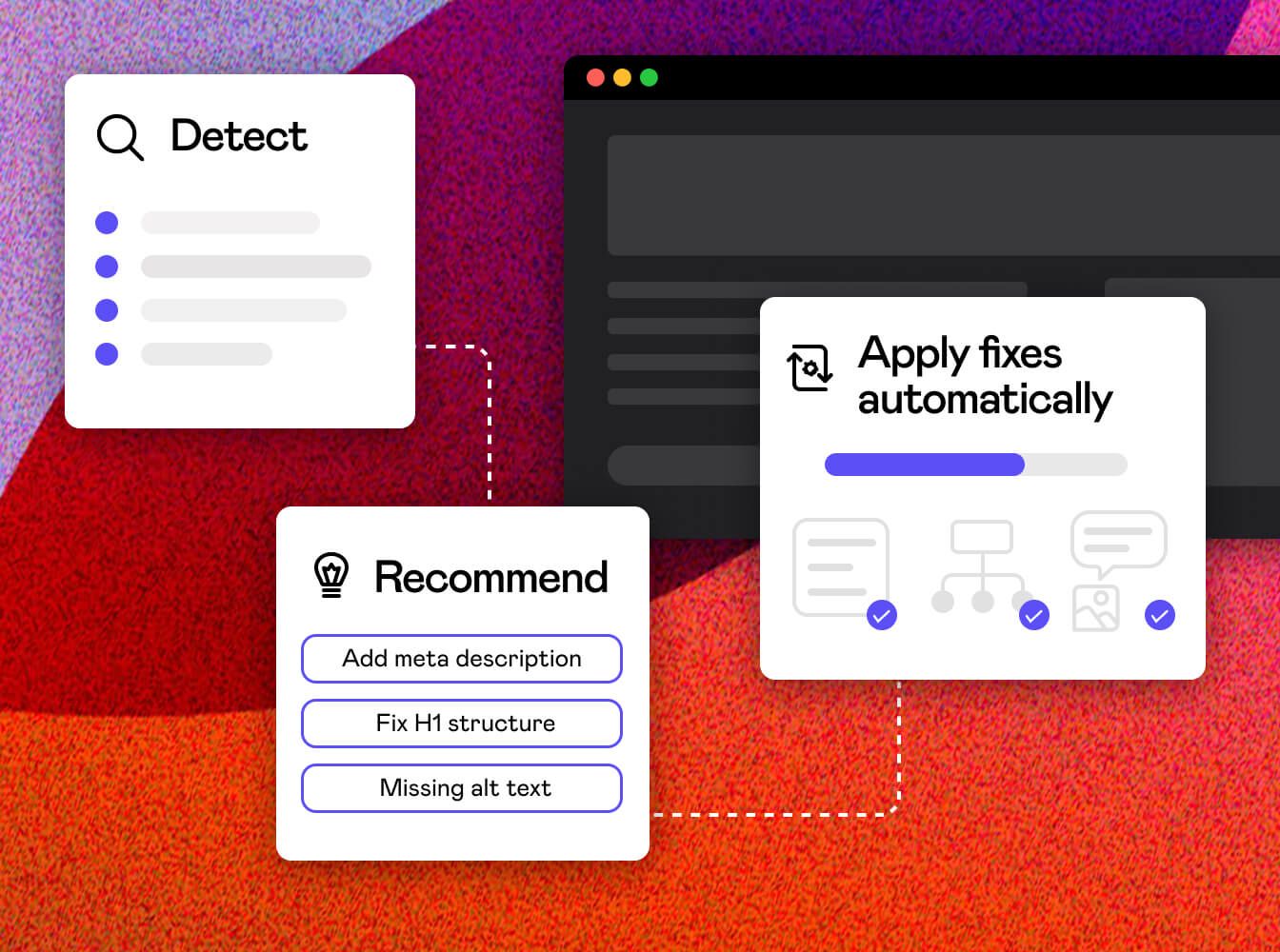
Like an intern that never stops for coffee breaks, Kontent.ai’s autonomous agents continuously analyze content for a bevy of issues that can impact SEO and GEO – detecting things like missing or inconsistent metadata, unclear structure, outdated terminology, and weak internal linking. Users can also prompt for an SEO analysis and recommendations across content like blog posts.
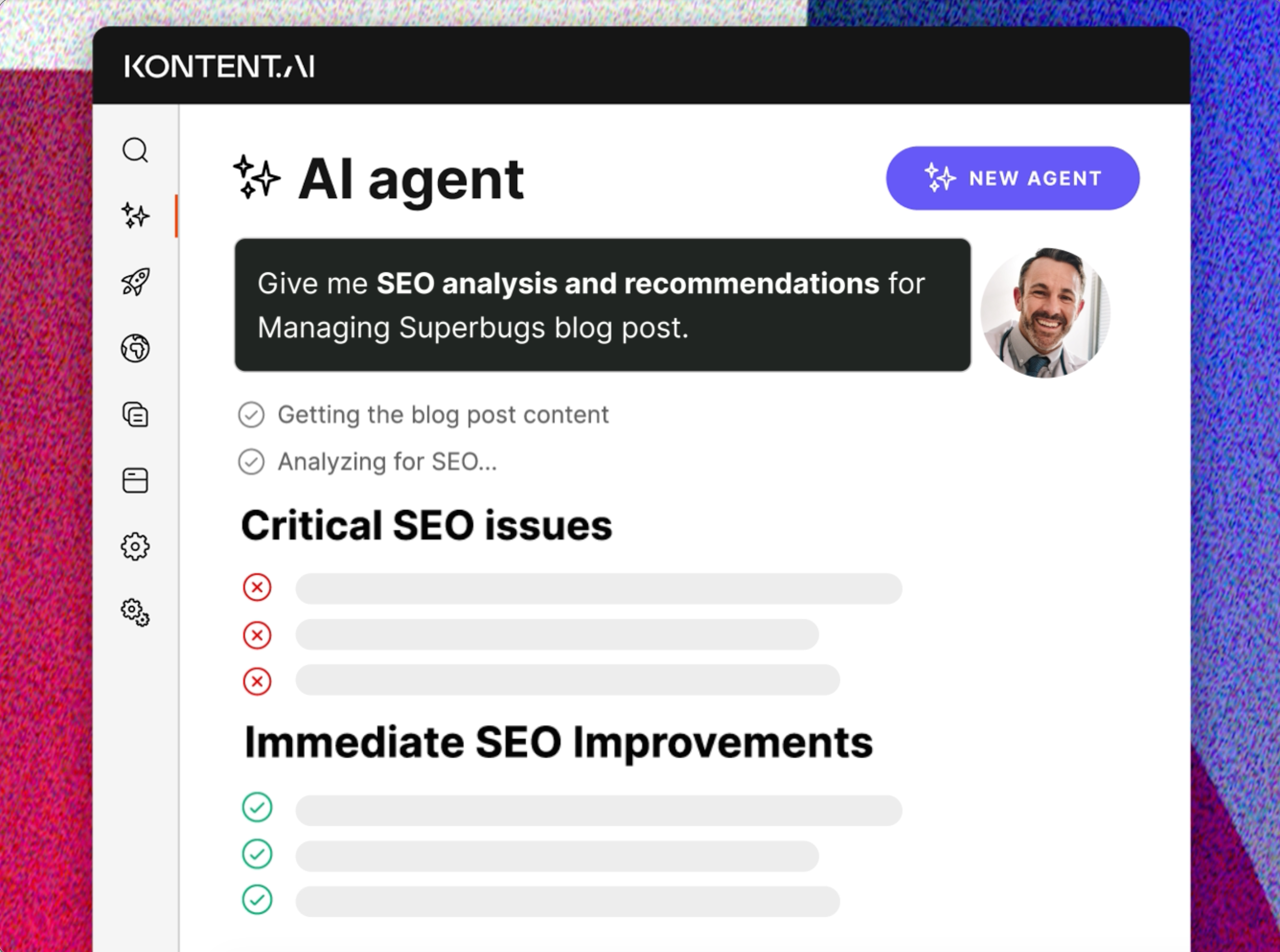
Source: Kontent.ai
But the automation goes even further. Instead of simply surfacing issues for manual follow-up, these intelligent agents can recommend improvements or even apply updates directly within Kontent.ai, mitigating the need for repeated audits and manual rework.
Source: Kontent.ai
According to Kontent.ai, some early but compelling use cases demonstrate the success of these new agentic workflows. For example, a global organization managing more than 400,000 content items used them to automate SEO metadata audits and implementation, cutting optimization time by as much as 80%.
There’s more. When applied consistently across editorial workflows, Kontent reported that teams saw palpable results – including a 30% increase in organic impressions and expanded keyword coverage, all without increasing paid media spending.
As GEO surfaces as a business mandate, brands are rapidly adopting practices and channeling resources towards optimizing for AI visibility. Many of the agent-driven principles for SEO also support GEO, as they share structural and foundational tenets. With Kontent.ai’s automation, teams can help ensure these content structures are clear and concise for AI systems to interpret accurately – particularly as buyers are increasingly turning to generative search and AI assistants earlier in their discovery.
It's worth noting that, unlike most modern SEO tools that are used after publishing, Kontent.ai embeds its optimization directly into the content model and enforces it universally. The net effect is simplification: agent-driven changes are validated against editorial governance, enabling teams to scale optimization without increasing operational complexity or risk.
“As SEO and AI-driven discovery converge, optimization can no longer rely on manual effort,” said Ian Norton, VP Marketing at Kontent.ai. “By embedding agentic SEO and GEO directly into content operations, we help teams reduce cost, improve performance, and stay in control at scale.”
The verdict
Kontent.ai continues to impress with its clear, elegant, and high-utility application of agentic AI across its platform. While many tools are introducing complexity, Kontent’s focus on real-world use cases for applying its agentic capabilities is a winning position as brands scrutinize the value of their AI tooling and investments. Adding these workflows is yet another example of how it addresses real problems that marketers and content editors face when managing the minutiae of SEO – and the emerging morass of GEO.
My recommendation: Since demoing Kontent.ai’s earliest foray into agentic territory, I was instantly drawn to its concise framing of the problem and how its focused application of AI is the solution. That concise delivery is one of the key reasons why it won our “CMS Idol” competition at the Boye & Company CMS Kickoff 26.
With its headless heritage and composable posture, Kontent presents a great solution for enterprise-grade stacks that are leaning AI-forward and require speed and control at scale. During your demo, pay close attention to the real-world content management use cases that their agents are solving – it’s all the proof you’ll need.
Upcoming Events
CMS Summit 26
May 12-13, 2026 – Frankfurt, Germany
The best conferences create space for honest, experience-based conversations. Not sales pitches. Not hype. Just thoughtful exchanges between people who spend their days designing, building, running, and evolving digital experiences. CMS Summit brings together people who share real stories from their work and platforms and who are interested in learning from each other on how to make things better. Over two days in Frankfurt, you can expect practitioner-led talks grounded in experience, conversations about trade-offs, constraints, and decisions, and time to compare notes with peers facing similar challenges. Space is limited for this exclusive event, so book your seats today.

Umbraco Codegarden 2026
June 10–11, 2026 – Copenhagen, DK
Join us in Copenhagen (or online) for the biggest Umbraco conference in the world – two full days of learning, genuine conversations, and the kind of inspiration that brings business leaders, developers, and digital creators together. Codegarden 2026 is packed with both business and tech content, from deep-dive workshops and advanced sessions to real-world case studies and strategy talks. You’ll leave with ideas, strategies, and knowledge you can put into practice immediately. Book your tickets today.
Open Source CMS 26
October 20–21, 2026 – Utrecht, Netherlands
Join us for the first annual edition of our prestigious international conference dedicated to making open source CMS better. This event is already being called the “missing gathering place” for the open source CMS community – an international conference with confirmed participants from Europe and North America. Be part of a friendly mix of digital leaders from notable open source CMS projects, agencies, even a few industry analysts who get together to learn, network, and talk about what really matters when it comes to creating better open source CMS projects right now and for the foreseeable future. Book your tickets today.