Matt & Matt, Episode 3: Broadway, Serendipity, Product Evangelism, and the New Rules of AI Visibility

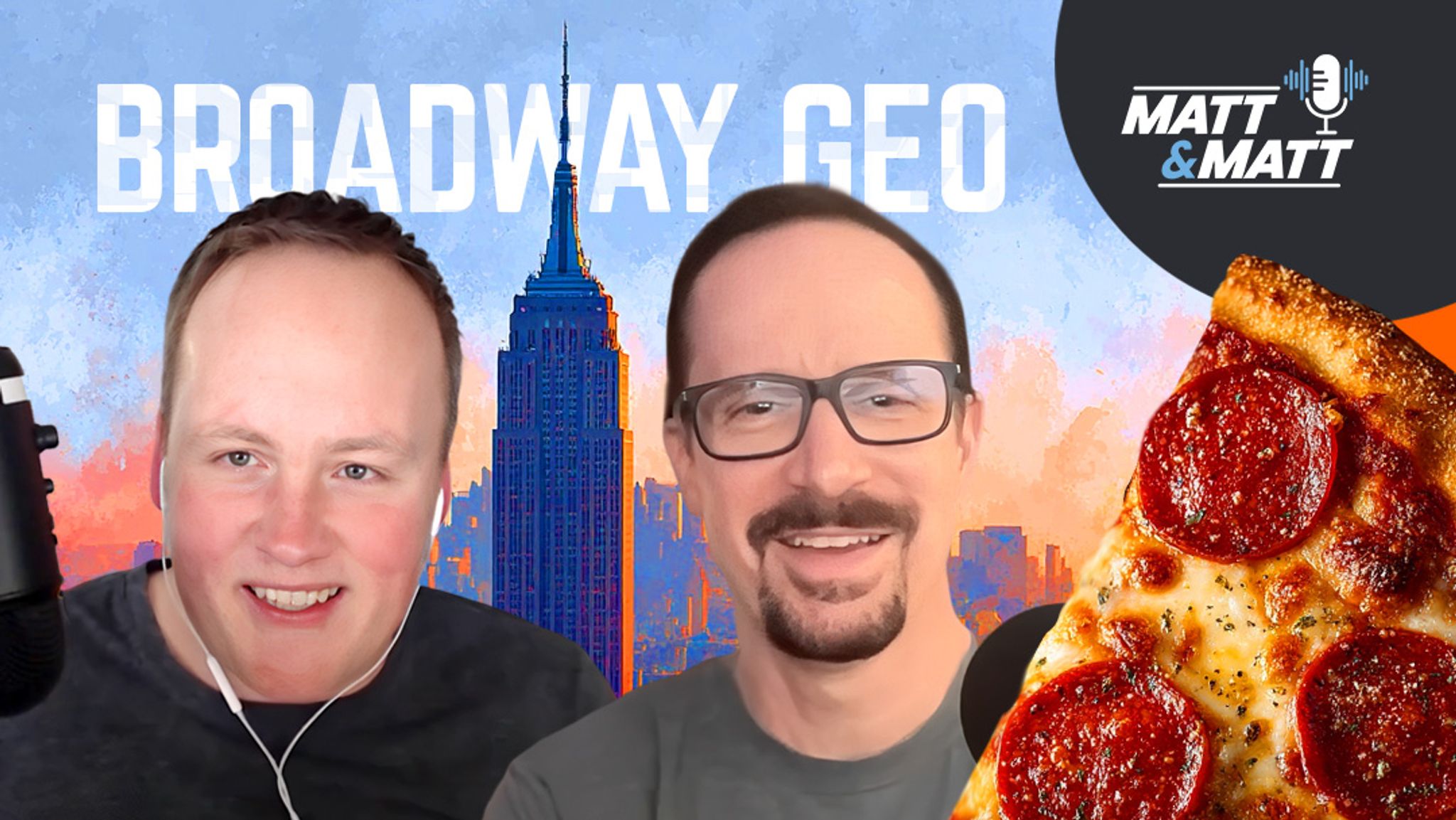
Oh, and we explore why New York City pizza just works. This is a packed episode where the Matts dig into AI visibility and go deeper on GEO and AEO. There are also reflections on product evangelism via a recent podcast with Hightouch’s Adam Greco, the merits of “serendipity,” and more. Read or listen – and grab a slice of pepperoni.
Watch the full episode of the Matt & Matt Show >
It’s time to file into the theater for another episode of the Matt & Matt Show – a video pod featuring Matt Garrepy of CMS Critic and Matt McQueeny of iMedia.
They say the neon lights are bright on Broadway, and that’s where things kick off: The Big Apple. Gotham. 42nd Street. The City that Never Sleeps.
For Matt McQueeny, it’s a hop, skip, and a jump from the Jersey side – but Matt Garrepy has left the frigid North for warmer climates, and a few weeks back, found himself in NYC for a bit of business (and fun).
Most people go the other direction during the late winter months, searching for palm trees. Not Matt G, who was greeted by 28-degree mornings. But it wasn’t all gloomy.
In the pod, he talks about supporting his son – who is about to graduate from the University of Florida – as he auditioned for Broadway casting directors and producers.
But wait… that’s just the first act! While in town, he took in a few shows, including the new Stranger Things: The First Shadow and Oh Mary, a darkly comic reimagining of Mary Todd Lincoln. For any fans of Broadway, you know that the stage door is an opportunity to meet actors after a performance wraps – and Matt G ran into Simu Liu of Shang-Chi and the Marvel universe (we invited him to come on the podcast, but no word yet).
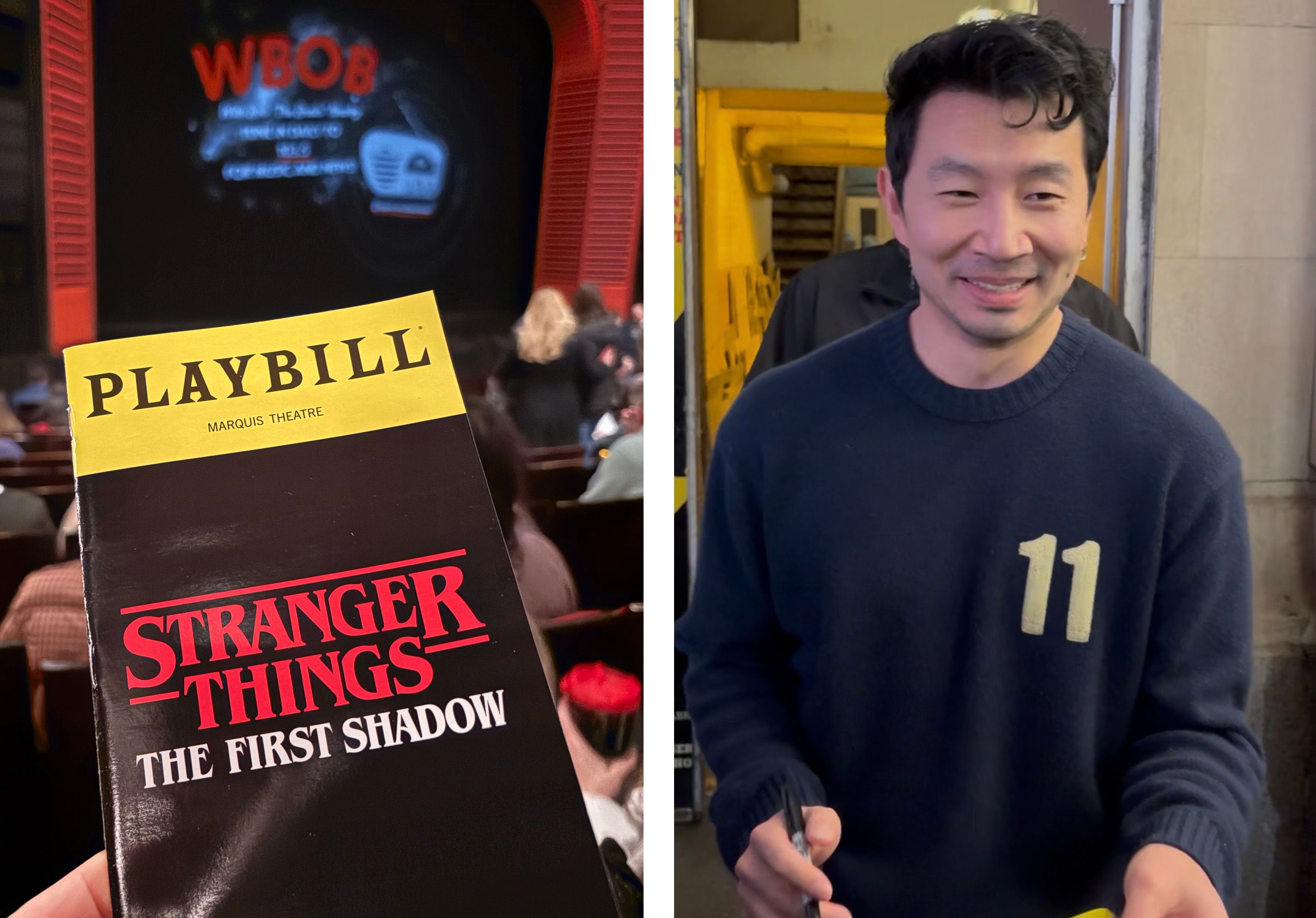
Stranger… Simu? “No AI-generated autographs, please.”
Of course, no trip to this food mecca would be complete without a slice of New York’s finest. Both Matts get real about the enduring mystery of why NYC pizza is so hard to replicate elsewhere, and how the ingredients – namely authenticity – add to the flavor.
The Matts spend time chatting about the value of physical events and experiences, and how this “intersection of universes” is creating real-world immersion. Along those lines, one thing that surfaces is how New York is a massive system with a large user base. On one hand, it can feel rigid and monolithic, like it’s all legacy. But this city is constantly adapting with more agile patterns, and technology is unlocking that evolution. Just use the subways with your phone, or roam around a museum with an app.
Digital and physical are intersecting everywhere.
Maybe someone should write a Broadway show about this.
Visibility vs. invisibility
In the pod, the Matts embrace their inner quantum physicists to explore the topic of visibility. As Matt G notes, most of the universe is literally invisible to us, and we infer things from indirect signals.
The Matts apply that lens to marketing and AI, and how much of what determines digital success is now happening in layers we don’t fully see. Things like ranking models, retrieval systems, answer engines, and now agent frameworks.
Hold on to your pizza, because this is where it gets tasty. The Matts thread the needle with a theme they’ve been reinforcing across the last few episodes: Generative Engine Optimization (GEO) and Answer Engine Optimization (AEO). These topics are becoming the new organizing principles for brands – and a genuine boardroom concern.
We all know that AI overviews and answer engines have been stealing share from organic search, responding directly to user queries and sidestepping websites. Traditional models of traffic and attribution are eroding, and “zero-click” behavior is rising. But here’s the silver lining: when users click through from answer engines, those visits often convert at higher rates. So you can’t afford to be invisible in that layer.
The engines, however, have clear preferences: first-hand human experience, documented in formats they can crawl, parse, and trust. That’s where McQueeny’s concept of Earnfluencing comes in – authentic video, audio, and long-form narrative transformed into structured, machine-readable content that also resonates with people.
Product Evangelism in the age of AI
Recently, Matt G hosted Hightouch’s Adam Greco on an episode of The Critic’s Corner Podcast. Adam and Matt go way back to his Amplitude days, but Adam’s reputation in the analytics community is unparalleled. He literally wrote the book on Adobe Analytics (which, as he told Matt G, changed people’s lives), and he’s penned a new one on the topic of product evangelism.
For Adam – and for the Matts – an effective evangelist does much more than pitch features. They raise the entire market’s understanding of a problem space, tell stories grounded in lived experience, and embody the product in a way that becomes inseparable from the brand.
This is increasingly important in an AI-saturated content environment. Garrepy notes that “thought leaders” are now among the highest-paid roles in many enterprises because brands need real human voices with demonstrated expertise. McQueeny connects this to his own framework: earnfluencing, when done well, is product evangelism, brand evangelism, and personal brand-building all at once.
The pair also revisits the thorny issue of attribution. In a world of AI summaries and blended journeys, last-click models have limited value. How do you measure the pipeline impact of an evangelist whose influence spreads across talks, interviews, social content, and third-party mentions? The old playbook, they argue, is due for a rethink.
PR’s quiet comeback
One of the most interesting turns in this episode is the case for a kind of “PR renaissance.” Running an active news desk, Matt G shares how press releases and pitches are evolving, and Matt M reinforces how classic earned media works – from briefings to story development, pitching to placement. This maps surprisingly well to today’s AI visibility challenges.
Many of AI’s favorite sources (think news sites, forums like Reddit, .gov and .edu domains) are exactly where PR teams have always tried to secure coverage and commentary. GEO and AEO split into on-site work and off-site authority, like citations, interviews, and references. PR can live in that second layer, which has become a primary source for answer engines.
Matt M connects this to the history of blogs and podcasts. When new channels emerge, everyone piles in. But over time, only the serious storytellers and consistent practitioners remain.
One big takeaway: AI doesn’t change the core of PR – it raises the stakes. Getting cited where humans and machines both look for authority is now inseparable from growth strategy.
On a practical level, the Matts suggest that PR discovery calls could be recorded and turned into testable clips and content via platforms like Riverside. The messages that resonate become not only media angles, but also high-value signals for AI engines.
‘Serendipity’ as a strategy
Ah, serendipity.
No, it’s not just the name of an excellent ice cream shop in Manhattan that makes a frozen hot chocolate (which is, by the way, serendipitous).
What is it, exactly?
In a nutshell, it’s finding valuable, fortunate, or pleasant things you were not actively searching for – a "fortunate accident" or "pleasant surprise,” so to speak. It’s often a combination of luck and sagacity in making unexpected, positive discoveries.
Threaded through the episode, Matt M makes a strong case for serendipity as a strategic asset, like meeting people at Boye & Company conferences, or re-crossing paths with Peter Stringer, once a fellow NBA team blogger who serendipitously showed up again in McQueeny’s circles.
The Matts advocate for simple strategies to tap the serendipity. For example, post that you’ll be in a city, see who reaches out, and say yes to invitations. Many of the most valuable relationships, collaborations, and opportunities emerge in these in-between spaces – things like group dinners, coffee shop meetings, hallway chats at conferences. You get the vibe.
In a time when so much is mediated by algorithms, they argue that showing up in person is one of the few authentic advantages that can’t be automated.
Channels change, storytelling endures
This pod episode rounds out with a familiar conclusion: while channels, tools, and models evolve, storytelling remains the constant. What’s shifting is where that storytelling happens, how it’s surfaced by machines, and which human voices are trusted to carry it.
For the two Matts, battling the aforementioned invisibility is key, and that’s where brands are doubling down on GEO and AEO. But the trick is to deliver with authenticity, that’s where evangelism – from real people, as Adam Greco says – can make an impact.
On that note: making product evangelism a serious discipline within your organization is a smart move, and one that can counter the AI slop and cut through the noise. You can also benefit from:
- Treating PR and earned media as core visibility levers, not afterthoughts
- Pursuing product evangelism and thought leadership as serious, measurable disciplines
- And never underestimating the power of serendipity and in-person community in an AI-saturated age
CMS Critic will continue to track these themes across future episodes of The Matt & Matt Show, connecting the conversations back to the evolving CMS, DXP, and AI ecosystems our readers are navigating.
What's up on CMS Critic
There are a couple of stories and technologies that Matt G touches on, particularly with how they intersect with topics in this episode. You can read more about them on CMS Critic:
- Fibr AI: A startup focused on turning URLs into intelligent agents, effectively creating agentic landing pages optimized by AI for better performance.
- Auxia: A customer journey orchestration platform now making 100+ billion autonomous decisions, illustrating the scale at which AI is already mediating user journeys.
The Matts also discuss Google’s heavy-handed attempts to leverage AI to optimize low-performing landing pages, raising questions about brand control, representation, and even monetization.
Also on the docket: Meta and YouTube are in hot water over questions surrounding addictive social media practices. Matt G references his podcast episode with Ari Paparo, who brings an insider’s perspective on the malfeasance of DoubleClick, Google, and the broader adtech ecosystem.
Check out our latest interviews with:
- Sitecore CEO Eric Stine on the “Death of SaaS” (or not?)
- Front CEO Dan O’Connell on the “Coordination Tax” in CX
- Storyblok CEO Dominik Angerer on the headless CMS’s new FlowMotion platform
Matt & Matt meetups
The Matts are on the road! Check out where they’re at – and drop us a line if you’re able to joind some of our Boye & Company meetings for CMS Experts and Digital Leaders.
McQueeny:
- April 7 – San Jose / Bay Area
West Coast CMS Experts meetup at PayPal - April 8 – Grand Rapids, Michigan
Midwest Digital Leaders meetup at BizStream (Brian McKeever’s digital agency) - April 15 – New York City
SUGCON (Sitecore User Group) on AI visibility and GEO at the Dataweavers office - April 16 – New York City
Optimizely Roadshow - April 22 – 24 – Las Vegas
CIO Arts Conference for CIOs in the performing arts sector
Garrepy:
- April 9 – Austin, Texas
CMS Experts and Digital Leaders at Contentstack’s Austin office - April 29 – May 2 – Del Ray Beach, Florida
JDayUsa – Joomla’s North American gathering - April 16 – Orlando
Full Sail University Cybersecurity Launch Event - June 10 – 12 – Copenhagen
Umbraco Codegarden 2026 - June 23 – Orlando
Digital Leaders meetup
Both Matts will be at:
- May 5 – 6 – New York City
CMS Experts meeting - May 13 – 14 – Frankfurt
CMS Summit 26
Enjoying the Matt & Matt Show? Stay connected!
- Subscribe today on YouTube: @MattMattShow
- Follow Matt McQueeny on LinkedIn
- Follow Matt Garrepy on LinkedIn
Have an idea for a topic? Wanna be on the show?
We love our audience, and we want your input. Send us your ideas for future episodes! And if you’re willing, maybe we’ll have you on to talk CMS, DXP, AI, and more! Contact us.
Upcoming Events

JoomlaDay USA 2026
April 29 - May 2, 2026 – Delray Beach, Florida
Be part of the Joomla community in one of the most iconic cities in the world! JoomlaDay USA 2026 is coming to Delray Beach, and you can join us for a dynamic event packed with insights, workshops, and networking opportunities. Learn from top Joomla experts and developers offering valuable insights and real-world solutions. Participate in interactive workshops and sessions and enhance your skills in Joomla management, development, design, and more. And connect with fellow Joomla enthusiasts, developers, and professionals from across the world. Book your seats today.
CMS Summit 26
May 12-13, 2026 – Frankfurt, Germany
The best conferences create space for honest, experience-based conversations. Not sales pitches. Not hype. Just thoughtful exchanges between people who spend their days designing, building, running, and evolving digital experiences. CMS Summit brings together people who share real stories from their work and platforms and who are interested in learning from each other on how to make things better. Over two days in Frankfurt, you can expect practitioner-led talks grounded in experience, conversations about trade-offs, constraints, and decisions, and time to compare notes with peers facing similar challenges. Space is limited for this exclusive event, so book your seats today.

Umbraco Codegarden 2026
June 10–11, 2026 – Copenhagen, DK
Join us in Copenhagen (or online) for the biggest Umbraco conference in the world – two full days of learning, genuine conversations, and the kind of inspiration that brings business leaders, developers, and digital creators together. Codegarden 2026 is packed with both business and tech content, from deep-dive workshops and advanced sessions to real-world case studies and strategy talks. You’ll leave with ideas, strategies, and knowledge you can put into practice immediately. Book your tickets today.
Open Source CMS 26
October 20–21, 2026 – Utrecht, Netherlands
Join us for the first annual edition of our prestigious international conference dedicated to making open source CMS better. This event is already being called the “missing gathering place” for the open source CMS community – an international conference with confirmed participants from Europe and North America. Be part of a friendly mix of digital leaders from notable open source CMS projects, agencies, even a few industry analysts who get together to learn, network, and talk about what really matters when it comes to creating better open source CMS projects right now and for the foreseeable future. Book your tickets today.