How to Thrive at 25: As Sitecore Charts an AI Future, Community Remains its Greatest Asset

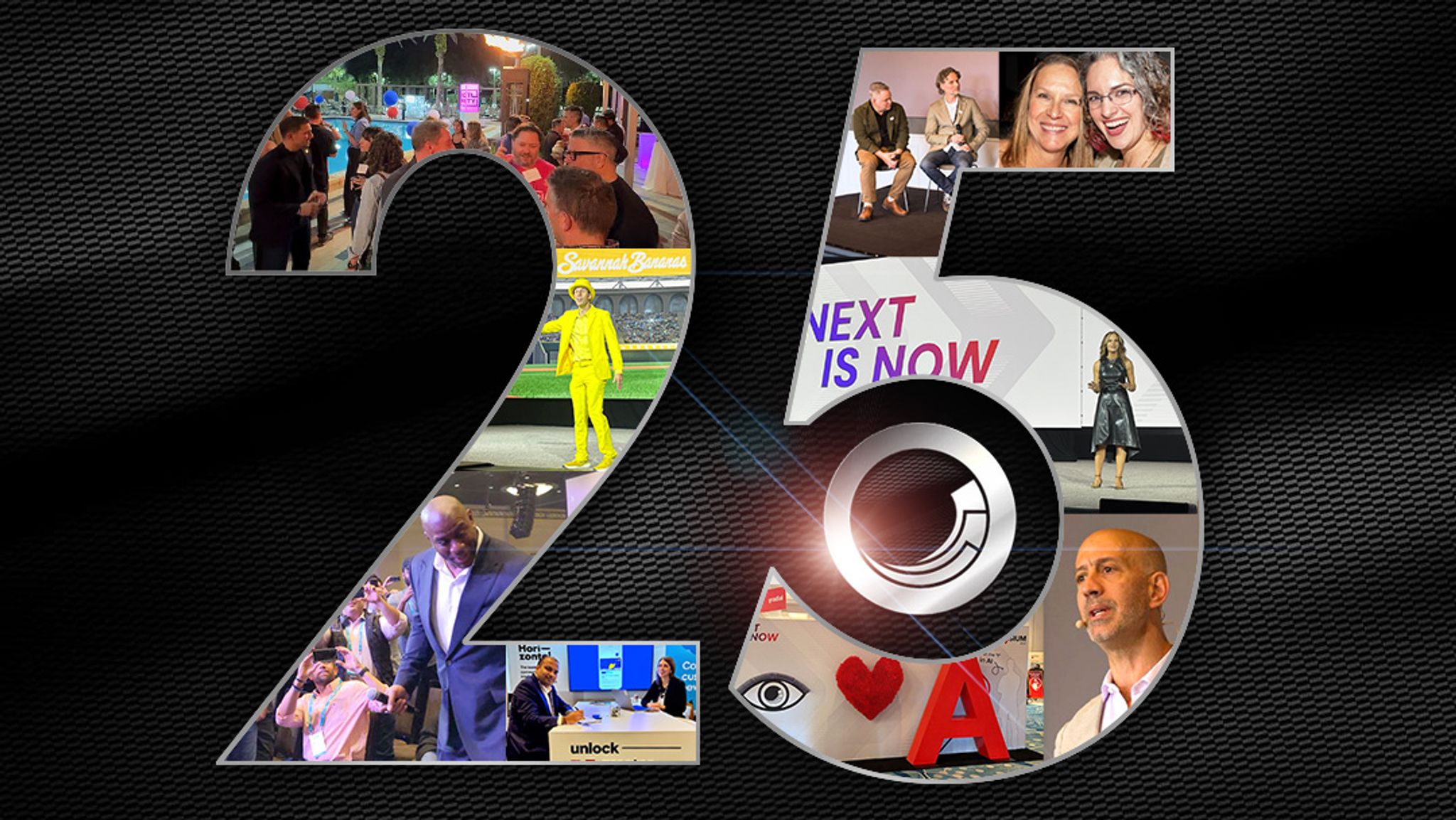
The industry leader just notched a quarter-century of powering websites and digital experiences. Drawing on its pioneering past, the company is once more adapting in the agentic era. I spoke to a chorus of voices about this milestone, from customers to partners, and they proved that people – not products – are the real secret to its past, present, and future.
There’s a song on John Mayer’s breakout album, Room for Squares, where he waxes philosophically about his early twenties, probing the existential question: “Am I living it right?”
The tune, Why Georgia, is an autobiographical love letter to the artist’s youthful turmoil, wandering at the gates of life as it all begins, feeling unsettled about uncertainty.
“It might be a quarter-life crisis,” he sings, “or just a stirring in my soul…”
If you’re my age (try doubling that quarter-life metric), it’s easy to forget how turning 25 is such a major milestone. It’s a crossroads, a junction between growing up and becoming the person you’re meant to be.
That moment can be an emotional waystation. It might even qualify as a crisis if you’re wrestling with what’s next. But that “stirring in our souls” is what guides us into the arms of discomfort and invention, where we sometimes discover an idea – or even a song – that changes the world.
When I was in Copenhagen last week at Sitecore’s 25th “Silver Anniversary” Celebration – the city where the company was born – I was playing Why Georgia on repeat in my head. Like Sitecore, the song was officially released in 2001, a time when the world felt a little lost amidst the great crises of September 11th and a heady tech recession.
That’s when the earliest rendition of Sitecore began to play like freshly pressed vinyl, a first spin that would spawn thousands of fans and power millions of pages and experiences. A chart-topper by any measure.
Yes, some might suggest the needle has settled comfortably into the grooves of the aging CMS category. But a few songs like this are lucky enough – smart enough – to stand the test of time, evolving their compositions and interpretations so they remain relevant.
Over its 25-year history, that’s exactly what Sitecore has managed to do. And despite its ups and downs – and there have been a few – the fans keep showing up, tuning into the same station, listening for new notes across familiar measures.
I have many friends and colleagues across the global Sitecore community, from agency practice leaders to enterprise platform managers. Since its “Silver Anniversary” was first announced, I’ve read countless comments across LinkedIn and other spaces, absorbing the personal connections to Sitecore and its legacy of community. It’s a rare and powerful asset that the company has cultivated and nurtured, and one that has served them well through thick and thin.
To commemorate this moment, I reached out to a few practitioners from across the Sitecore ecosystem, hoping to get their perspective as the company turns 25. While each brought a unique spin, the topic of community kept surfacing like a heartbeat. Like a stirring in the soul.
Before we hear those voices, let's explore a bit about how we got here.
A History of Thinking Ahead
If you don’t know the story of Sitecore, it’s something of internet lore. It’s best told in three chapters, and I’ll just hit the high points.
The first began with its European roots in 1998, when five grads from the University of Copenhagen – Michael Seifert, Ole Sas Thrane, Thomas Albert, Jakob Christensen, and Peter Christensen – founded a web consultancy called Pentia A/S.
Like so many great software mythologies, Sitecore emerged partly from frustration. At the time, Pentia was building websites using a Microsoft backbone, coping with tasks that were repetitive, tedious, and manual. They wanted to simplify the technical facets of that process but also give marketers a way to manage websites without relying entirely on developers.
Thus began the quest. Scripts were written to automate steps. A platform took shape. Then, in 1999, the earliest version of Sitecore launched, and by 2001, it had spun out as its own company under Seifert's leadership. Presciently, he saw the focus on “experience” long before it was in vogue, back when the web was still (largely) static HTML.
“I envisioned the need for a Microsoft-centric system for creating and managing websites that could take the online experience far beyond the then-present technology,” Siefert said in a previous interview on CMS Critic. “We developed a product with functionality and appeal that was completely disruptive in the market at that time.”
Throughout the 2000s, what differentiated Sitecore wasn't just enterprise .NET content management. It was an elemental belief that websites should be measurable, personalized, and connected to customer behavior. This philosophy eventually gelled into its Experience Platform (XP), years before "DXP" became an industry category.
Sitecore graduated into partnerships with an elite slate of industry players. Along with Microsoft, its shiny new logo was appearing alongside giants like IBM, Oracle, and HP. According to James Derry, Sitecore’s marketing director in 2004, the company’s brand identity was rooted in the concept of waves, energy flows, evolution, and an undeniable sense of motion.
It’s also worth noting that, despite some typographical changes, the logo icon remains true to its original form.
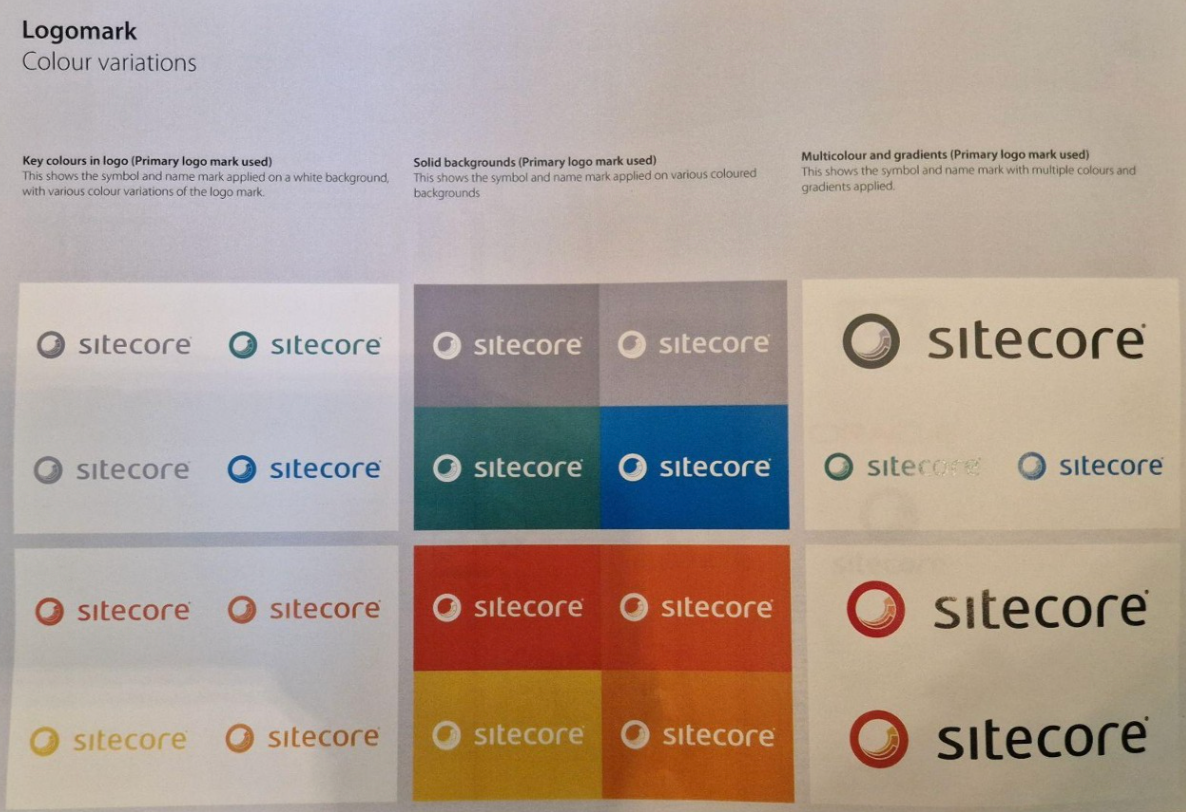
A page from Sitecore’s original brand guide, circa 2004. Source: James Derry, LinkedIn
As the years progressed, Sitecore’s growing user base became something of a tangible community. In 2006, this led to one of its most enduring contributions: the creation of its coveted MVP (Most Valuable Professionals) program, which was inspired by Microsoft's MVP model.
This elite group within the Sitecore ecosystem includes more than 16,000 certified developers and 30,000 active community participants worldwide. Today, the Sitecore MVP community remains one of the strongest ecosystems in enterprise software and has played an outsized role in the platform's adoption and innovation.
The second chapter really kicked off in 2016, when the company achieved unicorn status – notching a valuation in excess of $1 billion and cementing its position as one of Denmark’s most successful software companies.
From 2018 through 2021 (which includes the pandemic-induced era of digital transformation), Sitecore aggressively expanded, aiming to complete its DXP vision. During this period, it acquired Stylelabs, Boxever, Four51, and other technologies that powered its Content Hub, Personalize & CDP, and OrderCloud products.
In the third chapter, Sitecore’s ecosystem embraced a more modular architecture, reflecting the market’s appetite for composable solutions. By 2023, it was also looking to the cloud and SaaS as new delivery models. Two years later, it was surging past $500 million in ARR, and its XM Cloud platform was now the fastest-growing solution in the company’s history.
From AI/ML to the Agentic Era
Sitecore’s history in AI is a rich one, with a roadmap that began well over a decade ago with deep investments in machine learning. In 2017, the company introduced xConnect, which provided an automated collection service for pulling data from an array of sources.
That was followed by Sitecore Cortex, a processing engine that was arguably its first major AI initiative. It promised automatic audience segmentation, predictive capabilities for gauging website visitor behavior, and content recommendations. This clearly influenced the track for the first iteration of Sitecore AI and its automated personalization, which used ML to gain insights from user actions and behaviors to predict and recommend variants.
As early as 2022, ChatGPT and Generative AI were “worming” their way onto the CMS roadmap. In the beginning, use cases were thin, although some tools were already targeting workflow automation as a bigger promise beyond content generation. In 2024, Sitecore introduced Stream, its AI assistant, fulfilling its vision for an intelligent DXP.
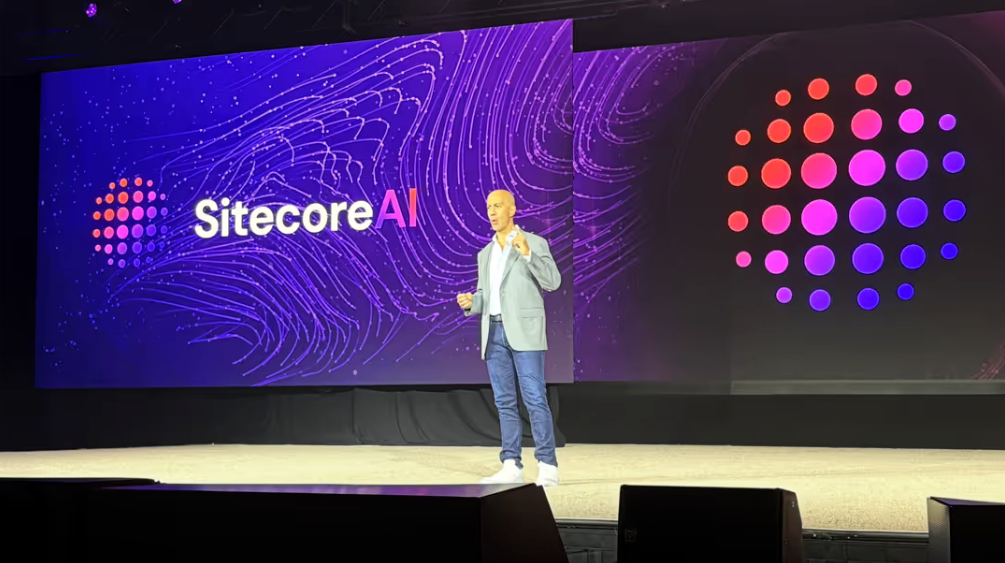
Sitecore CEO Eric Stine at 2025's Symposium event in Orlando, Florida
Of course, the biggest shift came at last year’s Symposium, when CEO Eric Stine introduced the company’s new SitecoreAI platform – which has moved beyond copilots and into the agentic era. From brand-aware AI to campaign orchestration, this bold new vision evolved Sitecore’s ecosystem, helping teams and brands to optimize, personalize, and collaborate in new ways.
Just a few weeks ago, Sitecore once again flipped the script by acquiring Scrunch, an AI visibility platform that focuses on the AEO (Answer Engine Optimization) space. It’s a clear response to a critical customer need in a world where AI search and discovery are top of mind, and one that squares strategically with the company’s agentic ambitions.
A Community of Voices
In many ways, Sitecore has written the music for digital experiences long before the market had lyrics for it. The last 25 years are evidence of this pattern.
In 2001, Sitecore was empowering marketers before the notion of "martech" existed. In the 2010s, it championed customer experience before DXP became a category. And today, it is positioning itself around AI agents and visibility before the next platform shift fully arrives.
At the Silver Anniversary Celebration in Copenhagen, I spoke to many attendees about their feelings at this moment. A quarter century is a long time, and in tech years, that staying power is a rare thing.
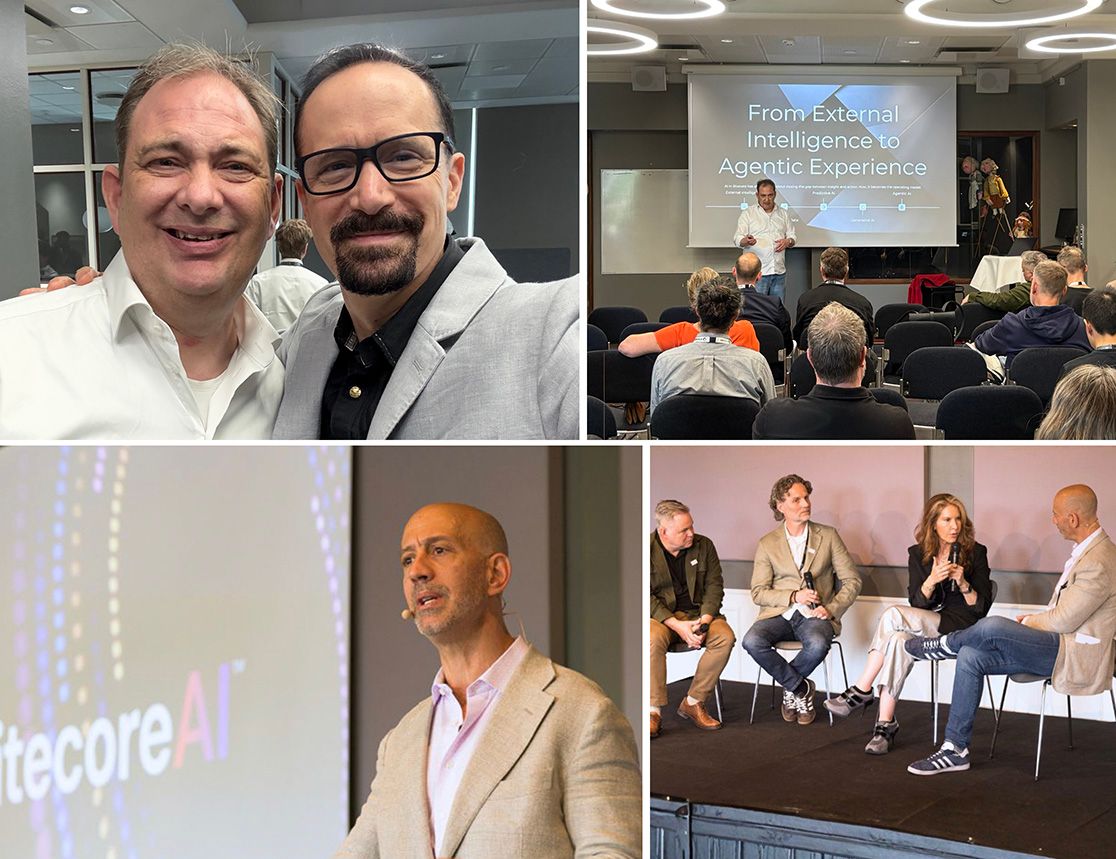
At the Sitecore 25th “Silver Anniversary” Event in Copenhagen
From my conversations with the incomparable Liz Nelson, Sitecore’s VP of Product and Technology, to Alpha-Solutions CTO and Sitecore MVP Klaus Petersen, there was a mix of wonder and emotion at the prospect of coming so far. And with that, deep reflection on how fortunate we are to be here, especially as we all look ahead with a mix of excitement and uncertainty.
Going back to Copenhagen for this celebration was like a love letter to Sitecore. Not just to its legacy of innovation, but its community of creators. I asked Eric Stine what it means as he leads the company into the next phase of its story.
“It is a very big moment,” he said. “I really can’t highlight it, underscore it, say it enough. The speed with which we have adopted this has happened so fast, and we are only at the very beginning. Where we are right now is sort of like asking, ‘Describe the future of commercial aerospace in the year 1927.’ But the one thing I know is that it is going to be transformative for brands.”
As promised, here are a few more voices that have championed Sitecore and are guiding it into the future. They shared their own human, soul-stirring stories – and in many cases, provided advice for future practitioners. These conversations were both revelatory and inspiring, and I’m sure John Mayer would agree: they’re living it right.

Jill Roberson: "It's an amazing world”
Jill Roberson’s Sitecore journey started with a leap of faith. Interviewing for a strategist role in 2013, she openly admitted she knew nothing about the platform but promised she could learn fast.
“They had asked me if I knew anything about Sitecore, and told them straight up in the interview, ‘I couldn’t even spell it for you right now, but I’m a very quick learner,” she said. “If that’s going to be a focus, then I’m happy to pick it up.’”
And pick it up she did. Training on Sitecore quickly pulled her into the power of personalization and digital experience design, where marketers could move beyond simple content updates to crafting tailored journeys.
Jill’s path to becoming a Sitecore MVP wasn’t straightforward. She told me about being denied on her first attempt, a moment that stung less for the title and more as a barrier to enter a community that already felt like “home.” That feeling crystallized at her first MVP Summit, where she found herself surrounded by peers who were just as eager to talk about DX as she was.
“I didn’t really know anybody, and I just kind of found these people,” she reminisced. “We sat at a table, and we were just geeking out about all things Sitecore, all things digital experience.”
Jill was frank with me about the platform’s evolution over its 25 years, which has experienced its share of change. Regardless of outside market pressures or internal shifts in strategy, she sees a company genuinely trying to grow alongside its customers, with a product organization that has historically listened closely to feedback from the field.
The move to Sitecore AI, in her view, was a key inflection point, a way for teams to mature into advanced capabilities like personalization and AI-driven experiences at their own pace without being forced to “use everything” on day one.
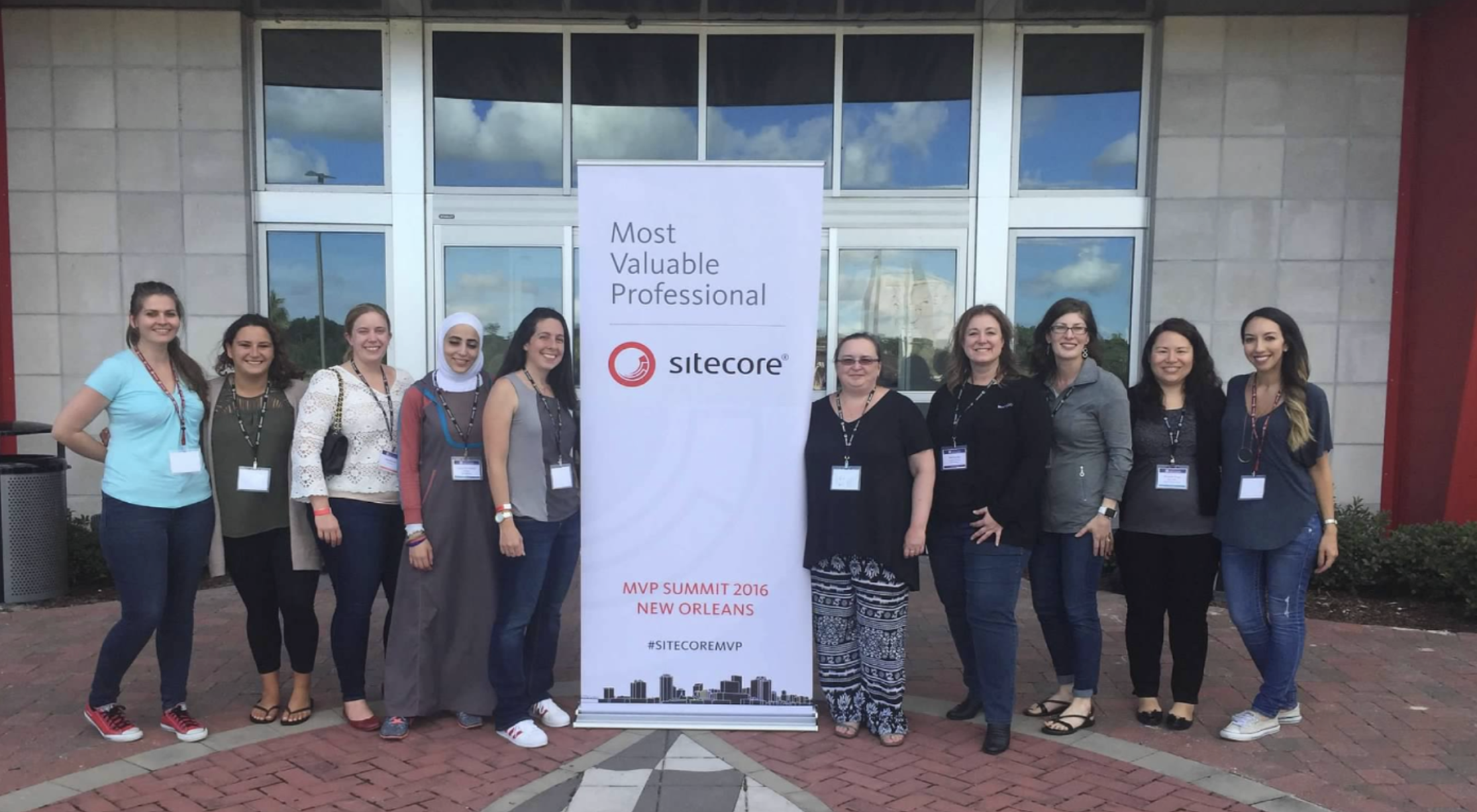
(Second from left) Jill Roberson at a 2016 Sitecore MVP Summit in New Orleans
“Sitecore isn’t perfect,” she said candidly. “But no DXP is. And that’s also such a strength of Sitecore. It’s okay to get frustrated if there’s no right answer. That’s so much of what drives the community, the MVPs, is solving those problems and sharing that information.”
I asked Jill if she had any advice for up-and-coming MVPs who are starting their journey with Sitecore. Her advice was simple but pointed: invest in the community. Even within a partner ecosystem where agencies often compete head-to-head, she said that real progress comes from sharing knowledge across organizational boundaries and acknowledging there’s no one way to fix something.
Today, Jill is the VP of Global Marketing at Dataweavers, which provides an operational layer behind Sitecore to ensure performance and provide governance. As she put it, Sitecore isn’t just a tech stack, it’s an “amazing world” where the work you do – from building global brands to supporting niche associations – is shaping digital front doors around the world.

Megan Jensen: “We're all explorers”
Megan Jensen’s Sitecore story begins not with a clear technical roadmap, but with curiosity… and a little Thai food. Nearly nine years ago, she joined Sun Dog Interactive, a largely Salesforce-focused agency that suddenly found itself with major Sitecore projects and no strategist who spoke the language of templates, items, or data sources.
Megan volunteered to become that person, learning Sitecore over dinners with a developer colleague, notebook in hand as she chronicled unfamiliar technical concepts into something she could grasp. That early crash course set the stage for her first Sitecore Symposium in Orlando, where she encountered a community of smart, motivated, and talented experts that left her with a clear ambition to be in the “Sitecore Club.”
“I left Orlando thinking, ‘I want to be one of these people!’” she recalled. “I want to be friends with them, to learn from them. And yes, I want to get that good at this.”
Today, Megan is the senior Sitecore Solution Architect at Perficient, a global consulting firm. She’s now a multi-year Sitecore MVP, but she resists any elitist framing. For her, MVPs are teachers and stewards, with a responsibility to expand and diversify the community. Part of that charter is bringing in more women, more non-U.S. practitioners, and more client-side voices.
In our conversation, Megan told me how some of her proudest moments weren’t achieving her own awards, but watching mentees earn their first MVP after months of coaching, feedback, and even helping them overcome imposter syndrome. She described the MVP ecosystem as a “symbiotic network,” where mentors and candidates stay accountable through shared commitments like blog posts, webinars, and community contributions.
“I feel like we are the teachers and the leaders of the Sitecore community. I really feel it’s a responsibility, more than anything, to welcome more people into the club and encourage them and help them figure out how to achieve that on their own.”
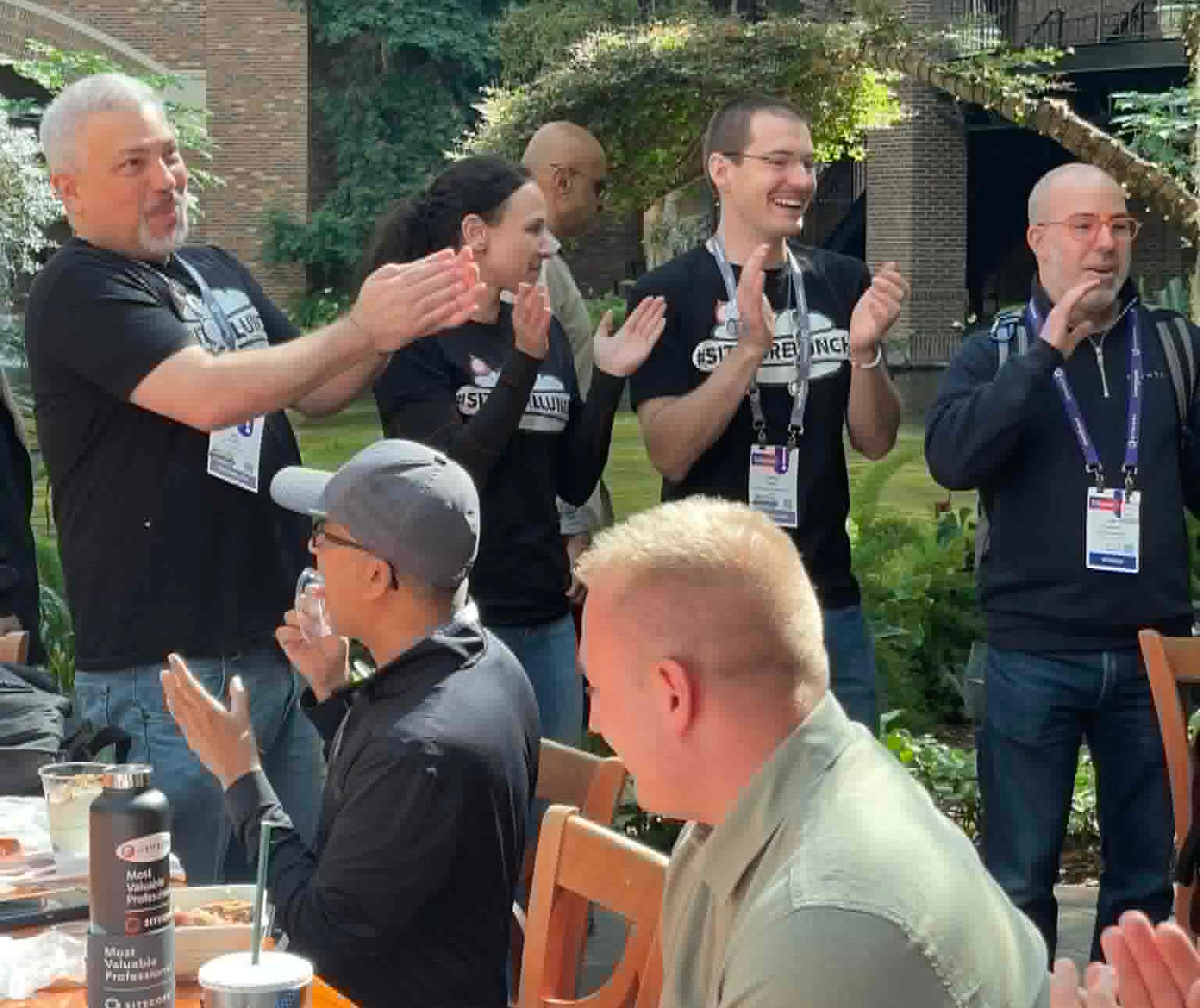
An animated Sitecore luncheon that conjured positive memories for Megan
That responsibility extends beyond people to the product itself. Megan highlights the MVP Summit as a crucible where candid feedback flows directly from practitioners to the Sitecore product teams. Over the years, she has watched Sitecore evolve from a monolithic platform toward a fully composable ecosystem, and now into a more balanced middle ground shaped by market and customer realities.
Underpinning that evolution, she believes, is a willingness to listen. This applies to partners, clients, and the community voices that are closest to day-to-day implementation. Her view of SitecoreAI is consistent with that ethos, where the ecosystem has spoken clearly around the need for greater automation to empower how people work.
“My impression of SitecoreAI is that it’s here to do the meticulous, time-consuming grunt work so that the human mind can be freed up for creative and strategic problem-solving,” she said.
One thing that stood out for me was how Megan sees Sitecore practitioners as having more influence over the digital world than they often realize. With that, she said, they have an opportunity to help shape it ethically. To use technology to reduce harm, increase inclusion, and create a digital future that’s more responsible and less biased.
I asked Megan what Sitecore meant to her at 25, given the potential impact she believes it can have. As she said, the technology might change, but the global web of relationships – friends, collaborators, and even competitors – is the secret sauce. She mentioned pizza tours in Chicago and Irish pubs in Dublin as the human experiences that have made MVP Summits and SUGCONs sticky and memorable.
“I’ve learned so much about the everyday lives of people living in far-flung parts of the world,” she said. “We share our cultures, our slang, our food. Stories about our families. It’s made my world much bigger and much closer at the same time. We’re all explorers.”

Henry Kao: “Infectious energy and genuineness”
Henry Kao’s journey to Sitecore doesn’t begin with a long history inside the ecosystem, but with a very specific business problem. When he joined Atkore in 2020 – a manufacturer specializing in power and grounding conductors for building construction – they were wrestling with a fragmented house of brands.
Henry knew they needed to bring order to their content and assets, and that search quickly evolved from “What CMS do we want?” into a broader DXP evaluation. As he told me, Sitecore’s architecture and product breadth made it possible to consolidate dozens of siloed sites into one powerful master brand presence.
“In fact, the reason we were so entrenched with Sitecore is that we bought all their products, even though they're composable,” he explained. “We just said, ‘Give me everything you've got.’”
Although he’s not an official MVP, Henry described himself as a “pseudo MVP” and, in practice, behaves like one. He’s become an ambassador for the brand, frequently sharing his experiences and advocating for Sitecore in public forums, from video testimonials to conversations with peers.
What continues to draw him into Sitecore? It’s not just the technology, but the ecosystem around it. The Symposiums, the program structure, the way customers and practitioners rally around the platform. That community, he told me, is marked by a particular feeling that’s hard to manufacture. He tried to crystallize it for me.
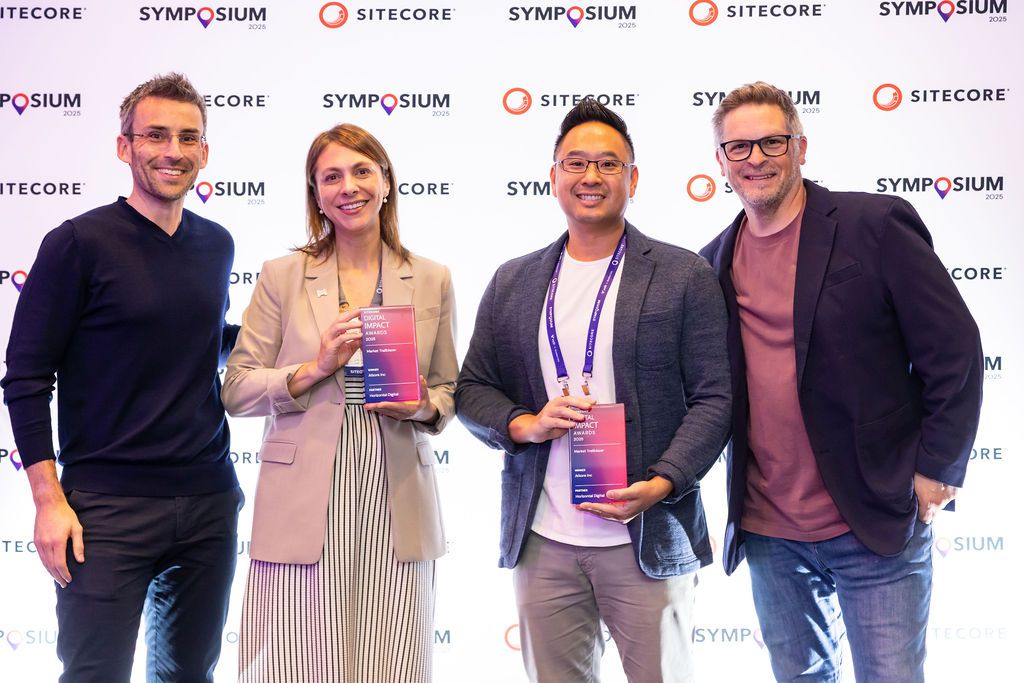
(Third from left) Henry Kao receiving an award at Sitecore Symposium 2025
“The first word that comes to mind is this infectious energy,” he said. “But the second one is genuineness.”
As Sitecore turns 25, Henry sees a company that has “earned its street cred” without aging into complacency. He pointed to their aggressive but strategic growth, from ambitious acquisitions to product expansion. But he also cited Sitecore’s willingness to listen to customer pain points, even down to simplifying how SitecoreAI is priced and contracted.
That same focus is showing up in how they’re approaching agentic AI for marketing. As Henry explained, the tactical wins are already visible in content creation, and the next frontier is orchestrating workflows and human review across complex organizations. Henry is confident that Sitecore will lead these next steps, but believes the responsibility also rests with practitioners and leaders like him.
“I totally disagree with the premise that AI is a solution looking for a problem,” he offered. “Don't be scared of it. Lean into it. Because if you don’t, you may be the dinosaur in five years.”

Anne Norman: “What it means for me is just being proud"
Anne Norman, Senior Director of Digital Solutions at Horizontal Digital – an “experience forward” agency – embodies the kind of multidimensional leadership that has become essential in the evolving Sitecore ecosystem.
Coming from a background at the intersection of telecom, data centers, and early web work, she has spent well over a decade engaged with Sitecore in roles that bridge technology, marketing, and business value. But her long tenure in the ecosystem isn’t just about product familiarity. It reflects a sustained commitment to continuous learning and to finding innovative ways to solve real customer challenges.
“I have a personal philosophy of just continuing to learn and grow,” Anne told me. “For those of us in the industry, it’s like you have to be truly passionate about technology and believe in the endless possibilities of what digital can do.”
That passion, for her, is inseparable from the Sitecore MVP program, which she sees as a global “community of practice” that has expanded far beyond its technical roots. Early on, Sitecore MVPs skewed heavily toward deep technical specialists and .NET practitioners. Today, Anne is one of the voices championing a broader, more diverse profile of expertise. This includes business strategists, marketers, and configuration-focused experts who align with Sitecore’s direction.
Anne also sees Sitecore’s 25th anniversary as a proof point of the company’s ability to continually adapt, shifting from a monolithic platform to a modern, AI-infused, composable product suite. In our conversation, she highlighted the company’s innovation and community as the cultural through-lines that have allowed Sitecore to remain relevant in a market that can look entirely different every six months.
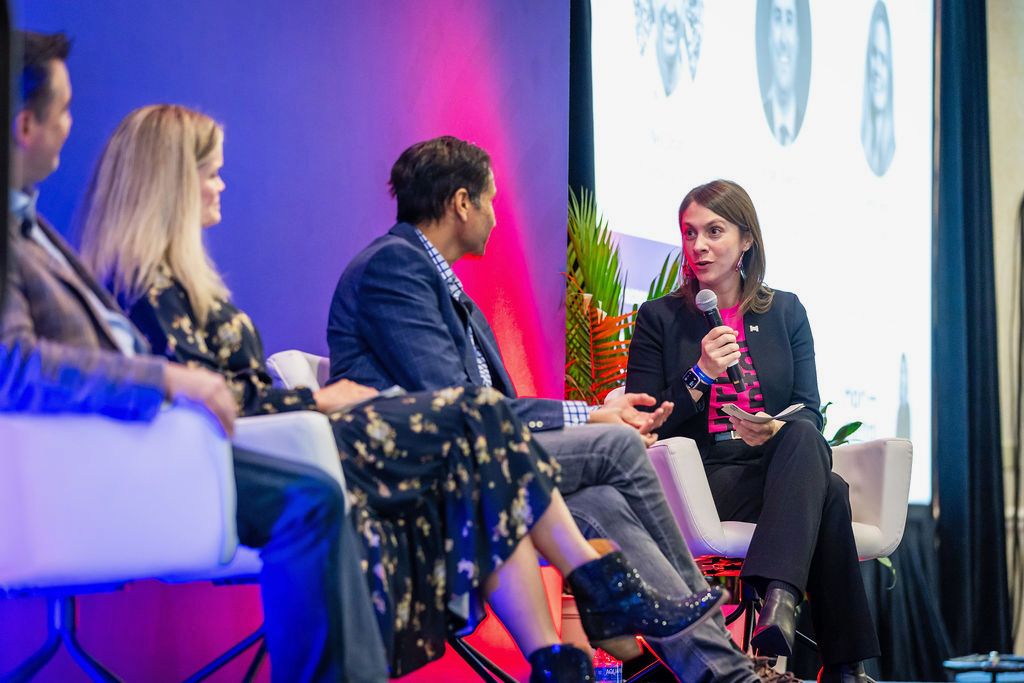
(Far right) Anne Norman on stage at Sitecore Symposium
As she explained, that evolution is visible in the move from heavy customization toward “configuration, not customization,” and in SitecoreAI’s emergence as a native capability that lets organizations crawl, walk, and then run in an agentic landscape. From her advisory vantage point at Horizontal, she framed it simply for customers trying to make sense of the hype.
“AI is your best intern,” she relayed. “It’s not your head of strategy, right?”
Right. And for the next generation of builders and MVPs, Anne’s advice goes beyond understanding the relationship with AI and reinforces the human tenets of responsibility and generosity. She views the Sitecore community not just as the formal MVP network, but as the circles we inhabit inside organizations and across real relationships – especially in efforts like enabling women in tech.
One thing I loved was Anne’s intentional mantra of lifting others up. As she told me, she’s emphatic about recognizing good work, amplifying emerging voices, and creating environments where people feel they belong and can contribute. It reflects both her personal ethos and the best of what the Sitecore community can be when product innovation and human connection move forward together.
“What it means for me is just being proud,” she said, glowingly. “I’m proud to be part of a community that’s been around this long and continues to invest in its product suite. It’s been fulfilling for my career, for the organizations I’ve worked for, and for Sitecore. And I think that culture of innovation, adaptability, and community is what’s kept them relevant for 25 years.”

Heather Nicholls: “There's this sense of everybody belonging here”
For Heather Nicholls, the path to Sitecore was anything but linear. And that’s exactly what makes her story so unique – and her perspective so valuable.
Trained in theater, then English, then thrust into the early days of the web at one of Alaska’s first ISPs, Heather eventually found herself leading communications and web replatforming projects for public organizations. This ultimately led her to GCI Communication Corp, where she’s been for almost 15 years and is now a Senior Product Manager.
Those years have been informative. What began as hand‑coding HTML and early e‑commerce experiments evolved into managing large, complex digital experiences, culminating in GCI’s move from a tightly controlled WordPress setup to Sitecore in 2015. As Heather told me, this enabled marketing to finally move at the speed of the business. Making the transition was hard, but worth it.
“There's always something new to learn,” she said. “Change can be big and scary, but if you have confidence in your ability to adapt, then you'll be fine.”
That mindset of adaptability – reinforced by her communication and theater background – is central to how Heather thinks about both technology and community. She draws a straight line from improv training to navigating disruption in digital experience. Case in point: the ability to say “yes, and…” rather than “no, but…” when faced with new tools, new constraints, or new customer expectations.
It’s the same disposition she’s now bringing to AI. As she explained, there’s reason to be cautious given that GCI operates in a regulated industry. But at the same time, she’s deeply curious, and is actively preparing for AI once governance and compliance are aligned. In her mind, the imperative is there.
“The old marketing funnel is dead,” Heather told me. “But look at all of these great new opportunities we have to meet the customer in their moment right now.”
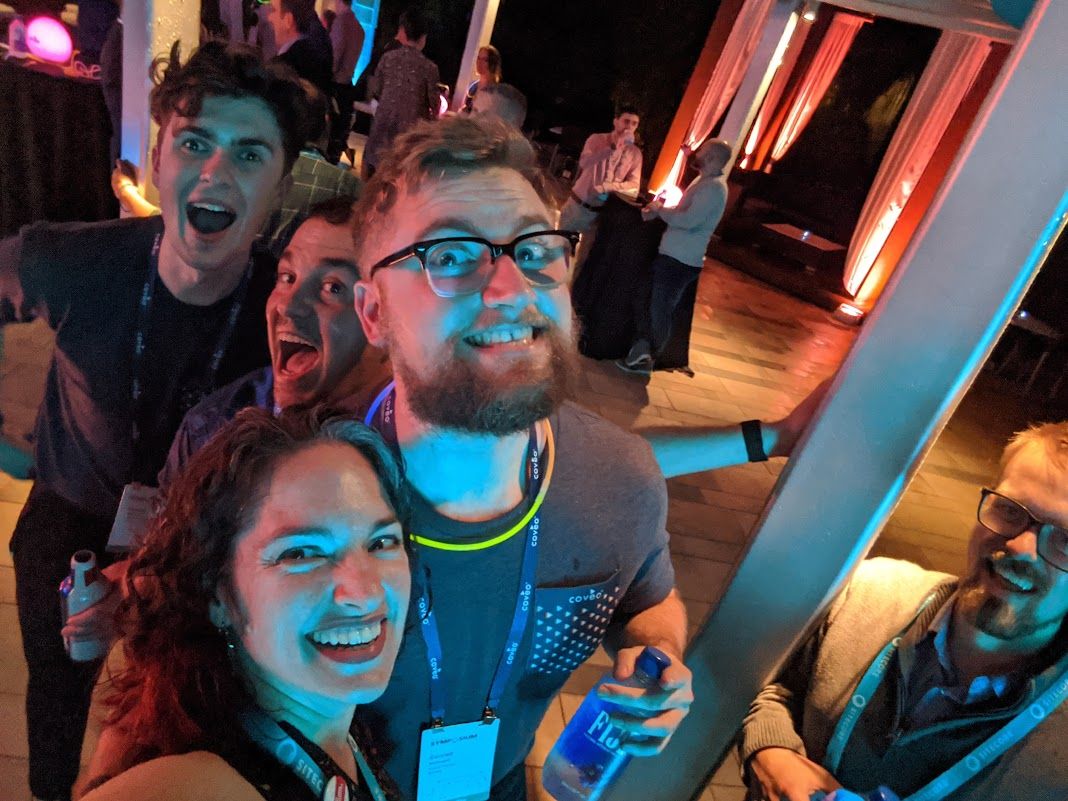
(Bottom) Heather Nicholls and “crew” at a Sitecore event
Heather’s view of Sitecore is firmly rooted in that reality. And as the company passes 25, she sees its story as being more than just a powerful CMS. It’s about a platform that lets marketing keep pace with nonlinear, AI‑mediated customer journeys while still grounding decisions in data.
In preparation for the future possibilities of SitecoreAI, Heather told me she’s already structuring content so it’s discoverable not just by humans, but by agents and AI systems – a shift from traditional SEO to GEO and AEO. Sitecore’s content and asset foundations are, in her words, how organizations can respond to a world where many customers may never even hit the website but still form strong impressions of the brand.
If technology is one pillar of Heather’s story, the Sitecore community is the other. For years, she told me how she felt like she was operating on an island in her home state of Alaska. The annual trek to Sitecore Symposium was always enriching, but she would still wind up back home feeling somewhat isolated. That changed when she seriously engaged with the MVP program and the broader ecosystem.
“Every single person that I spoke with was so open, welcoming, and encouraging,” she said. “And there's this sense of everybody belonging here. We're all trying to do the same thing.”
Being guided by mentors and introduced to practitioners across agencies and brands, Heather discovered a community where competitors share freely, questions are welcomed, and customers have a direct line to influence product decisions. That sense of belonging and impact – and seeing Sitecore respond to feedback and even adjust product limits based on real‑world needs – is what transformed the platform from a vendor into a true partner.
How to thrive for another 25
The song Why Georgia has a palpable coming-of-age theme. And it makes sense: Mayer was meandering in Atlanta, trying to find his footing in a music industry that was rapidly transforming. Two platinum albums later, it's clear that he found his way.
Turning 25 is fraught with questions and crucibles, but it’s still an age where possibilities seem to stretch out in front of us. It's an age where experience meets service. The key to thriving? Doing work that’s meaningful – and finding like-minded people to do it with.
In the digital experience space, many of us share a boundless belief in creativity. It inspires us on this journey and surfaces in our passion for making new things. That should give us hope in light of the constant change we’re facing.
There’s no control plane for where AI might take us. No guardrails for what’s ahead. As someone who has built directly in Sitecore and countless other platforms, I can see the precipice we’re standing on. Will CMS still be here in five years? Will it mutate into something we can’t even predict? What will the toolscape look like in this brave new AI world?
All fair questions. But seeing Sitecore’s leaders and founders back in Copenhagen reminded me that we can do hard things. We can overcome. Adapt. Evolve. All the things this company has done consistently for two and a half decades. Maybe that’s the key to maintaining momentum for the next big stretch.
As Eric Stine told me, Sitecore’s 25th is more than a milestone. It’s a celebration of its customers and partners in an industry that it helped pioneer – and continues to push forward.
“The fact that we have led the market for a quarter of a century in a space that is only a quarter of a century old is a tremendous point of pride,” he said.
And that pride has shone through across Sitecore’s global community. At its heart. With its people.
They are, after all, the real music.