The Razor’s Edge of AEO: How Razorfish is Sharpening the Future of AI Search

Razorfish’s SVP of Search Amos Ductan – a long-time veteran of SEO and performance media – shares how the legendary agency is focusing on AI visibility, how the company's culture of innovation is driving adaptation, and what's ahead in this brave new AI world.
Amos Ductan's most important job is being a dad.
Last year, he shared a story on LinkedIn about how he and his wife have been writing emails to their kids since birth – capturing the moments, milestones, and memories of their family journey.
Now that he has a rich repo of messages, Amos has uploaded them to Google’s NotebookLM, where he's summarizing everything into sharable content. It's a beautiful, authentic testament to his parental journey, and one way to help kids understand who you were before you were patently “uncool” (and I speak from experience).
“It’s like giving them a time capsule, but one that talks back,” Amos wrote. "The use cases for LLMs are truly endless."
That last part rings true. And as the SVP of Search at Razorfish, harnessing new tools and finding creative outlets is par for the course – even if the AI era presents significant challenges to the way he approaches his wheelhouse of SEO and SEM.
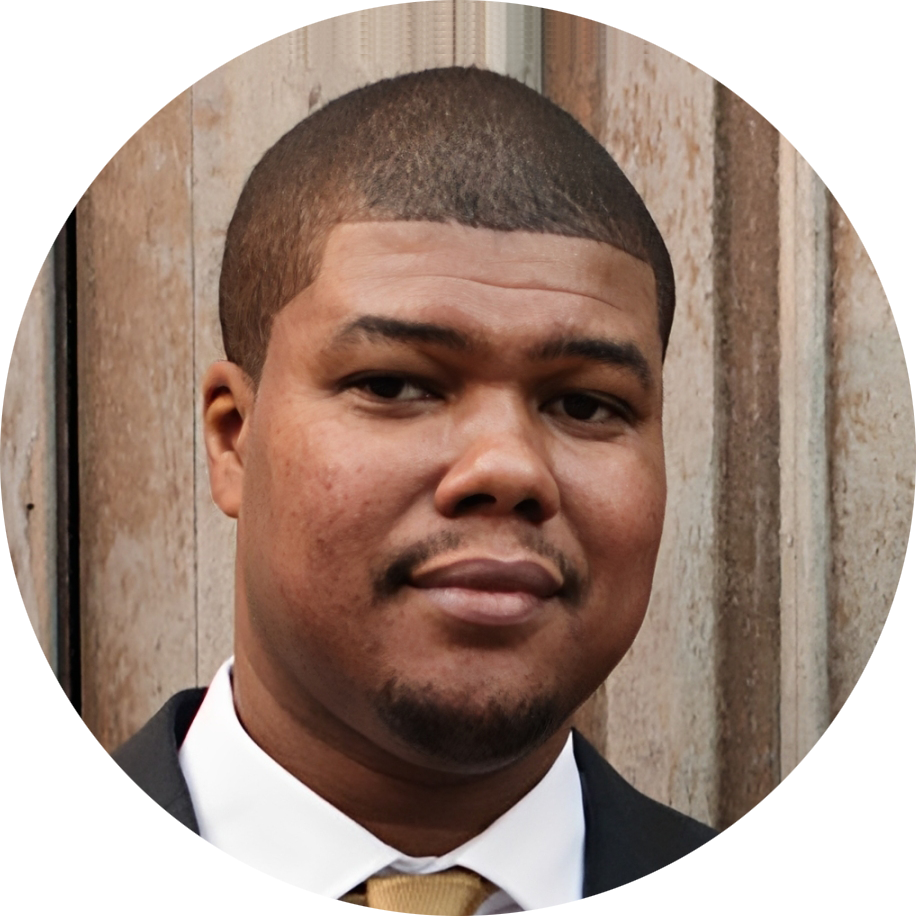
Razorfish VP of Search Amos Ductan. Source: LinkedIn
I talk to a lot of agencies these days. They're on the frontline of the frontline, feeling the AI change with deep urgency. They're also adapting faster than most as their revenue models are upended – and they struggle to tap the opportunities that AI presents.
Let's face it: charging for hours of development or fumbling through the odious phalanx of a migration doesn't demand the same price tag it once did. Brands are also fully aware that AI is diluting the perceived value, and they’re expecting more for less.
While 2025 was unkind to many shops in the agency sphere – just read some of the data that Karla Santi of Blend Interactive shared at our recent CMS Kickoff – this year has been a little more chipper. Some of the agencies I've spoken with are finding terra firma, harnessing AI and "agentic engineering" capabilities (vibe coding, n'est-ce pas?) to build custom solutions. This is putting a bit more wind in their sails.
That said, the negative impacts have been undeniably macabre. Accenture, one of the world’s largest digital transformation and consulting firms, cut 11,000 jobs last September as part of a massive global restructuring effort. The company admitted that a growing AI gap was forcing its hand, which reflects the growing realization that AI is, in fact, altering customer expectations.
Perhaps the noisiest part of the marketing conversation is around AEO (Answer Engine Optimization) and GEO (Generative Engine Optimization). I've been tracking these topics with keen interest, trying to parse the hype from the hope. This includes recent announcements from Conductor and HubSpot around their respective AI visibility tooling.
In my recent conversation with Amos, we dug into everything through the agency lens. He's the right guy to talk to – a time traveler who has spent 16 years at Razorfish, all of it in the agency's search and SEM practice.
“Now more than ever, it’s important to look at search in a unified way,” he told me. “I work very closely with our partners on the SEO side, and always have.”

Source: www.razorfish.com
Razorfish specializes in delivering marketing transformation. Founded in the mid-90s in New York City by Craig Kanarick and Jeff Dachis, Razorfish is considered one of the OG pioneers in the digital space, helping brands navigate the intersection of marketing, technology, and consumer behavior. I worked with them directly on a few large-scale website projects when I was in Silicon Valley, which is a reminder of just how far back we all go.
Razorfish merged with Sapient in November of 2016, making it part of the global goliath’s Publicis Groupe. But in 2020, its original independent brand was resurrected, reinforcing that unmistakable name in the digital zeitgeist.
Amos has been a talented passenger on this train of change, continuously pushing the boundaries of search engine marketing and optimization. But AI is shifting what we do, how we do it, and what we should expect from the effort.
“This isn’t just an inert algorithm,” Amos explained. “We’re pulling up the goal work of being visible in AI responses, and the more strategic work of trying to influence the AI so that it says things that are aligned with the message that we want it to convey to users.”
Controlling these new answer engine channels is impossible. Outside of ads coming to ChatGPT, the best shot we have is, as Amos said, influencing them. As the investment in AEO becomes a strategic boardroom consideration, we're facing big questions surrounding the tools and practices to pull this off. Are they working? It might be too early to call, but there are promising signs.
AEO relies on many of the core tenets of SEO: Good structure, schema, and semantics. That said, the hacks and “bag of tricks” that defined the darker corners of search engine optimization don’t have much place in this new world of conversational layers that sit in front of everything. Amos gave me some perspective on what matters through the lens of a leading agency practitioner – and what we should pay attention to.
AI visibility and the new funnel
The most striking thread in our conversation was Amos’s position that AI is no longer a side channel. It’s upstream of everything – a fact that was codified by Y Combinator’s recent alumni event. At the investor level, AI is no longer a category of product, but the substrate.
Clients, predictably, are nervous. They’re used to owning their website, analytics, and media buys. They might not love the opacity of Google’s algorithm, but at least it was a familiar black box that was navigable. Now, LLMs and AI Overviews are juicing anxiety levels, particularly as they grow more powerful and more human-like in their responses.
Users and teams are also struggling with measurement, which should surprise no one. This is chiefly reflected in the race to adopt tools that track performance in AEO and GEO investments. As Amos relayed, none of these fit neatly into the dashboards most CMOs are used to reading.
“One of the most common themes is unease and the loss of control,” Amos said. “It’s not just about your website anymore. That tends to be where the conversation starts. How do we even think about this new world where there’s all of this stuff that’s out of our control? And how do we measure it?”
Amos was blunt about the double-edged nature of AI overviews and answer layers. As he told me, some of this erosion might represent a rebalancing of the equation, where we’ve been focusing on the wrong data points.
“In some cases, we’re seeing drops in click volume,” he said. “But in a lot of cases, those clicks were just adding a kind of friction. In those places, it’s actually good that we can have an AI overview versus having to click through onto a site.”
But that doesn’t mean the stakes are any lower. Amos sees a quiet, structural change that’s impacting brand perception as users sidestep traditional search for the answer engines. By the time they see your ad, organic listing, or landing page, their expectations have already been shaped by an AI response.
From Amos’s perspective, that makes AI visibility more urgent than ever.
Tools, tactics, and the emerging AEO stack
If you’ve spent any time in the martech ecosystem, then you’ll recognize a familiar “reaction pattern.” Something changes in the landscape, and suddenly the market is flooded with vendors promising to decode, visualize, and unlock solutions to the next wave of problems.
This has certainly been true with SEO platforms (think Semrush and Ahrefs). Now, AEO, GEO, and AI search visibility have entered the lexicon. The difference? AEO has become a boardroom consideration – one where the CEO and CMO aren’t just aware of these technologies, they’re factoring them into their business strategies.
Amos predicts that AI visibility tracking will graduate to near-universal adoption, where tools like Conductor and Otterly.ai become fixtures within the modern enterprise stack.
“Generally speaking, getting some kind of AI visibility tracking will be table stakes,” he said. “Every organization now has some version of Semrush, so I think we’re eventually going to get to the same place.”
The reality, however, is that many people are still at the awareness stage. During a recent Boye & Company CMS Experts and Digital Leaders meeting in New York, I gave an impromptu session of “The Matt & Matt Show” with Matthew McQueeny, where we discussed AEO in depth.
After the talk, several people in the room – many of whom were content or marketing practitioners – told us they had no idea what AEO was, let alone what the tool landscape looks like. Amos is seeing this with some of his engagements.
“Clients are coming to us for help with managing the whole ecosystem. Oftentimes, opportunities come from an SEO engagement, but then we zoom out and say, ‘We need our brand and content strategy team.’”
“In some cases, there’s a real education gap,” Amos codified. “Some clients don’t even know there’s a way you can track this at scale. People think this is just a phrase that we’re starting.’”
That’s a clear signal that we’re roaming the perimeter of the echo chamber, and education is clearly the most important vehicle for breaking out of it.
When it comes to shaping an AEO model for a customer, Razorfish starts where a seasoned marketer might expect: by getting a lay of the land. Who’s being mentioned? In what contexts? For which intents? Once you have that baseline, the gaps become a little more visible – and that’s where the next layer of the stack comes in.
Content has always been the substrate of SEO. In the AEO era, that’s still an immutable fact, but the way we scale it has evolved with AI. Within this new paradigm, Amos described an ecosystem of partners and tools that blend content gap analysis with reliable AI-assisted creation, providing the missing links to the AEO equation.
Some of this is tool-based, but there’s still the presence of content strategists and practitioners who know where to apply the right mixture of machine-based and human solutions for success. This is becoming a new domain of expertise for agencies.
“The other thing that’s proving to be critical is AI assistance with new content generation,” he explained. “There are lots of different partners and platforms to help with that, from performing content gap analysis to writing new pieces using existing pieces that are working strongly.”
The human role in this can’t be underscored, and if you stop at tooling, you’ll miss the point. Amos emphasized that this isn’t just adopting new tools or a dashboard for SEO teams – it’s becoming a philosophical mindset that requires leadership and change management, as well as the integration of multiple marketing disciplines like brand and content strategy.
Razorfish is becoming a go-to partner for shepherding this transformation. “Clients are coming to us for help with managing the whole ecosystem,” he said. “Oftentimes, opportunities come from an SEO engagement, but then we zoom out and say, ‘We need our brand and content strategy team.’”
AI visibility is revealing what many of us already suspected: search was never just about rankings. We’ve been overvaluing traffic volume and not seeing the forest through the trees. When your websites and content are properly structured – and quality becomes a more crucial benchmark – AEO can help influence how your brand surfaces across these channels, and give you an edge in this new internet of possibilities.
‘Build vs. Buy’ in the age of AI
One of the more intriguing parts of our conversation veered into the “Build vs. Buy” conundrum, which I touched upon in my recent talks at Joomla’s JDay USA and CMS Summit 26.
The question is simple: If everyone has access to vibe coding with increasingly powerful agentic frameworks, could agencies build a CMS or CRM to suit a specific customer’s needs – and dig a moat of greater value around an owned solution?
Amos’s answer is rooted in Razorfish’s heritage as a technically savvy shop: Build where it matters, buy where it's logical, and connect things with confidence. He’s not starry-eyed about custom development for its own sake, and most agencies aren’t set up to be product companies. So a decision to build comes down to a careful weighing of all the factors.
As he told me, if the platform you’re already using has 80% of what you need, there’s no net benefit to reinventing that wheel. That said, the agencies I’ve spoken to are carefully weighing the long-term value of owning more of the stack.
“We’re always keen to build where there are gaps,” he said, “but we’re not necessarily going to build by default. We’re focused on filling in gaps where we see opportunities to add value for clients.”
This “last mile” framing came up more than once, and it feels like a relevant and useful mental model. For the enterprise, there’s a clear question surrounding trust when it comes to running mission-critical workflows on bespoke, vibe-coded contraptions. You want hardened, scaled foundations that are well-maintained and supported with logical customizations.
“If there’s a way we can build something that complements what we’re already using for a client that’s repeatable and has enterprise scale, that’s the best of both worlds,” Amos reflected.
The rise of LLMs and code assistants hasn’t changed whether Razorfish decides to build versus buy, but it has absolutely changed how much they can build – and how quickly.
“It’s been huge, especially in search,” Amos said. “Now the barrier to entry is even lower, so we’re definitely building more, and we’re able to fill more of the gaps than ever before.”
Of course, on the customer side, the change is also being felt. Enterprises are no longer relying on their agency partners to crank out boilerplate integration code. What they’re seeking are partners that can assess their morass of legacy systems and implement new roadmaps for agentic solutions that deliver the future.
Build or buy, this is an opportunity moment for agencies to transform their own value – and develop the next wave of endearing partnerships defined by performance.
From search to outcomes: what’s next on the agentic horizon
I asked Amos to look down the road a bit and wax about the future. With 16 years of Razorfish under his belt, he has an unmatched sensitivity to the search landscape. If AEO is a wedge that agencies are using to open doors, what’s next?
He didn’t hesitate: the real shift ahead is behavioral. We’re already seeing glimpses of it in the way early adopters live inside chat interfaces and agent-style workflows. But that’s not where the mainstream will land. Most people want AI that lives where they do.
“If you think about how we’re using things like Claude Code, OpenClaw, all that stuff, I think the average person isn’t going to want to do that,” he argued. “But the average person does want an AI agent they can use with their iMessages, and have it perform things for them.”
There’s another subtle but important distinction that Amos made. Right now, we’re still “doing AI” as an explicit step in our workflows. We go to a site, open a chat, paste a prompt, and repeat. But in the future Amos envisions, AI is ambient – it’s already there, functioning in the background. And in that reality, the very notion of “search” starts to mutate.
“Search is a means to an end. As these technologies make things easier, I think the future is people no longer ‘searching’ in the traditional sense. It’s about outcomes at the end of the day.”
“I see a world where you don’t really do the searching anymore, because you just have your agent do it for you.”
And that tracks with everything I’m seeing as user complexity becomes further abstracted. Website visitors are asking for answers, not a results page populated by blue links. In the near future, they’ll simply want the trip booked, the appointment scheduled, and the product ordered – all with basic prompts and zero friction. The shift, as Amos said, is behavioral.
“Search is a means to an end,” he punctuated. “As these technologies make things easier, I think the future is people no longer ‘searching’ in the traditional sense. It’s about outcomes at the end of the day.”
Which loops us right back to AI visibility – only now, the stakes are even higher. In a future agent-to-agent ecosystem where AI is making decisions on your behalf, you might never see the response at all. This could further obscure how your brand is showing up throughout that decision-making cycle. If that’s the case, how do you influence the choices an agent makes?
Right now, we’re focused on what we can control. But it’s easy to see how disruptive this will continue to be. That’s why it’s critical to be properly tuned right now, ensuring that your content is deeply modeled and positively represented. Do that right, and you might have an edge in whatever comes next.
Do agencies matter more in the AI era?
They do. And whenever I talk to shops about AI, I hear echoes of the same story I’ve told from the stage.
In early 2025, a lot of practitioners were wondering if they’d still have jobs by the end of the year. Twelve months later, the mood has shifted. The work has changed, and teams have indeed gotten leaner. But the need for human judgment hasn’t gone away.
Amos is at the frontier of this shift, working as a sort of “change agent” within an established agency practice. He’s steeped in the tactical history of search, from bids to keywords to account structures. But when he talked to me about where Razorfish is investing in the future, it’s leaning on what AI can unlock with orchestration. He sees AI visibility, AEO, and the rise of agents as force multipliers that are pulling strategic disciplines together.
Agencies like Razorfish have a critical edge within this patina of AI transformation. Yes, there are point-solution vendors – both legacy and emerging – that offer a salve for managing AEO. But many of these tools are forging partnerships with agencies, providing a stronger coordination with brand and content strategy as a complete solution.
As far as the stack is concerned, agencies have already evolved beyond “tool picking.” They’ve been in a tacitly strategic role, interpreting a myriad of signals to help enterprises make outcome-based decisions. It’s high-value stuff, and they’re best positioned to deliver it – working at the intersection of clients, platforms, and users to make sense of a landscape that is changing fast and furiously.
Anxiety, as I said, is a big part of the story. Amos didn’t sugarcoat it when he talked about how his clients are feeling it. But Razorfish is tackling this pain proactively, blending its focus on edge technologies, awareness and education, and the alignment of internal teams around outcomes. It’s also helping customers as an AI-forward resource, mapping the value of new opportunities as they come online – such as ChatGPT’s latest push into advertising.
In this new era of AI Overviews, zero-clicks, and answer engines, brands are feeling the existential risk of being invisible. Agencies should feel bullish about their strategic value as guides in this wild new frontier. It’s still early days, and they have a unique shot at shaping the narrative. Add to that the ability to leverage AI to both customize and fully build new solutions, and there’s a limitless opportunity to own the experience.
One other note: We should all be more conscious about customer behavior as it relates to AI. As generational cohorts engage differently with answer engines and search tools, how will this impact the experience vector? This is where agencies like Razorfish have been investing heavily in research, helping to unpack how brands can futureproof for Generation Alpha in a complex digital landscape of social media and search-driven experiences. You can learn more about it here.
In many ways, Amos isn't just a dad to his kids. He's also nurturing the growth of AI search at Razorfish, raising it from optional experimentation to differentiated value in a new stack of AI-powered everything. It’s still early days, but there are promising signs. And Razorfish is pushing to do what it has always done: innovate and deliver at the razor’s edge.
Upcoming Events

RAISE Amsterdam
May 20, 2026 – Amsterdam, Netherlands
Sponsored by Kontent.ai, RAISE Amsterdam brings together bold marketing and technology leaders to explore how agentic AI is reshaping the way ambitious brands create and deliver content and what it takes to use it safely, responsibly, and with proper governance. Experience the ideas that are shaping the future and dive into big thinking, innovative strategies, and expert insights. Held at the Klein Canvas, Volkshotel, you'll hear from world-class speakers in dynamic sessions that will reveal how AI-powered content operations are accelerating production, improving governance, and driving creative impact. Limited spots are available, so book yours today.

Umbraco Codegarden 2026
June 10–11, 2026 – Copenhagen, DK
Join us in Copenhagen (or online) for the biggest Umbraco conference in the world – two full days of learning, genuine conversations, and the kind of inspiration that brings business leaders, developers, and digital creators together. Codegarden 2026 is packed with both business and tech content, from deep-dive workshops and advanced sessions to real-world case studies and strategy talks. You’ll leave with ideas, strategies, and knowledge you can put into practice immediately. Book your tickets today.
CMS Connect 26
August 5-6, 2026 – Montreal, Canada
The best conferences create space for honest, experience-based conversations. Not sales pitches. Not hype. Just thoughtful exchanges between people who spend their days designing, building, running, and evolving digital experiences. CMS Connect brings together people who share real stories from their work and platforms and who are interested in learning from each other on how to make things better. Over two days in Montreal, you can expect practitioner-led talks grounded in experience, conversations about trade-offs, constraints, and decisions, and time to compare notes with peers facing similar challenges. Space is limited for this exclusive event, so book your seats today.
Open Source CMS 26
October 20–21, 2026 – Utrecht, Netherlands
Join us for the first annual edition of our prestigious international conference dedicated to making open source CMS better. This event is already being called the “missing gathering place” for the open source CMS community – an international conference with confirmed participants from Europe and North America. Be part of a friendly mix of digital leaders from notable open source CMS projects, agencies, even a few industry analysts who get together to learn, network, and talk about what really matters when it comes to creating better open source CMS projects right now and for the foreseeable future. Book your tickets today.

Contentstack ContentCon 2026
September 30 - October 1, Amsterdam / October 27-28, 2026 – Chicago
Contentstack’s annual customer conference is the premier event for executives, marketing leaders, and developers to redefine their digital experience strategy. This is your opportunity to step out of the "status quo" and into "elite" status, learning exactly how the world’s most successful brands are using the technology you already own to do the impossible. Enjoy a full day of interactive workshops, certifications, and inspirational on-stage sessions designed to help you become an expert on cutting-edge digital strategies and how to turn Contentstack's CMS and adaptive personalization tools into your greatest competitive advantage. Book your seats today.