11,000 Days and Counting: CoreMedia’s Sören Stamer on AI, Digital Sovereignty, and Seizing Opportunity

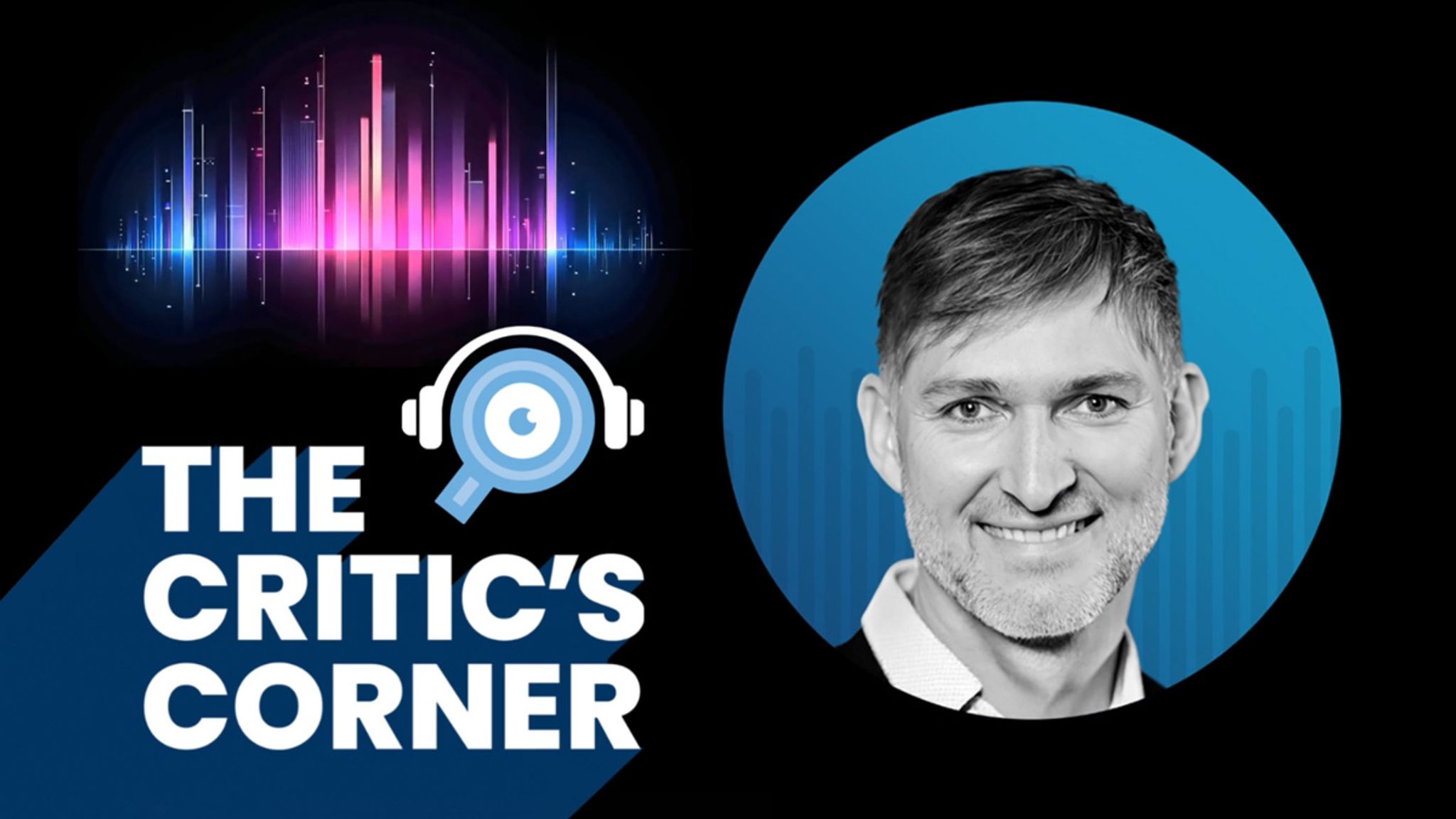
In the latest episode of “The Critic’s Corner” podcast, we sit down with the industry veteran to discuss 30 years of CoreMedia’s rise, how AI is transforming what’s next, and why digital sovereignty has become so important in a changing world.
Listen to the full episode of “The Critic’s Corner” Podcast >
Carpe Diem.
It’s the last thing Sören Stamer said to me before wrapping our interview on a recent episode of The Critic’s Corner podcast.
The famous Latin aphorism loosely translates as seize the day, coined by Roman wordsmith Horace circa 23 BC. But most of us in “ye olde Gen X” cohort are familiar with the quasi-modern conjuring from the 1989 coming-of-age masterpiece, Dead Poets Society.
And it was apropos: I had just asked him what it meant to be celebrating CoreMedia’s 30th anniversary this year.
“30 years,” he pondered. “I thought about this a while ago, when we celebrated earlier milestones, and it's less than 11,000 days. When you think about the last 11,000 days of human existence, how much change happened in those 11,000 days? Then, think about the last 1,000 days, and it’s basically since ChatGPT came out.”
A lot has changed indeed. Even at the time of our recording, when the Winter Olympics were in full swing, war had not erupted once more in the Middle East. In my opening of the episode, I talked about how the fluidity of geopolitics, rampant conflict, and global unrest are putting the spotlight on a critical topic I wanted to focus on with Sören: digital sovereignty.
During our chat late last year about emerging trends, we talked about it at length. It was already surfacing in conversations throughout 2025, but the volume has increased precipitously amidst the continued uncertainty with tariffs, bellicose rhetoric with Greenland, the ongoing wars in Ukraine and Gaza, and yes – the fresh news of war with Iran and stress in the Straits of Hormuz.
As we discussed, the rising pressure, eroded trust, and false assumptions about global security are forcing nations, large enterprises, and individuals to rethink everything. In the pod, we drift into the muck and explore the costs of dependency – from government systems to hyperscalers – and how it’s impacting regions like the EU and reshaping our strategies.
Of course, there’s another pressure point we’re all coping with: AI. Being a DXP with global customers (many in the retail and commerce verticals), CoreMedia is innovating at the edge as agents become commonplace across our tools and processes.
In the pod, we talked about the immense impact on marketers and how reliability has been a moving target. That’s been top of mind just this week as AWS called an emergency engineering meeting to discuss AI-generated code as a contributing factor to recent outages. Yikes.
But our conversation wasn’t all doom-and-gloom. As Sören mused about the last three decades and the genesis of CoreMedia, he shared valuable insights about building a durable company – and how thinking past the hype cycles has been a critical strategy for success.
This conversation wasn’t just about seizing the day. It was about seizing the opportunity for 11,000 of them. During the course of this lively conversation, Sören reminded me that the real magic of CoreMedia’s longevity is showing up with passion. And that's something he has an abundance of.
From CD‑ROMs to CMS
CoreMedia’s origin story begins in a land far from our modern buzzwords, and decades before generative AI was a twinkle in Sam Altman’s eye. While studying at the University of Hamburg, Sören was diving deep into the academic realm of computer science and exploring the boundaries of integrating databases and programming languages.
Before he graduated, he helped develop software that could create and edit text, audio, video, and images – all stored on a CD-ROM for distribution. This laid the groundwork for a business, which, as the internet blossomed, evolved into an early form of a content management system.
Opportunity struck with some marquee web projects that included a website for the German Press Agency (the equivalent of the AP in Germany). Specific requirements forced him and his intrepid collaborators to rethink everything. Their concepts, while novel at the time, provided a framework for handling content in ways that modern headless CMSes do – long before the category was ever dreamt of.
“Content is something that allows you to create all these things,” Sören said. “We basically had a structured content model, object-oriented from the start, with inheritance, and all these things that we later discovered to be very powerful.”
Working with real customers gave Sören and his team a vital opportunity to test and optimize their theories, which ultimately provided real‑time control across publishing channels. This was critical for organizations like the German Press Agency that dealt with sensitive data or news that had to be modified or updated rapidly.
“One requirement [the German Press Agency] had was that, if we publish something with your system and we want to get rid of it, you have to remove it within a second from every reference,” he explained. “We have to be in full control.”
If you squint a bit, you might spot the early signs of omnichannel, composable, real-time attributes and a nascent content graph taking shape – as well as the foundations of modern governance. These were core concepts that migrated into philosophical pillars of CoreMedia, which grew in tandem from the dawn of the internet to what it is today.
The company’s journey has always been one of constant innovation and evolution. When e-Commerce went global, the platform adapted with translation and localization, just as it did with the mobile and social revolutions. Today, as a composable digital experience platform with a hybrid headless CMS and built-in personalization and AI capabilities, CoreMedia has endeared itself to global brands in retail, B2B, healthcare, and other industries.
A far cry from CD-ROMs, but a legacy built on the shifting story of content.
Digital sovereignty: An urgent reality
If I picked up anything in our conversation last year, it’s that digital sovereignty isn’t a surface talking point for Sören. It’s a systemic risk question that governments and enterprises can no longer postpone.
Let’s start with what it is. By definition, digital sovereignty is the ability for nations, organizations, or individuals to maintain independent, informed control over their own digital assets, infrastructure, and data without being forced by external vendors, platforms, or foreign jurisdictions. This is broad brush strokes, and that makes sense: there’s no universal playbook on adopting a sovereign strategy.
That said, in the CMS industry, this typically covers the operation of software within a legal framework, ensuring that digital systems are secure, compliant, and can allow for an entity to control their “digital destiny” when using these tools.
How did this become such a heated topic? It might be as simple as reading the news or looking at our fragmented world. Simple examples: the dependency on foreign energy resources or reliance on third-party cloud hyperscalers. Both are chokepoints when major disruptions occur, but even a cloud outage is a reminder that we’re at the mercy of outside systems.
Sören traced the current urgency back to a series of global shocks: the pandemic, subsequent supply chain breakdowns, and war.
“Covid was the first impact I think, where we saw that we couldn’t even produce certain medicines here [in Germany],” he said. “We couldn’t even produce face masks. Then the war in Russia brought it home for Germany, but also the rest of Europe, that with this dependency on other countries, you really have to think about it twice.”
“There is this political dimension that has been created now. There’s a movement that’s saying, ‘Well, we were complacent and avoiding the pain, but now we are willing to take the pain, because we have to. We just realized this is not acceptable anymore."
As Sören said, what used to be “convenience”– things like outsourcing infrastructure, production, and even critical services – has become a strategic liability as trust erodes. As a result, more brands are refusing to host with hyperscalers, European cloud providers are foregrounding sovereignty, and enterprises are building their own data centers as a hedge against uncertainty.
This mindset is consolidating under what Sören calls “sovereignty-aware strategies,” where organizations are embracing hybrid solutions as they look to fortify their interests with autonomous hosting and data ownership – even the exploration of open source AI models that sidestep the singular reliance on OpenAI and Anthropic.
Enterprises and governments alike are shifting their thinking in this direction, and being composable is playing a key role in how they adopt these sovereign strategies.
“There is this political dimension that has been created now,” he explained. “There’s a movement that’s saying, ‘Well, we were complacent and avoiding the pain, but now we are willing to take the pain, because we have to. We just realized this is not acceptable anymore. Retail was always a little bit aware of the AWS situation, so we had companies who said, ‘No, my data doesn't go on AWS.’”
According to Sören, this shift is now spreading to utilities, airports, and other critical infrastructure providers that have been tested by outages and disruptions, which regularly bring their businesses and interests to a grinding halt.
“I had a conversation with an airport, and they told me that when Microsoft Azure went down recently with a bug, they were very far down on the list of priorities,” he said. “They realized in that moment that nobody cares about them. They’re not big enough. But then they said, ‘Oh, but we are big enough to run our own data centers.’ So now they’re moving all their critical services back to three data centers that they have.”
This aligns with so much of what I’m hearing from the market. In a world where trust is being challenged at every turn – and disruption is becoming a daily reality – digital sovereignty is providing a salve for a range of entities. It’s an important topic, and one we’ll continue to focus on as it transforms our tools and how our customers use them.
The growth opportunity for Europe (and the world)
Tangential to the digital sovereignty subject, we also discussed the compliance landscape. Being based in Hamburg, Sören was candid about Europe’s structural challenges, which large-scale regulation aims to rebalance.
Despite a more progressive willingness to embrace expansive oversight, the EU has relaxed some of its GDPR and AI policy stipulations as part of an omnibus bill, hoping to reduce compliance burdens – especially for SMEs. Some of this was big tech pushing back in an effort to stimulate growth.
Still, as Sören said, the EU is struggling under the weight of fragmented markets, complex hiring, and a capital environment that often pushes startups to incorporate in other places – namely the US. And yet, he’s bullish on Europe’s long‑term potential as a massive, educated, high‑value market.
The challenge for Europe – and for vendors like CoreMedia operating in that market – is to strike the balance between protective regulation and room to experiment, especially around AI and open source. Sören is quick to point out the EU needs to harness its own leverage, and that regulation is going to be key to the conversation with startups looking for long-term growth.
“What I would certainly say is that Europe is such a big structure, so powerful, with so many really educated and well-suited people,” he framed. “That's a huge market that is very attractive, and we have market power there to say, ‘Hey, these are the standards that we want with AI.”
AI, agents, and helping humans do more
Come on. We couldn’t not talk about AI.
For Sören, the most immediate impact is at the intersection of customer experience and marketer fatigue, where he sees compelling use cases for AI agents to support human agents with their work.
This is something we discussed last year, and I’ve been seeing it surface in product demos in areas like HR and training. It all reflects a seismic shift in how workers are better enabled by their AI co-pilots, and customers are accepting AI as the experience touchpoint.
“We’ve seen that AI agents are making human agents more productive,” he explained. “Then you indeed saw that we are more comfortable talking to AI agents when they are knowledgeable. Quite a few experiences are becoming really delightful, and you get faster solutions to your problem, and people are not refusing that. There are some places where it's not accepted, like outbound calls with AI that’s spam on steroids.”
For marketers, AI is having a dramatic influence on productivity. As Sören said, it’s increasingly about orchestration and plumbing, helping them cut through tool sprawl and complexity – and the viscous cognitive load that’s dragging them down.
“The stress for marketers to do more with less is immense,” he stated. “And AI, fortunately, is something that can help with the orchestration and creation of content and analytics. It’s finding out where there are gaps and [identifying] some things that we should do differently. It’s really good at doing the dynamic plumbing.”
He draws a direct parallel to how coding itself has changed as a practice – even on a cultural level. Practitioners are increasingly directing things as opposed to building from scratch. And while the recent AWS issues are cause for alarm, the key is to have humans reviewing AI-assisted code before committing it.
“Something that was not as reliable just six months ago with Claude is now basically ‘one-shot code development,’” Sören exclaimed. “It’s impressive how far we've come. You don't write the code, you say what you want to have written, right? And then you review it.”
The next 11,000 days and seeing past the hype cycles
As previously mentioned, CoreMedia passes three decades this year – a milestone Sören measures in “days of change” to underscore just how fast things are moving. He fully expects the next 11,000 days to be even more intense than the last, which is why he’s leaning on a few proven strategies that have served him well.
“There are some patterns that work,” he explained. For example, looking for the meta problem and focusing a few levels up, where you might be able to build a solution that isn’t obsolete in a year or two. He’s also skeptical of chasing every hype cycle as it comes along.
“The metaverse,” Sören cajoled. “Look at Meta, right? They renamed the company for it, and then, oh my gosh, forgot about it. It's a great example of following the hype, right?”
He also offered a counterexample with Apple, which has been labeled “done” multiple times in the past. It’s true: they’ve flopped on a few hotly sought-after technology initiatives like a smart television and even an electric car (remember Project Titan?).
And yet, as Sören described, the OG unicorn is still sitting on enormous latent AI potential – precisely because it moves thoughtfully, methodically, and optimizes for trust.
“Some people have basically said that Apple is not innovating anymore, that Apple is over,” he laughed. “And it's like, man, when I look at the one company that I'm pretty sure will massively benefit from AI, it's Apple. It's so obvious.”
For Sören – and, increasingly, for the content management space as a whole – the real differentiation won’t come from being the first to bolt on the latest acronym. It will come from solving deeper, more durable problems around trust, sovereignty, and how humans and machines collaborate to create and govern digital experiences.
Or, as he channeled so eloquently throughout our conversation, it’s focusing on the opportunities that will shape the next 11,000 days.
Carpe diem.
“The Critic’s Corner” podcast with Sören Stamer

Upcoming Events

JoomlaDay USA 2026
April 29 - May 2, 2026 – Delray Beach, Florida
Be part of the Joomla community in one of the most iconic cities in the world! JoomlaDay USA 2026 is coming to Delray Beach, and you can join us for a dynamic event packed with insights, workshops, and networking opportunities. Learn from top Joomla experts and developers offering valuable insights and real-world solutions. Participate in interactive workshops and sessions and enhance your skills in Joomla management, development, design, and more. And connect with fellow Joomla enthusiasts, developers, and professionals from across the world. Book your seats today.
CMS Summit 26
May 12-13, 2026 – Frankfurt, Germany
The best conferences create space for honest, experience-based conversations. Not sales pitches. Not hype. Just thoughtful exchanges between people who spend their days designing, building, running, and evolving digital experiences. CMS Summit brings together people who share real stories from their work and platforms and who are interested in learning from each other on how to make things better. Over two days in Frankfurt, you can expect practitioner-led talks grounded in experience, conversations about trade-offs, constraints, and decisions, and time to compare notes with peers facing similar challenges. Space is limited for this exclusive event, so book your seats today.

Umbraco Codegarden 2026
June 10–11, 2026 – Copenhagen, DK
Join us in Copenhagen (or online) for the biggest Umbraco conference in the world – two full days of learning, genuine conversations, and the kind of inspiration that brings business leaders, developers, and digital creators together. Codegarden 2026 is packed with both business and tech content, from deep-dive workshops and advanced sessions to real-world case studies and strategy talks. You’ll leave with ideas, strategies, and knowledge you can put into practice immediately. Book your tickets today.
Open Source CMS 26
October 20–21, 2026 – Utrecht, Netherlands
Join us for the first annual edition of our prestigious international conference dedicated to making open source CMS better. This event is already being called the “missing gathering place” for the open source CMS community – an international conference with confirmed participants from Europe and North America. Be part of a friendly mix of digital leaders from notable open source CMS projects, agencies, even a few industry analysts who get together to learn, network, and talk about what really matters when it comes to creating better open source CMS projects right now and for the foreseeable future. Book your tickets today.