Sitecore Symposium 2026 rewired marketing. But the real ‘backstory’ was the power of people

With the rollout of its new MarketingIQ module, intelligent agents, and a stronger backbone for AI search visibility, Sitecore is building on its Scrunch investment and giving marketers a “rewired” platform that helps them take action – so brands can stand taller in an AI-driven world.
Highlights
- Sitecore Symposium was held from November 10-12 in Orlando, Florida
- The theme, “Marketing Rewired,” offered tracks from agentic workflows to content management for the AI era
- MarketingIQ, a new SitecoreAI module that combines brand intelligence with agent orchestration, was unveiled
- Scrunch, Sitecore's AI visibility platform that was acquired earlier this year, announced new Citation Optimization and upgraded capabilities to combat imposter sites
- Keynotes featured a fireside chat with Bravo's Andy Cohen and use cases from partners like Akamai and Nestlé
“How’s your back?”
Usually, I’m the one asking the questions. But from the moment I arrived at Sitecore Symposium 2026, I was met with this greeting. Not once. Not twice. Repeatedly.
Surprising? A little. But I had alerted several people to my predicament: severe muscle spasms rendered me horizontal just as I was leaving for the event. It was impossible to stand, let alone walk the long, serpentine corridors of Disney’s Dolphin Hotel in Orlando.
I was, tragically, down for the count.
To say that I know a few people in the Sitecore community might be an understatement. Over the years, I’ve been fortunate to develop numerous customer relationships and agency connections within the ecosystem. Word spread that I wasn’t attending, and things went… well, just a little viral.
As an analyst, I was disappointed at the specter of missing out on my tradition of covering this hallowed conference. I was also anxious to get a first look at MarketingIQ, the company’s latest advancement to its SitecoreAI platform. More than anything, I pined for the people.
Thanks to the wonders of modern medicine, a trip to the doctor set me on the path to a quick recovery. And after a solid day of limited motion, I was able to brave the mammoth convention center and gingerly maneuver the sessions.
The funny thing about our backs is that we can’t see them. But they’re part of our core. Essential infrastructure for our mobility. When any system breaks down, we need support, and that’s what I experienced at this year’s Sitecore Symposium: an outpouring of sincere compassion. Constant accommodation and flexibility. Kindness everywhere.
The people at this event became my backbone. And my backstory. I wish I hadn't experienced the agony of an injury, but it reminded me why I come to live events – and what made this one particularly special.
The AI pain points are real
In some ways, my ailment reflected the challenges we face as AI forces us to rethink, reposition, and (as Sitecore pitched) “rewire” how we stay on our feet.
For decades, the web ran on predictable foundations for getting found. But like a slipped disc, AI has caused this balance to break down, and answer engines are assuming greater control over how brands are positioned and perceived.
We’re all victims of this shift, but marketers are experiencing the pain points in real time. They now have two Internets to navigate, and two audiences of humans and agents to influence. Search and discovery have been radically transformed, and how we capture and convert interest is being challenged in new ways.
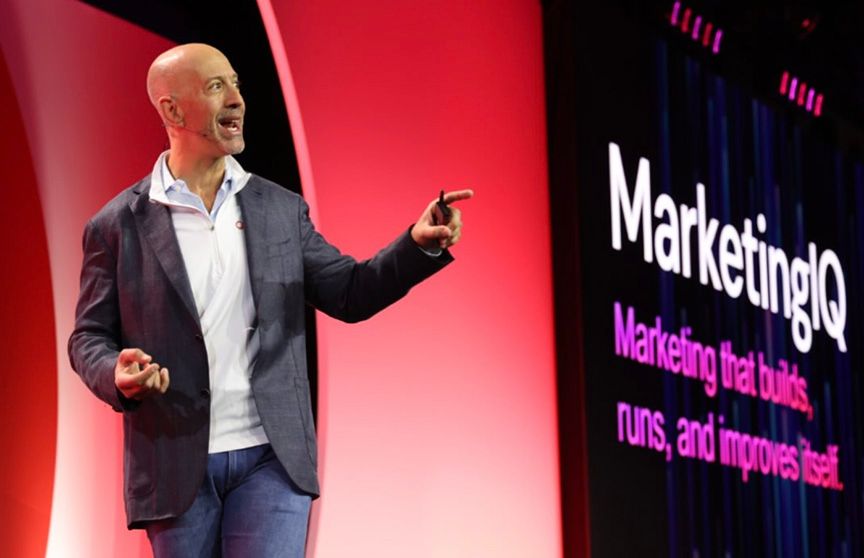
Sitecore CEO Eric Stine. Source: Sitecore
As CEO Eric Stine shared during his opening keynote, AI is changing our behaviors and shaping an entirely new game for brands – one where decisions are being made in these new AI channels. Always the consummate storyteller, he described his own experience of volunteering to coach his son’s flag football team (a task outside his comfort zone), and how he consulted AI for guidance.
In his tale, he began by prompting a goal, discovering products as the journey unfolded. That ultimately led to $1,500 in purchases, and the brands that surfaced along the way were the winners.
The shift to AI search is like the proverbial genie being sprung from the bottle. We’re not going back. And while the steps ahead might be painful, agents are delivering measurable impacts for businesses, with more opportunity on the horizon. Helping marketers and brands take the agentic leap – and making it simple and with a high degree of confidence – is where Sitecore is pitching its boldest play yet.
The vibe at Symposium 2026 was different
And not just because of my compromised condition. The Scrunch acquisition, which I covered back in June, has further reshaped the composition of this legacy DXP, which was already executing on its agentic vision with the introduction of SitecoreAI last November.
Along with a purposeful new product in its ecosystem (which, for the foreseeable future, will maintain its independence as “A Sitecore Company”), Scrunch co-founder and CEO Chris Andrew has become a key figure in the company’s AI-enabled roadmap, injecting a startup vibe that is undeniably exciting. This is something I was already sensing when I attended the Sitecore 25th Anniversary celebration in Copenhagen this summer.
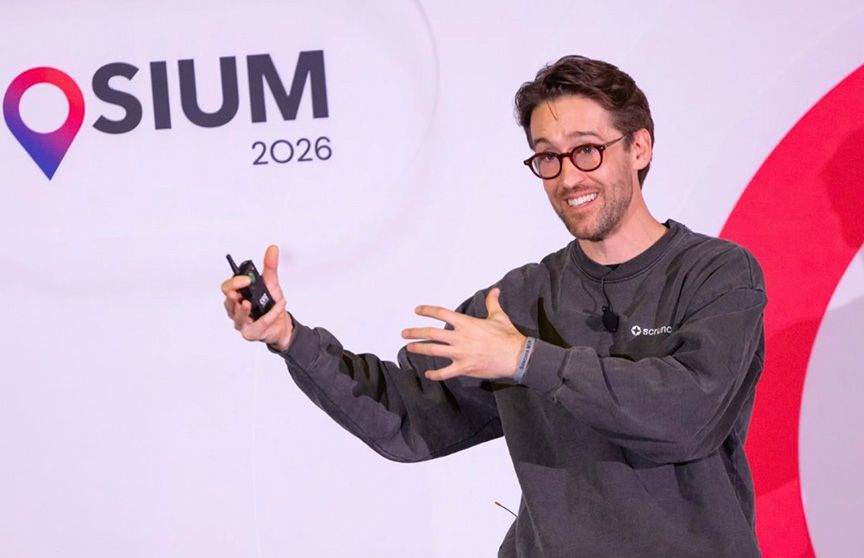
Scrunch CEO and co-founder Chris Andrew. Source: Sitecore
The other thing that felt different was the shifting sentiment amongst partners. 2025 was a challenging year for many of the agencies I spoke to. AI forced significant changes to their traditional business models, and some leaders were forecasting a dystopian winter.
This year, there was more wind in the collective sail as agencies and SIs made the pivot to AI-first strategies. The ones I spoke to at Symposium 2026 were careful to temper their enthusiasm, but many reinforced how Sitecore is providing a more predictable path towards value. But the momentum was there, and it built on the conversations I've been having with firms like RDA, Dataweavers, and others that are blazing new trails.
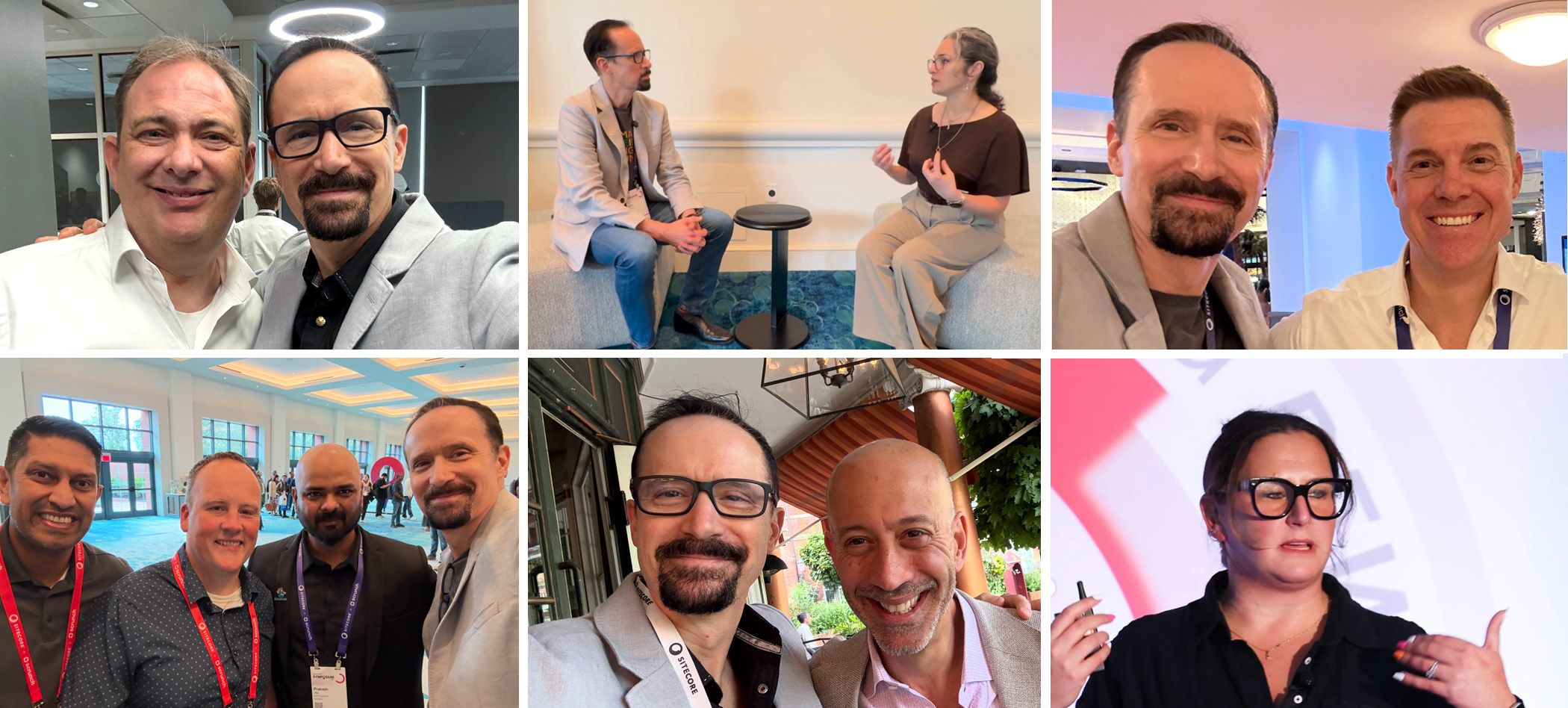
(Clockwise from top left) Klaus Petersen at Sitecore's 25th Anniversary in Copenhagen; interview with Heather Nicholls of GCI; Matt Krebsbach of Sitecore; Jill Roberson of Dataweavers; Eric Stine at Sitecore's 25th Anniversary in Copenhagen; Kamruz Jaman and Prkash Jha of Konabos with Matt McQueeny of Earnfluencing
What I also saw was how ambition is surfacing through innovation. Sitecore’s partners and customers are building and shipping faster than ever, and SitecoreAI has been a critical accelerant. As Altudo’s David San Filippo told me, AI is making him “feel like a wizard.” And every good wizard needs a powerful wand.
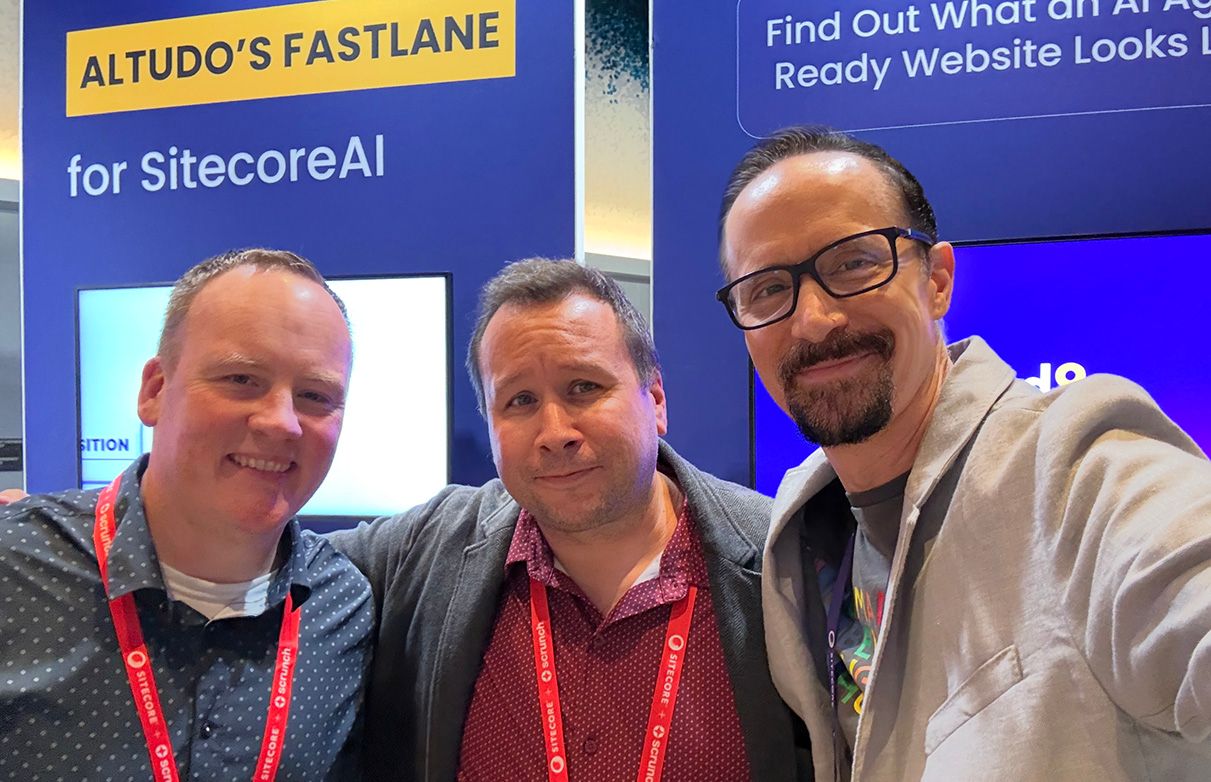
Sitecore MVP Matthew McQueeny with Altudo SVP David San Filippo.
During my time at Symposium this year, I was reminded – mostly by my back – of the importance of moving forward. Most people I spoke to shared a dichotomy of excitement and uncertainty, and a 2027 that looks increasingly precarious. This is exactly why they keep showing up: to find support for their work, a backbone for making confident decisions, and greater visibility into what’s ahead.
And for marketers in particular, this event is a curated menu of learning. A platform for getting their feet firmly planted with the next wave of Sitecore's tools and technologies.
“The job of the marketer hasn't changed,” Eric told me. “You still need to reach your audience and be found. You still need to engage and convert them. There's a reason [why] our mission is built around simplifying how marketers serve their audience. The technology may change, but the mission doesn't change at all.”
What's clear is that Sitecore has the marketer’s back. The real test is whether all this added intelligence and automation will pay off. There's also the increasing noise of competitive products up and down the stack, vying for attention as a salve for the cognitive overload that marketers feel.
From where I stand (currently pain-free, I might add), Sitecore is making the right moves to position its value. But the real ace in the hole is what the company has diligently built over its 25-year history: trust.
Delivering an ‘epic universe’ in Orlando
“Marketing Rewired” was an appropriate way of framing this year’s Symposium. AI is rippling across our products and practices, and Sitecore has been harnessing it to power personalization and energize workflows to make meaningful impacts on the marketer’s experience.
Meanwhile, AI is enriching legacy fixtures like CMS and DAM, providing the critical foundation for AI-enabled brand and content operations. Along with the context and signals gathered from other systems – from CRM to analytics to other third-party systems – the entire stack is being connected in new ways to support digital experiences for humans and agents and enhance AI search and visibility.
The "wow factor" of this event was palpable. Like last year, it was held in the epicenter of Orlando’s experience economy, just a stone’s throw away from Disney’s Hollywood Studios and Universal’s Islands of Adventure. Speaking of experiences: Sitecore reserved the latter for its Thursday night extravaganza. Talk about going big.
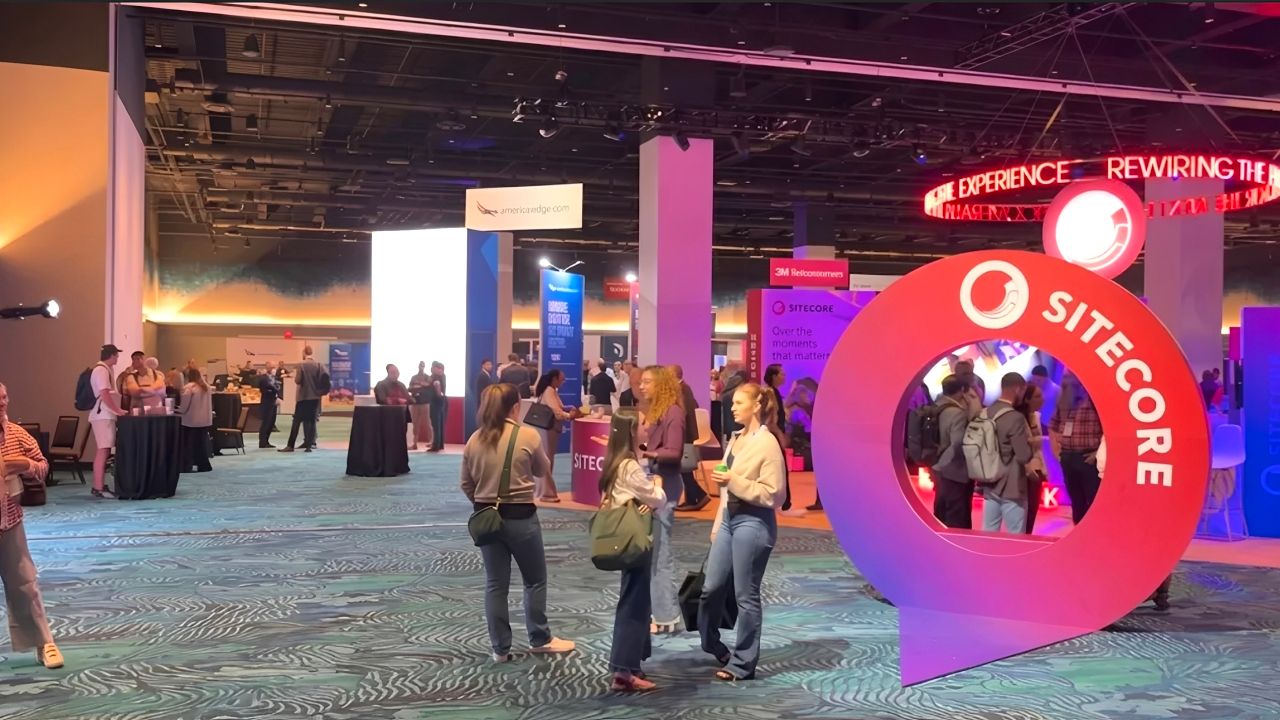
The sponsor pavilion at Sitecore Symposium 2026 at the Disney Dolphin Hotel.
The intersection of physical and digital saturated Symposium’s main pavilion. Product demos ran alongside a puppy petting den – a brilliant stress reliever, BTW – and a CPR station sponsored by the American Heart Association helped attendees brush up on their life-saving skills.
Sponsors like American eagle.com offered immersive booths and stunning use cases, while niche vendors like TechGuilds offered SitecoreAI migration estimates in minutes (and a shot at winning a Porsche Lego set).

(Left) puppies… need we say more? Source: Sitecore. Right: one of the AHA's “CPR agents.”
Like previous Symposiums I’ve attended, the sessions were dense but well crafted. The core content was aligned around five key tracks: agent orchestration, “rewiring” your martech stack, AI discoverability, content management in the AI era, and DAM-focused strategies for brand visibility.
Across each track, there were demos and hands-on workshops, including focused resources for improving AI visibility. From content marketers to more technical AI builders and developers, there was something for everyone, and the Sitecore universe was on full display.
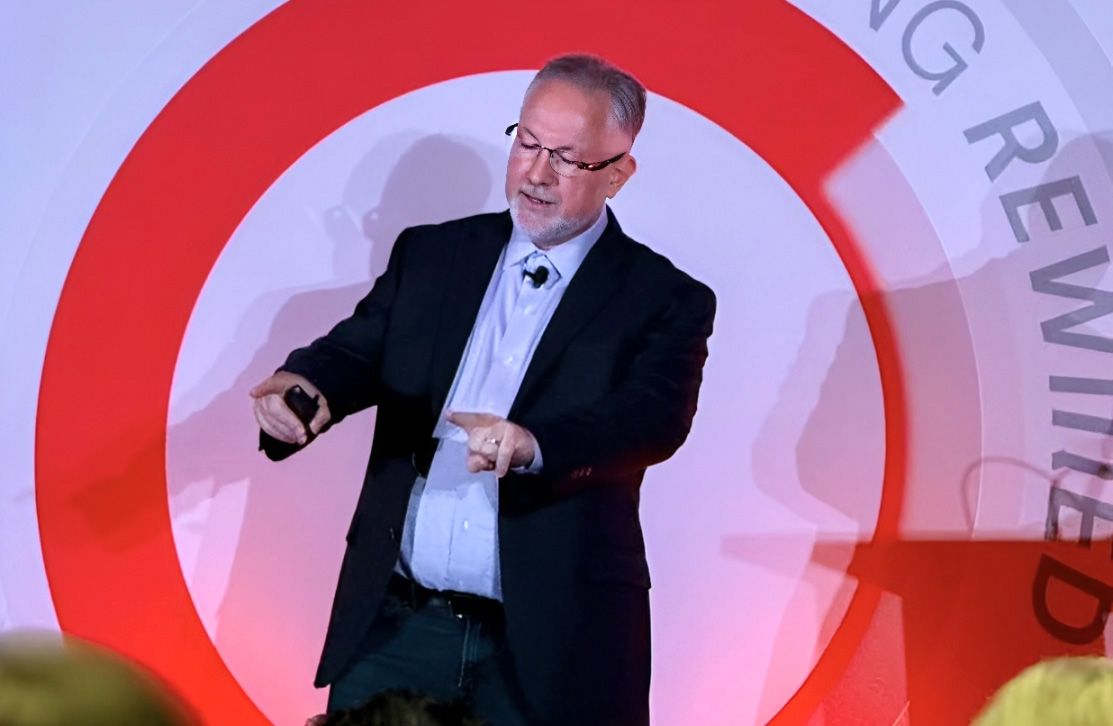
Chied Martec's Scott Brinker. Source: Sitecore
Along with industry personalities like Scott Brinker (Ad Age's “Godfather of Martech”) talking about the concept of “Golden Context,” and use cases with brands like Akamai and Nestlé, Sitecore brought some inspiring star power to the Symposium stage. Last year, it was hype man extraordinaire Jesse Cole, co-founder of baseball’s disruptively entertaining Savannah Bananas, who shared unique insights on how to be a memorable marketer.
That was a tough act to follow, but Symposium 2026 put the energetic Andy Cohen in the spotlight, tapping his sharp humor and brilliant presence to illuminate the challenges we face in this new era of media and content. As he told the audience during a fireside chat with Eric Stine, Bravo (the network that hosts his popular Watch What Happens Live with Andy Cohen) is tripling down on human beings.
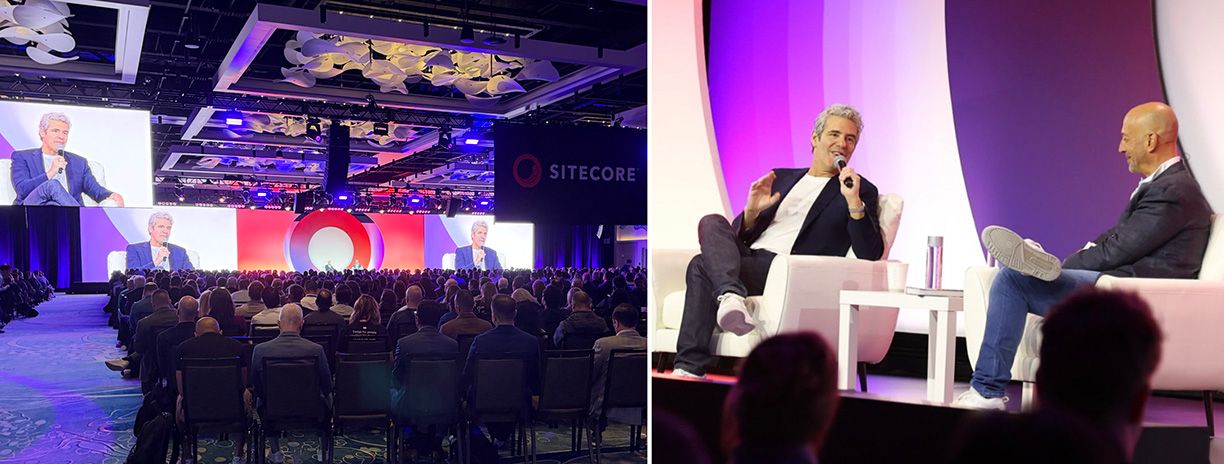
(Left) Fireside chat with Andy Cohen. Source: Matt McQueeny. (Right) Andy Cohen and Eric Stine. Source: Sitecore
It’s the right bet, and one that Cohen has confidence in. His show has been running since 2009 and banked over 3,200 episodes – all while weathering significant change across the media landscape, from shifting audience behaviors to swelling choices. Through it all, it's clear that authentically human content has been a guiding light.
With a third successful Symposium under his belt, Eric admitted that Orlando will always be home to this event as long as he’s CEO. A reusable component, so to speak, and one that offers the right mix of amenities and a stable foundation for optimizing the experience.
“For me, this was a really, really tight event,” Eric told me. “The message was very clear and consistent, and we showed up with something to say. I'm really proud of it, and I think it serves a purpose.”
Indeed. But live events are changing. I’ve attended a gaggle this year, and many are shifting to more compact formats or hybrid virtual models given the cost and logistics of hosting large-scale events. That said, Symposium continues to deliver value for explorers who are curious about the platform and its community – which was proven by the fact that 45% of this year’s attendees were first-timers on the customer side.
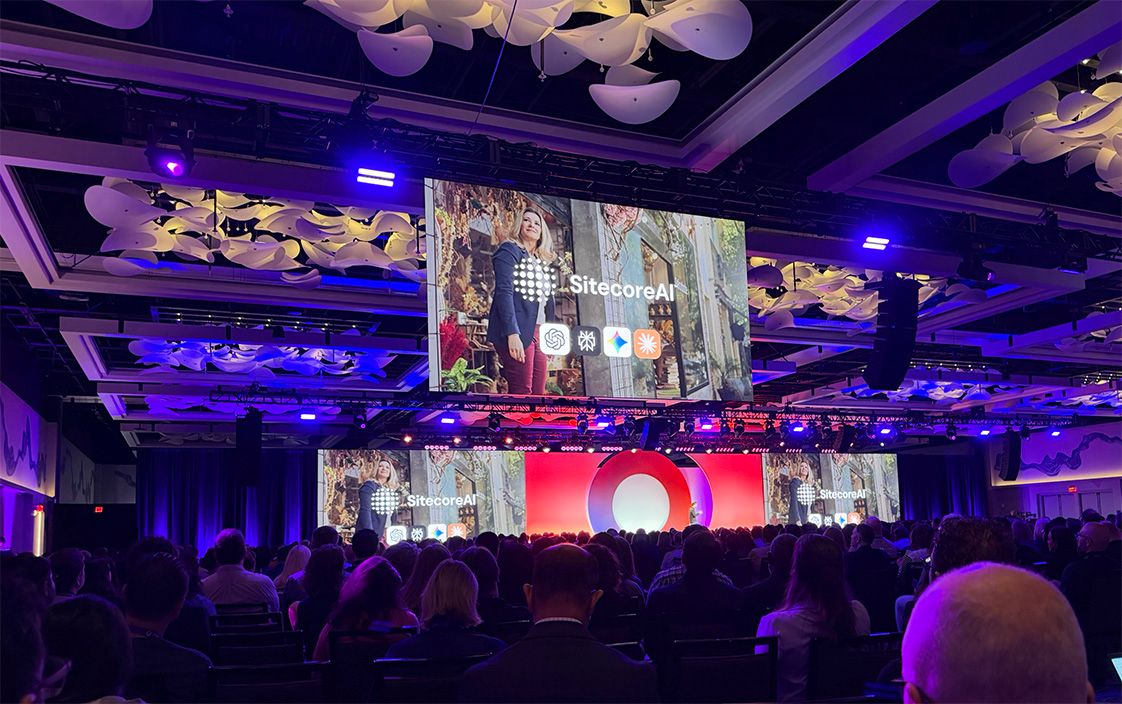
“Because of the nature of our ecosystem and the speed with which marketing is changing, I think it's super important that people get together and have these forums,” he said. “It’s important for the MVPs, partners, and customers. There’s a good mix of general session information and affinity and resource groups on a role-based, industry, and executive contribution levels.”
As product categories erode, having live events like Symposium also provides an opportunity to frame the platform value for customers. Many vendors are jettisoning the legacy acronyms and focusing on their agentic positioning. Sitecore is no exception, but enterprise buyers need clarity – and having an immersive environment that gathers Sitecore knowledge in emerging areas like AI visibility is a critical advantage.
“I don't know that anybody could tell you the difference between a DXP or a CMS, or between a CMS and a CMP,” Eric said. “And while those things are quite properly the bailiwick of the analyst community, we are rapidly approaching a world where what we used to refer to as DXP, CMS, CMP, DAM, they are all effectively the same thing. Search and visibility are now becoming the connective tissue. There’s a reason that we are very, very much in that space right now because it changes the entire content funnel.”
MarketingIQ backs intelligence and context with agentic action
Feature parity is accelerating, and vendors are shipping faster than ever. As such, I’ve noticed there are fewer of what I might call “seismic” announcements at conferences and events.
But Sitecore did unveil the aforementioned MarketingIQ, which, according to Eric, shouldn’t have come as a huge surprise. As he told me, it tracks with everything they’ve been working towards over the last two years.
I wrote my initial review of MarketingIQ when it was first announced, but I had a chance to do a deeper dive at Sitecore’s pavilion at Symposium. In a nutshell, MarketingIQ takes a goal, signal, or a marketer’s raw idea and overlays contextual intelligence that purpose-built agents can run with, from research to drafting content to developing complete assets and landing pages structured for both human and agent audiences.
The pavilion demo included a high-level animated schematic of how the module itself – which lives in the SitecoreAI ecosystem – orchestrates brand and business context from a variety of sources. Among them are SitecoreAI’s CMS and DAM, as well as analytics, work management, and third-party systems like an external CRM.
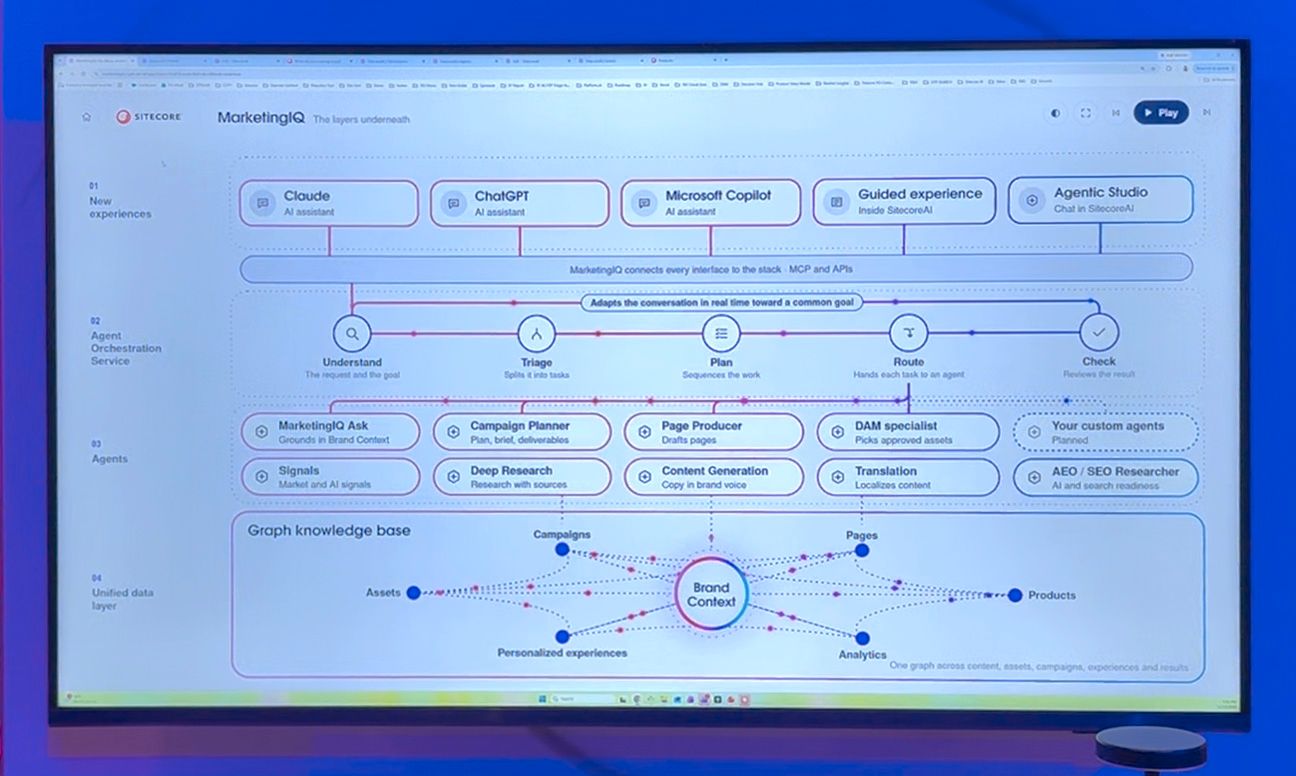
Using MCP and APIs, it can be harnessed to Claude, ChatGPT, or any AI agent of choice, giving you the freedom to work any way you want. And of course, it’s receiving crucial insights from the answer engine fabric via Scrunch. It really wires everything up while giving marketers more freedom.
In the guided examples at the booth, what I saw felt downright magical, channeling the agent automation that SitecoreAI has been continuously enhancing since it launched last November. Using a marketer’s goal, it adapts context from all of these sources in real time – where it understands, plans, and routes everything to the appropriate agent for the task.
The agent identities are key. A request might activate MarketingIQ Ask to ground everything in brand context, and then interface with Deep Research to align with other knowledge sources. The Campaign Planner and Page Producer create deliverables, while the Content Generation agent drafts copy in your brand voice. It’s all orchestrated behind the scenes, and leverages a unified data layer reinforced by brand context.
What’s cool is how MarketingIQ builds on Scrunch, and how seamless it all feels. Toggling back to the SitecoreAI dashboard, a user can easily track the market signals, citation, and mention rates they’re receiving, and visually map how their actions are making an impact. It’s also self-improving, learning from the results to help recommend and further optimize the content it renders and making it readable for AI agents that ultimately engage with it.
I can’t underscore the human checkpoints enough. Throughout the demo, it felt like the user was in total control of setting rules and establishing guardrails – all critical fixtures when it comes to trusting AI to execute. Marketers need confidence, and SitecoreAI has already established many of those thresholds. MarketingIQ effectively inherits all of those fixtures.
At Symposium, I had a chance to connect with Sitecore CMO Michelle Boockoff-Bajdek, and I asked her how this intersection with MarketingIQ and Scrunch will support marketers like the people on her own team.

Sitecore CMO Michelle Boockoff-Bajdek. Source: Sitecore
“For me, this is such an important and critical moment,” she said. “Having a capability that tells us what our audience cares about, the kinds of questions they're asking, and their intentions behind those questions gives us so much insight. Scrunch has been able to do that for some time, but now we have the ability to take action against a signal around a new customer question, a competitor gaining ground, or something that has just happened that is relevant and important for us to know. That action could be to create more content, or surface the right content within my entire content estate.”
From a productivity perspective, the benefits are intrinsic. As Michelle told me, the average marketer spends 80% of their time in “last mile execution,” conducting routine research or creating, preparing, and adapting content.
“The reality is that the marketer is down in the weeds,” she explained. “What I think is so valuable here is that we can flip that on its head, and we can spend 80% of our time on strategy, creative development, critical thinking, and understanding who our audience is. Because at the end of the day, this is about reaching, engaging, and serving our customers in the best way possible.”
The enthusiasm for MarketingIQ was evident amongst both the customers and agencies I spoke to at Symposium. I discussed the mission and benefits at length with Klaus Petersen of Alpha Solutions, a Sitecore partner, and he echoed this motion towards simplicity. We also talked about the impact on partners, and how these new AI-powered technologies are giving them a marketable advantage.
You can watch our interview here:
While it’s early days, MarketingIQ could be a game changer. It’s precisely how AI can be leveraged to automate the complexities of modern marketing in meaningful ways. I asked Eric what marketers will be able to do when powered with this cache of capabilities, and he answered with a single yet potent word:
“More.”
Citation Optimization picks a bone with imposter websites
While I was in New York last week to facilitate our Boye & Company AI Transformation peer group, I stopped by Scrunch’s offices in Chelsea to gather some post-Symposium reflections with Eric and Chris. At the top of my list was a deeper dive into Citation Optimization, a new Scrunch capability that was also unveiled at the conference.
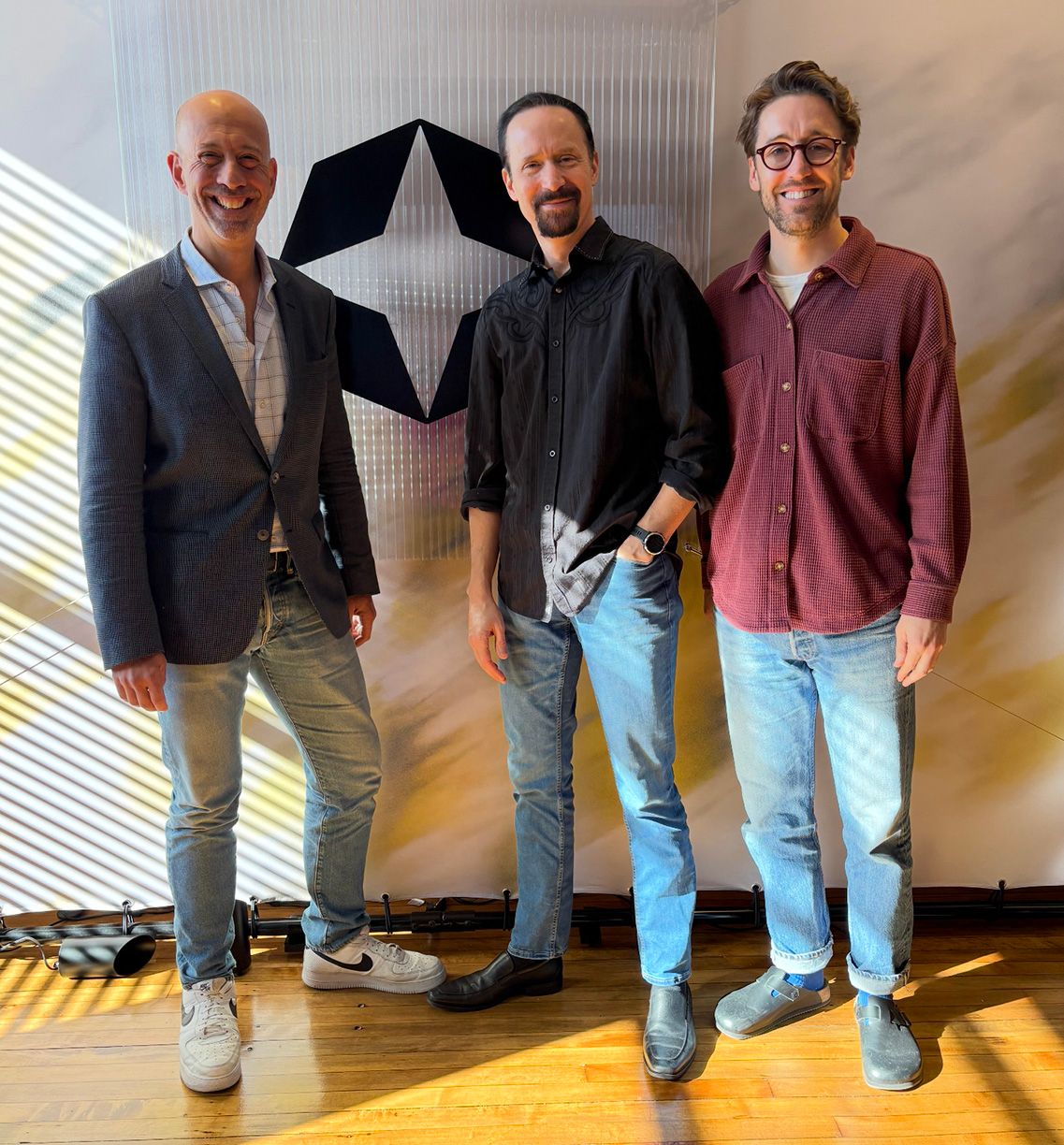
With Eric Stine (left) and Chris Andrew (right) at Scrunch's Chelsea offices in New York.
Citation Optimization adds real sauce to Scrunch, helping brands identify third-party pages cited in AI answers and prioritizing them based on how easily a brand can score a stronger position. Marketers can see which sources already include their brand, where competitors are featured, and where amplification could make the greatest impact. Then, Scrunch recommends targeted outreach that aligns with the source.
The urgency behind Citation Optimization also reflects a terrifying trend for brands: the rise of impostor websites. Like a red herring, these fake sites are infiltrating Generative Engine Optimization (GEO), causing major AI search engines to recommend fraudulent storefronts to shoppers. Because LLMs synthesize answers rather than simply listing search links, scammers are exploiting how AI scrapes and cites web data to hijack brand recommendations.
I’ve noted this in several of my recent conference keynotes, and a new study from IP protection firm Podqi codifies the risk. In its test of Gemini, Perplexity, and ChatGPT, they discovered as many as 15% of conversations were surfacing fraudulent domains or full-blown imposter sites.
Scrunch Labs (the company’s research center piloted by Dr. Michael Iannelli) also performed its own study. Their data maps to Podqi’s, revealing that 17% of Fortune 500 companies had a fake website cited in AI answers – and in 75% of the answers citing one of those imposter sources, AI was surfacing that site as the brand’s official source. Yikes.
For marketers, making the leap from traditional SEO to GEO has been arduous but essential, especially as more answers become decisions within AI platforms. Unfortunately, just as new tools and processes are beginning to influence outcomes, the results are now being hijacked. I asked Chris what we can do about it.
“You’ve got to do a takedown,” he said. And to help fight the fraudsters, Scrunch now includes an automated Imposter Detection service. A bit like culling toxic backlinks in Semrush, Scrunch automatically targets suspicious sites and provides steps for initiating a takedown. The goal is to help marketers fix where their brand is being misrepresented.
Scrunch has been shipping at a breakneck pace and delivering real solutions for marketers. In the past quarter, this includes the launch of Knowledge Studio, which transforms brand-approved information into a source of truth for AI, as well as optimization and content generation tools that help teams reinforce their brand and domain authority.
As Chris explained, they’re also expanding their signal-capture capabilities to other critical channels with the introduction of Ad Monitoring. “It’s another super valuable data input,” he said. “Maybe you're not winning the organic display in ChatGPT, but you better start participating in the paid ecosystem to get your message there.”
The battle for brand relevance in AI platforms is just getting started, and imposter sites are just the latest form of disruption. My prediction is that we’ll see a rise of more institutionalized systems to combat this, and Businesses in ChatGPT is perhaps the first wave. It lets companies claim profiles, manage product and business details, and view engagement insights that could provide greater validation (kind of like your Google Business Profile).
For now, Scrunch is leveraging its research and innovation to help marketers stay ahead – and that’s worthy of a citation.
Three key themes made for a stronger spine
As my lower lumbar reminded me while shuffling from floor to floor, Symposium is a big event. Even without an injury, I couldn’t attend every session, so I relied on colleagues and connections to help me fill in the blanks.
With so much happening, it's easy to get distracted. But the signals were clear – and for me, three key themes persisted, starting with a meaningful move from insights to action.
Since the launch of SitecoreAI last year, I’ve interviewed Eric about the company’s deepening focus on marketers, the future of SaaS, and the optics surrounding the Scrunch acquisition. Through it all, he’s been pushing the intersection of AI search and agentic automation to unlock real value for Sitecore’s customers.
Now, with the advent of MarketingIQ and Scrunch’s new features, brands not only see how they’re positioned in AI, but they can take real action and turn recommendations into outcomes. It’s a tipping-point moment that simplifies the cognitive overload for marketers while agentically automating the output for both humans and agents.
The second theme is around Sitecore’s evolution as a next-level platform beyond the DXP. Product categories are becoming less defined, and unified context is driving the AI imperative. While building has gotten cheaper, trust has become the most valuable commodity, particularly when it comes to the AI frontier. This is where an integrated, agent-powered platform is becoming a strategic pitch for brands that need high-velocity performance while reducing risk.
This focus on trust goes beyond the platform perimeter. Just as I was wrapping up this review, the “AI bubble” was bursting at the seams, drawing 2027’s economic forecast into question. Enterprises are still betting big on AI, but business leaders need to understand what they’re buying, where the ROI is, and what a shared security and responsibility model looks like. Sitecore is well positioned to answer these challenges during a period of uncertainty.
There’s also a service component to this shift. As Eric told me, the company is also working more closely with its partners and customers to guide AI transformation – a trend that started with the launch of its Microsoft AI Innovation Lab for Marketers.
“I'm really proud that we’ve again built a listening engine within our product organization,” he said. “That's a relatively new muscle for us, but I'm happy that's become part of our culture and direction from a mission perspective.”
Finally, there’s the Sitecore community, which is unrivaled in the digital experience space. What I saw at Symposium were partners and customers leaning into AI, harnessing Sitecore’s solid foundation to expand their own capabilities in a “build and buy” capacity.
In this new era, websites must be ready to serve both humans and agents. But doing so doesn't mean builders and brands have to compromise on delivering amazing experiences. When I met with Chris at Scrunch’s New York offices, he showed me how this is embodied by the new Stripe Press website, and where the opportunities exist for creativity and structured content.
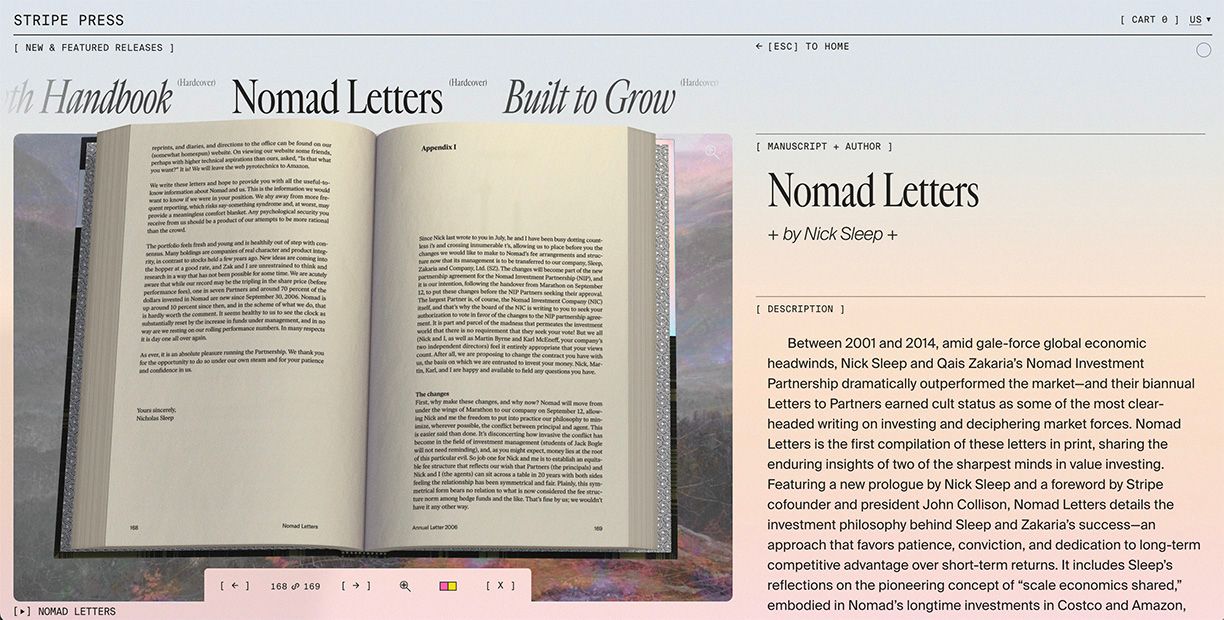
“A designer had a blast with this," he said, glowing as he scrolled me through the animated sequences. "AI tooling makes it possible to design these kinds of rich experiences for humans, and you get to treat your eyes to some lovely new pixels.”
At the same time, agents are using LLMs.txt to browse the well-known UCP profile, cataloged to JSON for search and WebMCP for checkout. “The agent just immediately gets what it needs on this website,” Chris continued. “It’s built in purely behind the scenes. This is where everything is going. I, as a human, don't know there's an agent experience. And the agent doesn't want to flip through these beautiful pages.”
Beautiful they are. And it feels like there's less of this caliber of flair on the web these days. But as Chris said, this is an opportunity – an invitation – for the builders in the Sitecore community to be more ambitious and audacious. To push the envelope on what's possible. And to give brands even more appeal for every audience that visits their site.
What’s ahead – and why the ‘backstory’ matters
Sitecore’s ambition is also clear: helping customers navigate uncertainty. That includes a future of “zero-click” marketing actions where agents book, register, or even buy on a consumer’s behalf without them ever visiting a website. Many brands are already playing in this agent-to-agent ecosystem, which I chronicled at the recent MACH X Conference.
As Eric said, the tools that compose the traditional DX tech stack are looking more alike, and their features are becoming increasingly similar. That said, the need for concrete systems like a CMS has never been more crucial for providing the content, context, brand assets, and workflows for delivering what humans and agents are searching for.
“I still fundamentally believe that we are moving very quickly to an internet that will not just be read by agents, but fully operated by agents,” Eric reinforced. And I fully agree. But getting there will require transactions built on trust, and systems where people call the shots.
Staying on my feet at Sitecore Symposium 2026 might have been a little painful at times. What I saw kept me moving forward. But it was the brilliant, talented, and compassionate people in this community that helped me stand a little taller.
If we’re going to face the future, we need to do more than just rewire marketing. We need to reprioritize our human relationships. That starts by connecting in real and meaningful ways, and it's a big reason why Sitecore’s partners and customers keep showing up together.
People. It's why we do this. And they're the best backstory of all.
If you missed the event, Sitecore is taking Symposium on tour to London, Amsterdam, Sydney, Tokyo, and Singapore. For dates and details, click here.