In 2025, it wasn’t just AI that made CMS shine. It was love, actually


Maybe it was the holiday season, but I’ve got a warm feeling about the future of content. Why? Because we still love to create – and AI is making that possible in new ways. Here's a look back at a year full of agents, relentless innovation, and undeniable proof that CMS still has our hearts.
Call me a sucker for cozy holiday classics, but Hugh Grant’s role as the Prime Minister in 2003’s Love Actually is celluloid magic.
“Whenever I get gloomy with the state of the world, I think about the arrivals gate at Heathrow Airport,” his character says in the opening narration. “If you look for it, I’ve got a sneaky feeling you’ll find that love actually is all around.”
This intro scene gets me every time. And the stinger at the end – where he punctuates how beauty is always within our grasp – is a gift that keeps on giving.
Like many of you, I spend a lot of time in airports, Heathrow being one. Between the rampant delays, unsavory snack options, and overpriced coffee, we all have something to be pissed about. But look for it, and you’ll see a family reconnecting by the luggage carousel. A couple embracing at the curb. A baby being scooped into a grandmother’s arms for the first time.
The good stuff is there. We just have to look for it.
I’ve been watching Love Actually in a seasonal cadence for over two decades. Much to my romcom chagrin, it’s baked into our family’s “Joyeux Noël” traditions. Somehow, it feels just as painful, hopeful, and relevant as ever.
Films like this have a rare penchant for being both static and dynamic. They exist as singular moments in the past, preserving what was in permanent amber. But they’re also time machines, instantly transporting us back to these nostalgic, halcyon days.
While much has changed since the early aughts, we’re still wrestling with a world that, at times, feels like it’s gone slightly mad. And yet, there is love, actually. It is all around. And it comes in many forms. A love of people. Community. Creativity. The content we experience in all its glorious forms.
And yes, even with the tools we use, like a CMS – which can, at times, feel frustrating. Just like our real-life, human relationships. Yes, there are those who hate their platforms, but all throughout 2025, I talked to so many who still love their products.
Would anyone hold up a sign like Love Actually’s Andrew Lincoln, proclaiming “To me, you’re the perfect CMS” as some grand romantic gesture? That might be a stretch. But as AI ripples across our products and transforms what a CMS is, practitioners will need more of a gentle hand to help them through the hard parts.
Can we stop the room from spinning?
OK, OK. I’m getting a little sappy and sentimental on the first days of the New Year, so let’s talk more about AI and how it tilted 2025 in maddening directions. At times, I felt more like an “Agent Critic” as vendors touted their innovation across dozens of product demos.
That off-axis feeling isn’t from the New Year’s Eve champagne flight – but the AI hangover.
This might be the cure: I’ve been reading Brené Brown's new book, Strong Ground: The Lessons of Daring Leadership, the Tenacity of Paradox, and the Wisdom of the Human Spirit. In it, she tackles some of the existential questions in the age of AI. I’ve found it a refreshing counterweight to the challenges we face as strangers in a strange land.
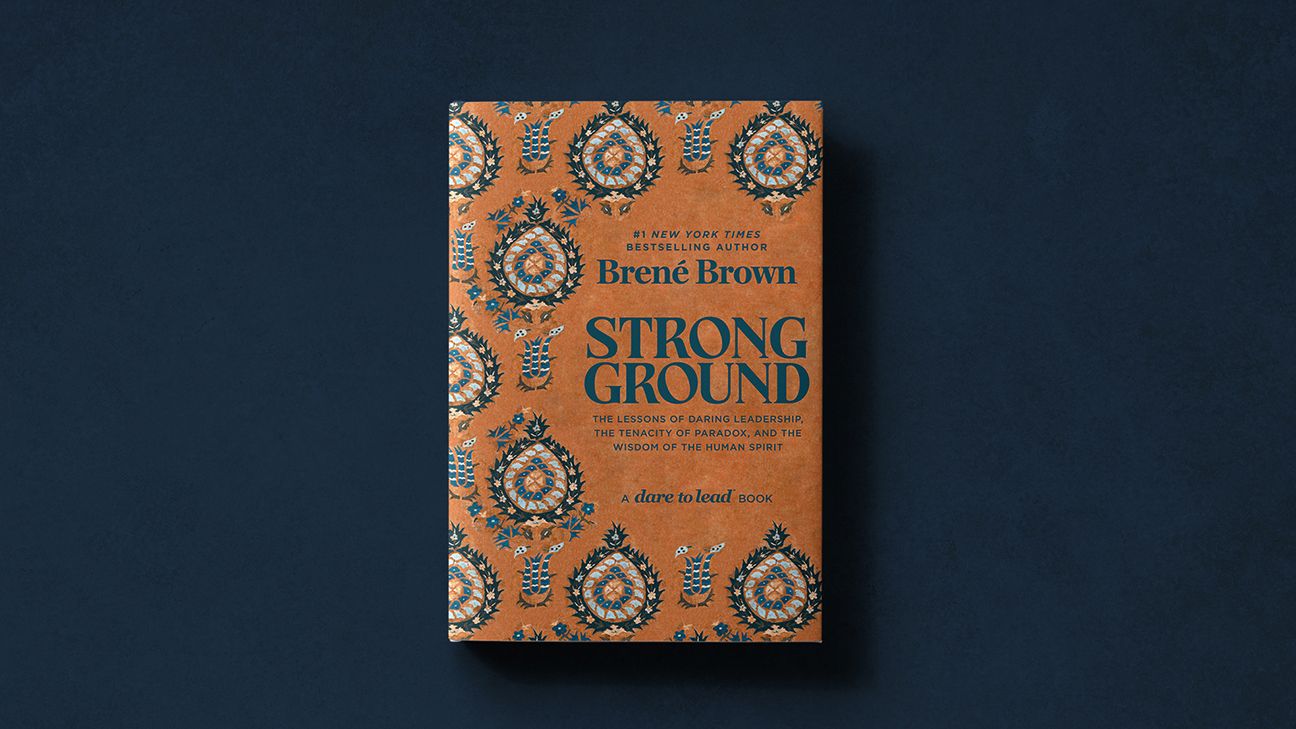
Brené Brown's new book. Source: brenebrown.com
Like me, Brené is a self-proclaimed tech optimist. But she’s clear in her assessment of what artificial intelligence is doing to us as a species, that our nervous systems aren’t ready for the level of uncertainty we’re facing. She says that the key to surviving AI is embracing humanity – and that’s hard at a time when, as she claims, “we can’t stand each other.”
That’s not AI’s fault. At least not entirely. As she says, it’s a tenacious paradox. AI is both exceedingly smart and incredibly inept. It has no sense of purpose, feels no remorse. It derives no meaning or value from its interactions with us, its creators. It can be sycophantic. Even borderline sociopathic.
How can we peacefully co-exist with a mechanism that aims to replace so many of our connections, but is devoid of empathy? The book's title says it all: we'll need strong ground to stand on.
Don’t let AI break your heart
We all know it: AI isn’t slowing down. But at least we’re talking about the broader implications to our quality of life. And as Brené says, we must rely on our emotional granularity and trust-building skills to remain relevant to each other – and ourselves.
While it poses these challenges, AI has a propensity to do so much good in our world. To solve complex problems, accelerate cures for diseases – maybe even save our climate despite its despotic, unquenchable thirst for more of our finite resources.
Since I’ve been covering AI in the content management field (which predates the modern generative and agentic waves), I’ve seen countless use cases and spent hundreds of hours researching and writing. And my coverage hasn’t been strictly passive. Back in 2018, I worked with AWS’ AI/ML team in Seattle on the first wave of cloud-based recommendation and translation engines. In 2023, I co-founded an AI research lab that’s focused on AGI and is actively deployed in pilot environments.
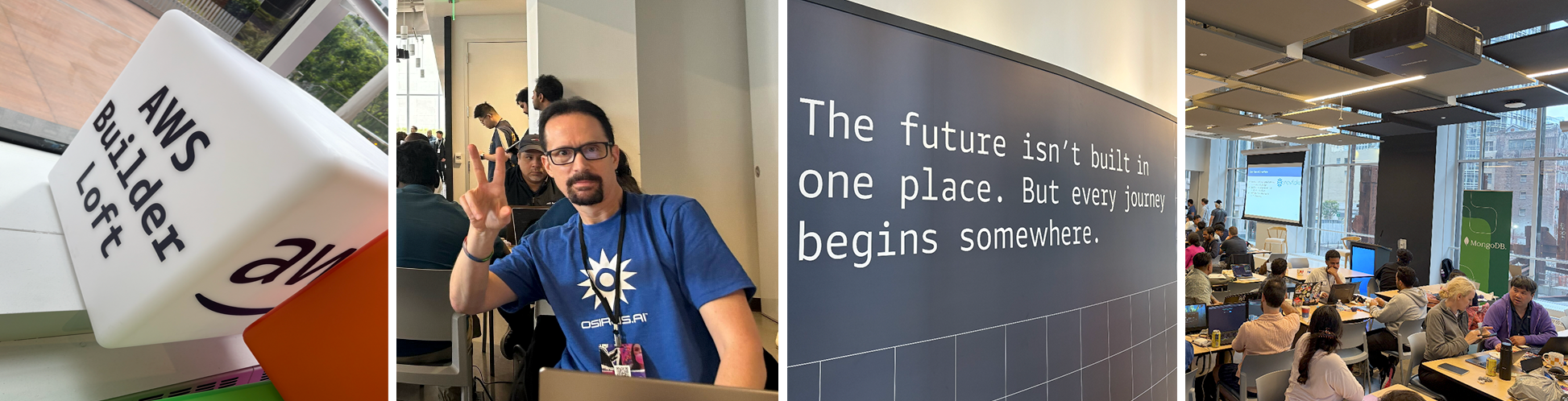
AWS MCP & Enterprise Agents Hackathon at the Builder Loft in San Francisco, July 2025
I even competed in an AWS Hackathon in San Francisco last July, earning second place for a project leveraging MCP and enterprise agents. I’m learning and doing – and that gives me deeper insight into the promise of AI and how it can transform the way we work. As such, I don't believe that it has to be heartbreaking or usher in doomsday. We can still decide our fate and trajectory.
Like films, the CMS Critic blog is another form of time travel, and I crisscrossed dozens of articles this week to get some insight on the past – and perspective on the future.
Looking back on 2025, it’s clear this wasn’t just another year of incremental progress for the CMS and DXP ecosystem. It was a year where long-building trends converged, assumptions were challenged, and agentic AI took center stage.
Here’s what I can say.
AI was ever-present in 2025
We saw it transform from speculative application to broad operational reality.
But it posed big challenges as it moved fully into production – forcing vendors, practitioners, and enterprises to confront new questions about architecture, governance, trust, and cost. And as agentic systems and strategies became all the rage, I saw the nature of our platforms change in profound ways.
This was a year of acceleration and innovation, but also one of reckoning. Not just with the hard ROI of our AI investments, but also the value that customers will expect in 2026 and beyond.
We’re still asking: Was it all worth it? Will it pay off? How will we wrestle with the scaling pricetag? The environmental impact? Or the exponential rise of AI slop?
As Brené might ask: Are we ready for the level of uncertainty we’re facing?
It’s easy to get dragged into a pit of despair, so let me offer this note of positivity as we enter this new year: Across the many events I attended this year, I saw a fire lit under our collective community. I’ve felt the wonder and excitement as AI graduated from pie-in-the-sky edge cases to real production. The initial GenAI spark of promise – and ensuing fear of displacement – has ignited into real fervor, and more people are focusing on the possibilities ahead.
From what I’ve observed, vendors are engaging, listening, adapting, and reflecting input to deliver agents and other AI features in the right places – both natively and via integrated services. Some are doing it better than others, but we’re all moving in exciting directions.
At the same time, there’s been pushback. Consumers are developing a disdain for AI-generated content in channels like social media. Governance surrounding AI usage is becoming a critical issue, and systems of authority are becoming frontline tools for maintaining standards.
True, these are challenges. We’ll be pushing a boulder up this hill for quite some time. But they are also opportunities for users and platforms to grow the value of a CMS as a control plane for content supply chains, where transformation is occurring at a breakneck pace.
CMS is a rare bird in the phylum of enterprise software. It’s more than just a technology. It is the backbone of passionate marketers and developers. People who make beautiful things above and below the code. As such, there’s a deep affection and loyalty from communities across this space, and they care deeply about how AI is being harnessed in the tools they trust.
They want their voices to be heard.
Yes, AI was the central theme in 2025. But it’s not what won hearts and minds. The bigger story was – is – still about humans. The people in front of and behind the products. The experience builders who feel connection and belonging in a shared chorus that sings with creativity.
And that sounds a little like love, actually.
As promised, here’s a glance back at 2025 through the lens of an analyst who still loves this industry and the art of content. It was a year when AI, agents, relentless innovation, and a whole lotta heart made it memorable.
How much was AI part of the story in 2025?
Turns out, A LOT.
Last year, we published almost 400 articles at CMS Critic, spanning news, analysis, research coverage, event reporting, and opinion pieces. Of those, almost half directly featured AI, generative AI, or agentic systems as a primary theme or topic.
We also had nearly a hundred contributions from the leading minds in our field, including outside practitioners, analysts, and industry experts. One of my favorites: Mark Salvatierra’s perspectives on AI, semantics, and content evolution.
There was a lot of intelligence on the platform this year, with almost 40 articles focused on original or third-party research and data-driven insights, much of it focused on AI.
AI was a prevalent theme at the dozens of industry meetings and conferences I attended, and dozens of articles on our platform highlight that in stark detail. From Contentstack’s ContentCon to Sitecore Symposium to Storyblok JoyConf, we provided in-depth coverage on the ground. I also spoke at and facilitated three of the Boye & Company conferences in three countries, where AI was always on the docket.
These numbers matter because they reflect a clear editorial reality: AI wasn’t just a category in 2025 – it was the through-line. Even articles that weren’t explicitly about AI were often shaped by it, whether discussing CMS modernization, composable architecture, developer experience, or content operations.
The rise in contributed articles also signaled something important: More voices from the field wanted to participate in the conversation – not just to promote products, but to unpack what these changes mean inside organizations and across the broader market. This plurality of perspectives enriched our coverage, with brilliant agency minds like David San Filippo exploring concepts like the “Zero-Cost Content Paradox.”
The rise of agentic: How the AI conversation matured
At our CMS Kickoff conference last January, AI was already an established topic, albeit with familiar themes of generative content, copilots, and a tacit focus on productivity gains. But as the year progressed, the conversation matured – and sharpened – around agentic AI.
This shift, while subtle, began at “The Composable Conference” in April, when MCP (Model Contact Protocol) and agentic commerce became explosive topics. In our coverage of the MACH Alliance this year, there’s been a steady evolution towards the development of an “Agent Ecosystem,” which could influence the future shape of the agentic plane.
At the same time, the MACH Alliance was challenged by one of its own members, VTEX, in a viral manifesto – signaling its intentions to leave the advocacy group over its rigid standards. In my interview with CEO Mariano Gomide de Faria, we discussed some of the issues and how they stymied his company’s acceleration into agentic commerce. As with all stories, there are two sides, and the MACH Alliance has continued to frame its commitment to strong standards as part of its value.
As the agentic volume increased, so too did the trajectory towards orchestration – one of the key themes I scribbled on a wipeboard at the CMS Summit event in Frankfurt this summer. We explored this shift through a mix of platform analysis, architectural commentary, and research-driven reporting. Articles like “Agentic AI Is Coming. Is Your DXP Ready?” resonated because they framed agentic systems not as features, but as organizational commitments.
Along with the shining promise of agents, this shift also introduced a new class of complexity, with vendors hustling to introduce orchestration and workflow capabilities as native tooling. At the same time, the specter of introducing armies of agents into proprietary systems – and eventually beyond – has created additional challenges, barriers, and even failures.
This is why observability has become a central target for 2026. Autonomy requires trust, and earning it requires an infrastructure that many organizations are still building. Keep reading for more on this.
What this year’s research revealed – and why it mattered
As with previous years, we had some insightful research from vendors and industry watchers, along with our own deep dives – all of which reflected a keen focus on AI. We broke down analyst reports and myriad surveys to help cut through to what matters.
This included my revealing conversation with Cleanlab CEO Curtis Northcutt on the reliability challenges facing agentic systems in production. For me, it stood out as a stark reality check. While enthusiasm for agentic AI was amplified this year, Cleanlab's data focused on the widespread and often unseen challenges surrounding reliability, error detection, system monitoring, and so much more.
The big question remains: Is agentic AI ready for prime time across our CMS and DXP systems?
That’s a tough one to answer, but the research felt less pessimistic and more pragmatic. Across the many demos I saw in 2025, it’s clear that agentic AI holds a lot of promise. But in production, successful vendors and enterprises will require disciplined engineering and governance to unlock the real potential. We’re already hearing stories from the market about the successes and failures, and we’ll be reporting on that this year.
I was also intrigued by the research conducted in TinyMCE’s 2025 State of Rich Text Editors. For many CMSes, RTEs like Tiny and CKEditor (both properties of Tiugo Technologies), have been foundational tools for both content practitioners and developers. According to this year’s survey, CMS use cases are fading, offering some insight into how platforms are building, buying, and leveraging RTEs as part of their strategy.
To be clear, editors aren’t disappearing; in fact, based on some of the trends, they’re becoming smarter, more contextual, imbued with AI – and more deeply embedded in content workflows. As the development landscape changes, RTEs are also advancing in categories like DMS, CRM, and workflow/collaboration tools.
One of my favorite studies came from Storyblok, which focused on the topic of “joy” – and how CMS users can experience more of it when AI is part of the experience. Partnering with a research strategy firm that harnessed a facial action coding system, they were able to “test for happiness” via microexpressions, something I’ve seen in action at Full Sail University’s UX Lab, where I serve on several PAC curriculum boards.
According to the study, product features that leveraged AI “sparked joy” with users, demonstrating the potential for new AI-powered technologies to improve sentiment.
These are just a few examples, but our coverage of relevant research continues to provide grounded evidence rather than hype – and we’ll continue to bring you these kinds of stories in 2026.
Conferences focused on AI but cultivated communities
If our articles captured the innovation this year, the events and conferences we attended crystallized the momentum. In 2025, we were globetrotters, attending numerous industry and vendor events. We were on the ground in the U.S., Canada, and across Europe, talking to CMS leaders and connecting with their communities as AI reshaped roadmaps.
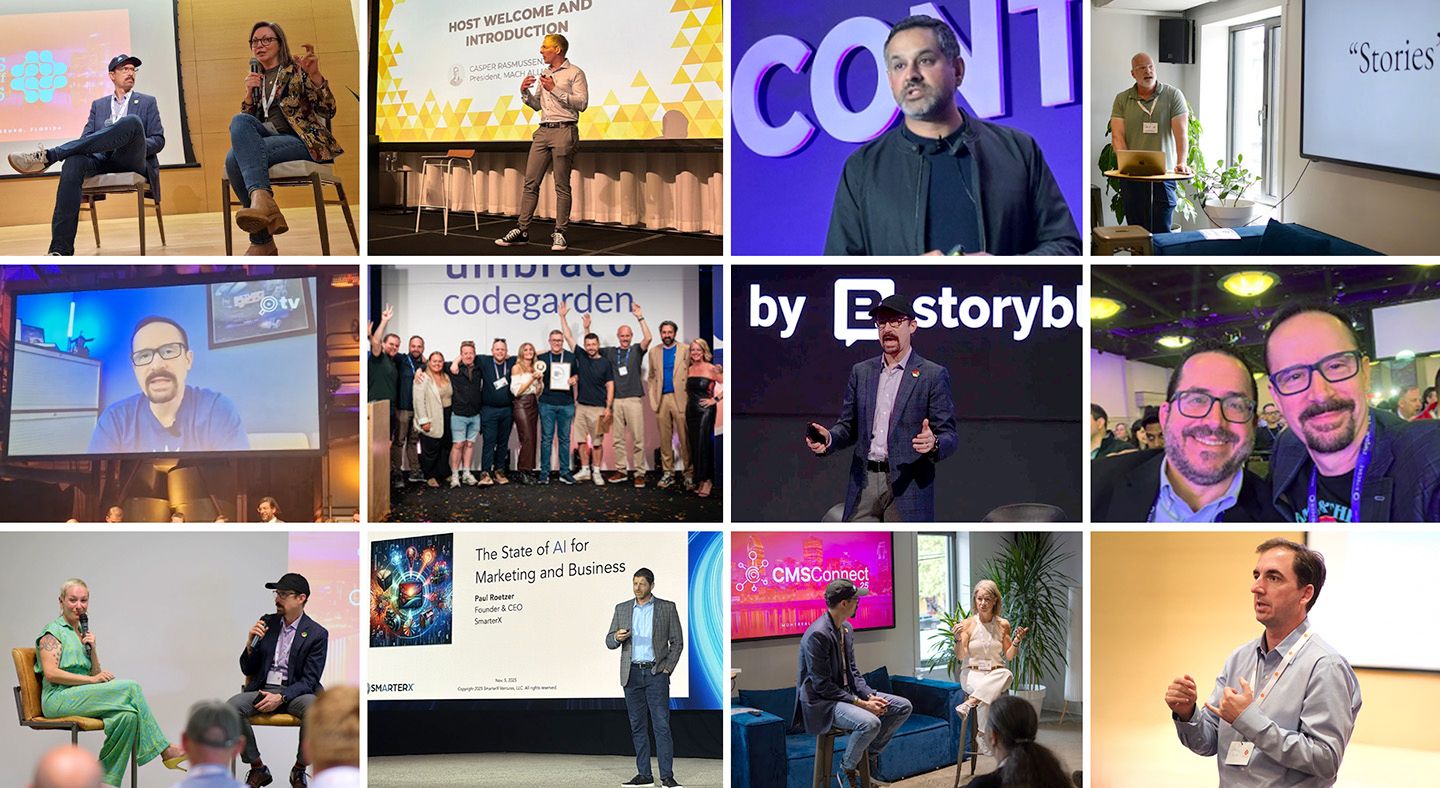
Snapshots from various events in 2025
Here are just some of the conferences we covered in person:
- CMS Kickoff 2025 marked its third year as the only global event focused on content management, kicking off in January in St. Petersburg – offering frank, vendor-neutral conversations about AI readiness, transformation, and more.
- “The Composable Conference,” the MACH Alliance’s fourth annual conference held in Chicago, reinforced MACH principles in the age of AI while laying an early foundation for an emerging agent ecosystem.
- Contentstack ContentCon showcased the vendor's shift into the global DXP category, demonstrating how its enterprise DXP and newly acquired Lytics CDP are evolving with AI-driven capabilities that focus on context and adaptability.
- Umbraco Codegarden highlighted the open source and developer perspective, emphasizing adaptability, experimentation, and community-led innovation.
- CMS Summit 25 in Frankfurt provided a global lens with a European focus, balancing strategic vision with practical insights on AI – and a tacit emphasis on open source, accessibility, and sustainability.
- Storyblok JoyConf 2025 in Amsterdam – the headless CMS's first large-scale conference – blended community, creativity, and AI innovation with human connection.
- CMS Connect in Canada was our second annual event in Montreal, expanding the conversation from agentic AI to accessibility to narrative storytelling.
- Sitecore Symposium 2025 showcased the “Seasons of Love” and how far AI has evolved into the DXP’s core toolkit, with agentic concepts front and center with its new Sitecore AI platform.
At each of these events, I encountered pockets of resistance and anxiety about AI – but there was more of a hopeful bend toward the possibilities. I also spoke to the editors, marketers, and CMS practitioners, many of whom are seeking answers and guidance as their tools – and the industry at large – transform around them.
Throughout the year, I also spoke at numerous events, moderated sessions and panels, conducted roundtables, and served on juries for the MACH Impact Awards and TYPO3 Awards, providing opportunities to celebrate the efforts of vendors and practitioners across the ecosystem.
Above all, the conferences we attended in 2025 brought us closer to the heart of CMS: its people. Hearing the pressures that agencies are facing as AI transforms their business models – and the frustration enterprises are experiencing as they hustle to adapt their stacks – gave us unmatched insight. Expect more on-the-ground reporting this year as we engage with more voices across the industry.
The big picture: What did 2025 tell us?
When viewed holistically, 2025 revealed a CMS industry in transition, with a laser focus on unlocking the value of AI and emphasizing the role of context. I heard this term conjured in nearly every vendor conversation and at every conference; in fact, Contentstack positioned the claim that if “content is king, context is queen.”
Without a doubt, agents will be a core focus for 2026. Several vendors launched robust agent orchestration last year, and we can expect the rest of the market to drive towards parity and look for ways to differentiate their value around agent capabilities. Some will introduce native features while others opt for integrations to accelerate time-to-market.
In a nutshell:
- AI is now structural, not just experimental
- Agentic systems are inevitable, but not yet mature
- Composability remains essential for adaptability
- Governance, trust, and human oversight are becoming strategic differentiators
Innovation was indeed relentless, and DXP vendors brought more gusto to their vision and roadmaps than we’ve seen in quite a while. That said, one of the biggest challenges ahead will be framing the value of a platform in a world where categories are eroding – and parity is closer than ever.
There’s no longer a 12-month jump on the competition. AI is accelerating the development and deployment of what will become commoditized features. As tooling becomes more complex, vendors will likely lean on the channel as a force multiplier, leveraging agency partnerships to enhance their value propositions.
What to watch in 2026
If 2025 was the milestone for agentic AI’s explosion, 2026 is shaping up to be the year when the industry is forced to operationalize everything we’ve been talking about. The questions ahead are less about possibility and more about execution.
While there’s a shortage of crystal balls, I had several “predictive” conversations at the end of the year, starting with CoreMedia’s Sören Stamer – who touched on the evolution of content management, customer experience, and the critical topic of digital sovereignty in an evolving AI world.
Additionally, Brightspot's Ravi Singh offered us some pragmatic reflections on the future of human-controlled, AI-powered storytelling, while an upcoming episode of the podcast featuring Filip Bech-Larsen and Phil Whittaker examines the growing impact of MCP through an open source lens.
I also spoke to Jason Cottrell, president of the MACH Alliance and CEO of Orium (a leading SI). Of course, we discussed the Alliance’s focus on bringing its vision for an agent ecosystem to life, but we also talked about the importance of fostering ideation and the role of governance.
AI was a central topic on our new podcast
If you didn’t know, we started “The Critic’s Corner” Podcast in 2025, currently available on Apple (with more channels coming). It’s been well-received and an absolute blast to produce. Over the last few months, I’ve hosted thought leaders like Greg Dunlap, Kelly Goestsch, Jasmin Guthmann, Ari Paparo, and Karim Marucchi – and more episodes are on the way in 2026.
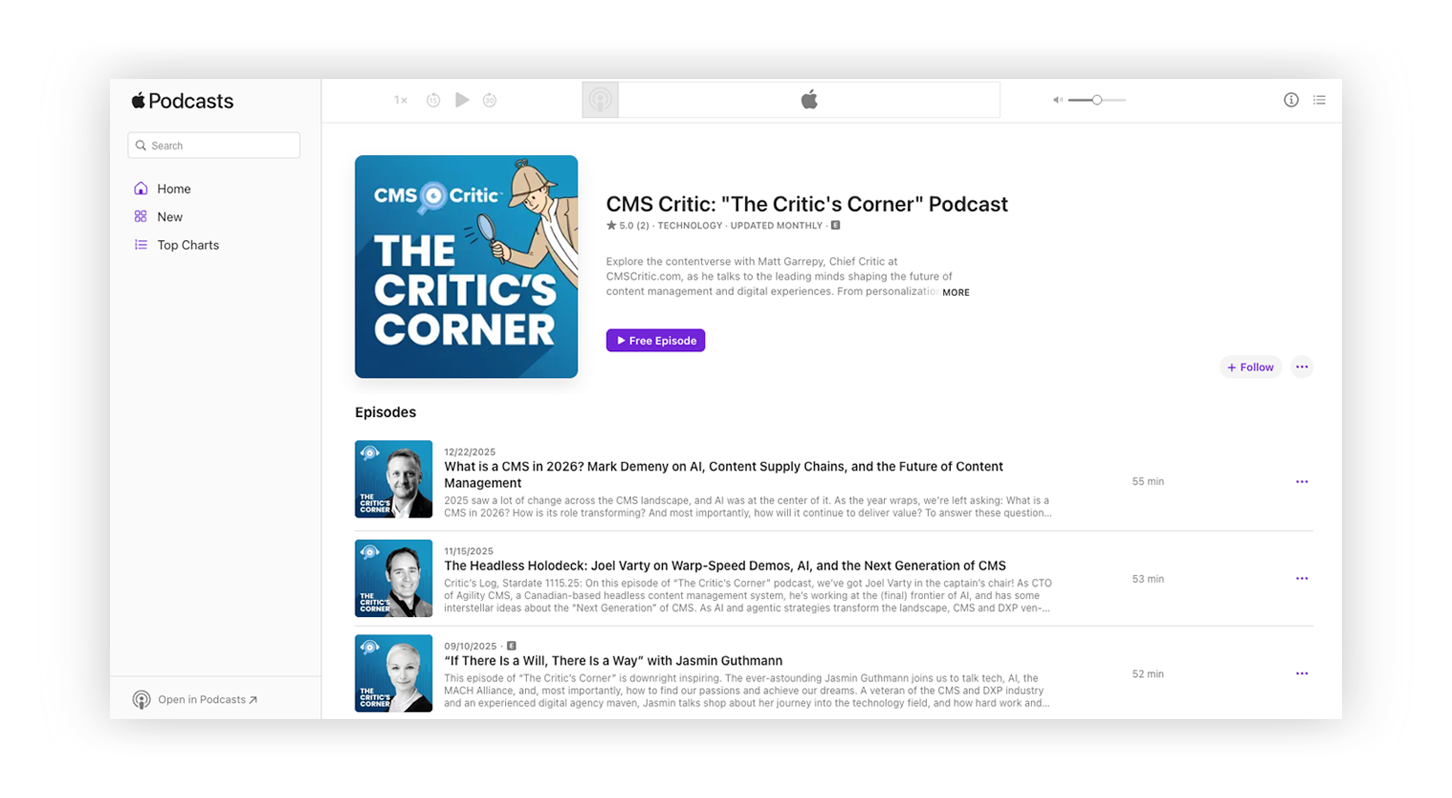
In a recent pod conversation with Agility CMS’ Joel Varty, we talked about AI and the next generation of CMS. In a world where content management platforms will need to rethink their messaging and positioning, he’s elevating the art of the demo as part of the recipe for success.
One of the most magnetic concepts emerging is the focus on the content supply chain – a term that surfaced repeatedly in my conversations throughout the year and was explored directly in my last episode with Mark Demeny.
The idea reframes content not as static assets managed inside a CMS, but as a continuously flowing system that spans creation, enrichment, orchestration, delivery, optimization, and reuse across channels, teams, and technologies. In practical terms, this could all signal a shift in how CMS platforms are evaluated.
As Mark told me, the CMS of the future won’t just manage content – it will act as a coordination layer across the entire content lifecycle. That includes upstream inputs like ideation and AI-assisted creation, midstream processes such as governance, versioning, and localization – and downstream execution across experiences, commerce, search, and emerging AI-driven interfaces.
Agentic AI will play a critical role here, but not as a replacement for humans. Instead, agents are increasingly being positioned as participants within the content supply chain, handling tasks like routing, enrichment, quality checks, optimization, and performance feedback loops.
As Mark noted, this is what CMS users of the future will be expected to do. And the challenge isn’t whether this model is coming – it’s whether organizations are structurally prepared for it.
Observability and composability will help shape the agentic future
At our CMS Summit conference in Frankfurt this summer, I wrote two words on the wipeboard during our closing session: orchestration and observability. The former is already becoming a key part of CMS and DXP platforms that are accelerating their agentic frontier – with the ultimate goal of supporting agent-to-agent transactions.
Are we ready for it? Not yet. Most vendors are struggling to move past proprietary limitations and enable secure interactions beyond their ecosystems. But a few have made progress – and 2026 will likely bring more production-ready examples. Bet on light use cases to start, but we’re bound to see more autonomy along the customer journey. Will consumers ultimately trust agents to perform things like financial transactions on their behalf? That’s another story.
With armies of agents (and in some cases, singular “Super Agents”) doing our bidding across content and ecommerce operations, observability will take on an outsized role. Organizations will need clearer insight into why decisions are made, not just what was published or delivered. This connects directly to lessons surfaced in Cleanlab’s research – proving that autonomy without visibility is not sustainable.
Finally, composable and MACH-based architectures will continue to matter, but more as a foundation for AI ideation and interoperability. This year, we’ve spoken to many enterprises about their shift back to integrated platforms with strong AI roadmaps, suggesting that complexity and time to market – along with composable latency and even failures – have rebalanced the market equation.
But composable still matters. We’re past the tired debate about monoliths versus headless platforms, and the conversation is shifting to broader considerations about how content systems function as part of a living, adaptive supply chain — one that must balance speed, intelligence, trust, and human oversight.
‘To me, you are the perfect CMS’
Maybe it’s an illusion. The plot of a romcom fairy tale. But some platforms have endeared themselves to their users – and that kind of loyalty is what we’re all working towards.
It doesn’t come easy. But then again, neither does love, actually.
2025 was a kind of emotional roller coaster for the CMS. A few industry watchers sounded the death knell, while some predicted the evolution from selling software to selling transformation. Others have been bullish about change, calling the AI era the “death of the one-size-fits-all-web,” making way for context management as a bridge to the future.
Funny enough, the more things change, the more they stay the same. As Deane Barker wrote back in 2016’s Web Content Management, the core question of “How do I keep track of all this stuff?” is still plaguing us in the age of AI. That’s a little heartbreaking when you think about it.
Perhaps the perfect CMS doesn’t exist. Or, as Cursor might have you believe, you can just build one yourself that meets your needs. And while the concept of conjuring a performant app with Base44 sounds appealing, the lack of governance, security, and accountability isn’t so easy to prompt into existence. Because you’re not just buying technology – you’re buying trust.
And yet, that’s where I’m hopeful 2026 will take us: into an AI-powered paradigm where adaptability is everywhere. Not just in a personalized experience for a website visitor, but within the backend composition of CMS. A place where content editors and supply chain conductors can manage every step of their content lifecycle on their own terms, with a UX that checks all their personal boxes while meeting the kind of enterprise governance that matters.
Realizing this kind of adaptability is the most human thing we can achieve in this race to robotic automation. As Brené Brown says, computers can't replace this kind of empathy – and the CMS vendors who unlock this truth will win.
Regardless of where the journey leads us, we’ll be analyzing the progress at every step.
Thanks to our readers and sponsors in 2025
None of our work would be possible without the fierce support of the CMS and digital experience community – the vendors building and innovating, the practitioners asking hard questions, the researchers surfacing inconvenient truths, and the event organizers creating space for honest dialogue.
Thank you for all of it. For letting me share your stories and helping our audience make better, more informed choices about technology. We’re grateful to be part of that conversation and we’re looking forward to bringing you more in 2026.
One last note: While CMS has our hearts, my favorite feel-good story of the year was an interview with Nabil Orfali, CEO of TechGuilds (a Sitecore partner) and one of the founding members of 14.Digital – an NGO dedicated to revitalizing Syria’s digital infrastructure. It’s a beautiful story about losing one’s homeland and returning to heal it with the promise of technology.
It's proof that love actually is all around us.
Upcoming Events

CMS Kickoff 2026
January 13-14, 2026 – St. Petersburg, FL
Meet industry leaders at our fourth annual CMS Kickoff – the industry's premier global CMS event. Similar to a traditional kickoff, we reflect on recent trends and share stories from the frontlines. Additionally, we will delve into the current happenings and shed light on the future. Prepare for an unparalleled in-person CMS conference experience that will equip you to move things forward. This is an exclusive event – space is limited, so secure your tickets today.

Umbraco Codegarden 2026
June 10–11, 2026 – Copenhagen, DK
Join us in Copenhagen (or online) for the biggest Umbraco conference in the world – two full days of learning, genuine conversations, and the kind of inspiration that brings business leaders, developers, and digital creators together. Codegarden 2026 is packed with both business and tech content, from deep-dive workshops and advanced sessions to real-world case studies and strategy talks. You’ll leave with ideas, strategies, and knowledge you can put into practice immediately. Book your tickets today.